Quick answer
Cover the burnt bottom with water, add 2-3 tablespoons of baking soda, and simmer for 10-15 minutes to loosen the burnt layer. Let it cool, then scrape with a wooden or plastic scraper. For stubborn residue, make a baking soda paste and let it sit, or add the vinegar boost. Match the technique to your pan material so you don't damage the surface.
A burnt pan is almost always salvageable. That black crust is mostly carbonized food bonded to the metal, and the job is to soften that bond before you scrub, not to attack it dry with steel wool. What you can safely use depends on the material. Stainless steel and enameled cast iron take aggressive treatment; nonstick and bare aluminum do not. Below is a default method that works on nearly everything, plus the adjustments for each pan so you don't ruin a good one trying to save it.
What you’ll need
- Wooden or silicone scraper or spatula (plastic works too)
- Non-scratch scrub sponge or nylon scrubbing pad
- Stiff-bristle dish brush
- Steel wool or a metal scour pad (bare stainless steel and bare cast iron ONLY)
- Stovetop for the simmer method
Materials
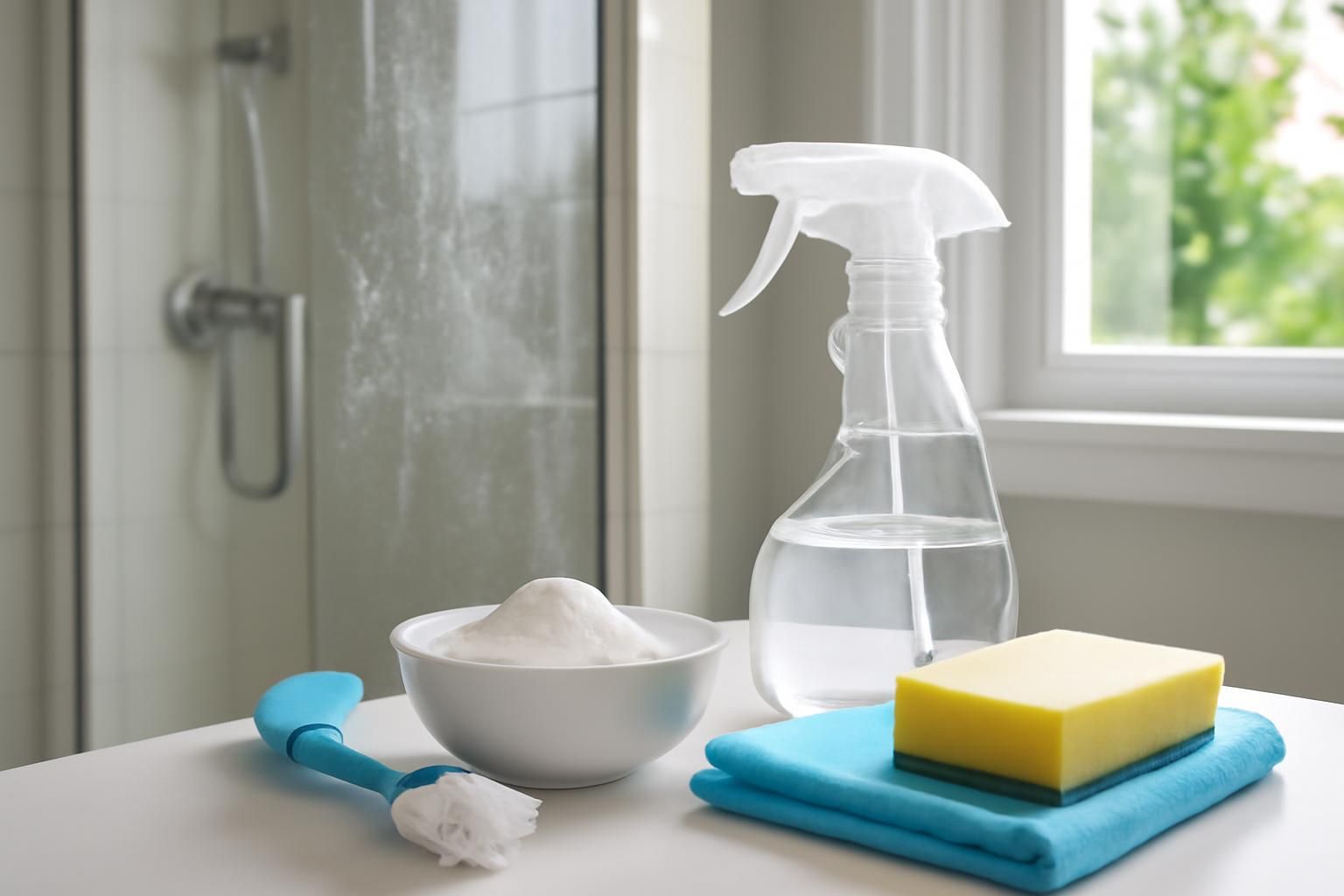
- Baking soda (sodium bicarbonate)
- White vinegar
- Dish soap
- Hot water
- Optional: a dishwasher tablet or oxygen-based cleaner for stubborn stainless jobs
Step by step
- 1
Identify the pan material first
This decides everything else. Stainless steel and enameled cast iron tolerate baking soda, vinegar, and even steel wool. Nonstick coatings (PTFE or ceramic) and bare aluminum do not; abrasives and acids damage them. Bare cast iron can be scrubbed hard, but you'll need to re-season it afterward. If you're not sure what you have, treat it as nonstick and use only soft tools.
- 2
Scrape off the loose debris
Tip out the burnt food and use a wooden or silicone spatula to lift off whatever flakes away easily. Don't force it. You're just clearing the loose stuff so the soak can reach the bonded layer underneath.
- 3
Simmer with water and baking soda
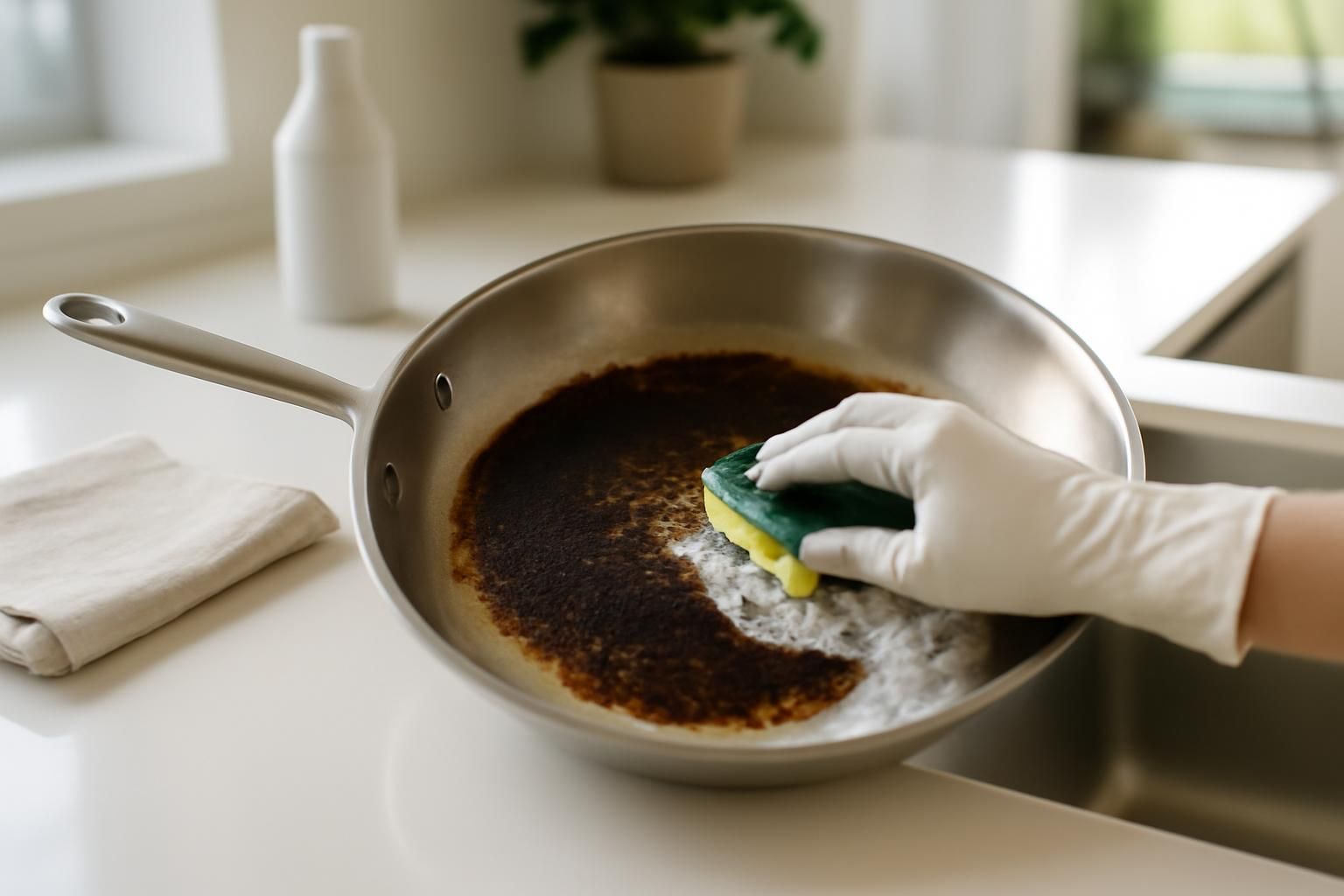
Add enough water to cover the burnt area by about a centimeter, then stir in 2-3 tablespoons of baking soda. Bring it to a gentle simmer and let it bubble for 10-15 minutes. The heat and mild alkalinity loosen the carbonized layer, and large patches often lift on their own. Watch it so it doesn't boil dry.
- 4
Cool it down, then scrape again
Turn off the heat and let the pan cool until the water is just warm. Never scrape a screaming-hot pan or plunge it into cold water; thermal shock can warp metal or crack enamel. Pour out the water and scrape the loosened residue with your spatula or a non-scratch sponge. A lot of it should come away in sheets.
- 5
Make a paste for what's left
For patches that won't budge, sprinkle baking soda onto the damp surface and add just enough water to form a thick paste. Let it sit 15-30 minutes, or several hours for severe burns. The paste keeps the alkaline cleaner sitting on the residue instead of running off.
- 6
Scrub with the right tool for your pan
On stainless steel or enameled cast iron, work the paste in with a scrub sponge in small circles, and step up to steel wool on bare stainless for carbon that won't move. On nonstick, ceramic, or bare aluminum, use only a soft sponge or nylon pad. No metal, no scouring pads. Rinse and check your progress as you go.
- 7
Add the vinegar boost if a brown film remains
If a thin scorched film or discoloration lingers on stainless steel, pour in a roughly 1:1 mix of white vinegar and water, bring it to a brief boil, then take it off the heat and sprinkle in baking soda (it will fizz). Let it sit a few minutes, then scrub. Do this only on stainless or enameled surfaces. Skip vinegar on bare aluminum, which it can pit and discolor.
- 8
Wash, dry, and re-season if needed
Wash the pan with dish soap and hot water to clear all residue, then dry it completely. If it was bare cast iron, rub a thin coat of cooking oil over the cooking surface and heat it briefly to re-season, since scrubbing strips the protective layer.
Never mix bleach-based cleaners with vinegar or ammonia. The combination releases toxic gas. Don't run cold water onto a hot pan or set a hot pan on a cold surface; thermal shock can warp aluminum and stainless steel and crack enamel or glass lids. Keep the simmer attended so the pan never boils dry, which scorches it further and, with nonstick coatings, can release fumes when the surface overheats. Match abrasives and acids to the pan material, because they permanently damage nonstick coatings and bare aluminum.
Common mistakes
- Going at burnt residue dry with steel wool instead of soaking first. You'll scratch the pan and barely shift the carbon.
- Using steel wool or baking soda on nonstick, which scratches and degrades the coating, or on bare aluminum, which dulls and pits it.
- Pouring vinegar on bare aluminum, where the acid discolors and corrodes the surface.
- Plunging a hot pan into cold water, which can warp the base so it no longer sits flat on the burner.
- Quitting too early. Heavy burns often need a second simmer or an overnight baking-soda-paste soak.
- Skipping the re-season on bare cast iron after scrubbing, which leaves it prone to rust and sticking.
Frequently asked
Can I just use the dishwasher instead?
A dishwasher won't shift a true burnt-on layer; that bonded carbon needs soaking and scrubbing first. For stainless steel, dropping a dishwasher tablet into a pan of hot water and letting it dissolve can help lift residue. Never put nonstick or cast iron through this, though, since the detergent is too harsh for those surfaces.
What if the burn is on the outside bottom of the pan?
Exterior carbon and burnt grease respond to the same baking soda paste. Coat the bottom with a thick layer, let it sit 30 minutes or more, then scrub with a pad suited to the material. Heavy built-up exterior carbon may take several rounds.
Will baking soda damage my stainless steel pan?
No. Baking soda is a mild abrasive and safe for stainless steel and enameled cast iron. It can leave a faint haze on polished stainless that buffs out with a soft cloth, but it won't harm the metal.
My nonstick pan is badly burnt and scratched. Is it worth saving?
If the coating is already scratched, gouged, or flaking, the pan is at the end of its life and should be replaced rather than scrubbed harder. A damaged nonstick surface won't cook well, and loose bits of coating can flake into food. For a lightly burnt but intact nonstick pan, soak it in warm soapy water and use only a soft sponge.
How do I keep from burning a pan in the first place?
Cook at lower heat with enough fat or liquid, stir foods that tend to stick, and don't walk away from reducing sauces or simmering milk. Preheating an empty pan too long, especially a nonstick one, is a common cause of scorching.