Quick answer
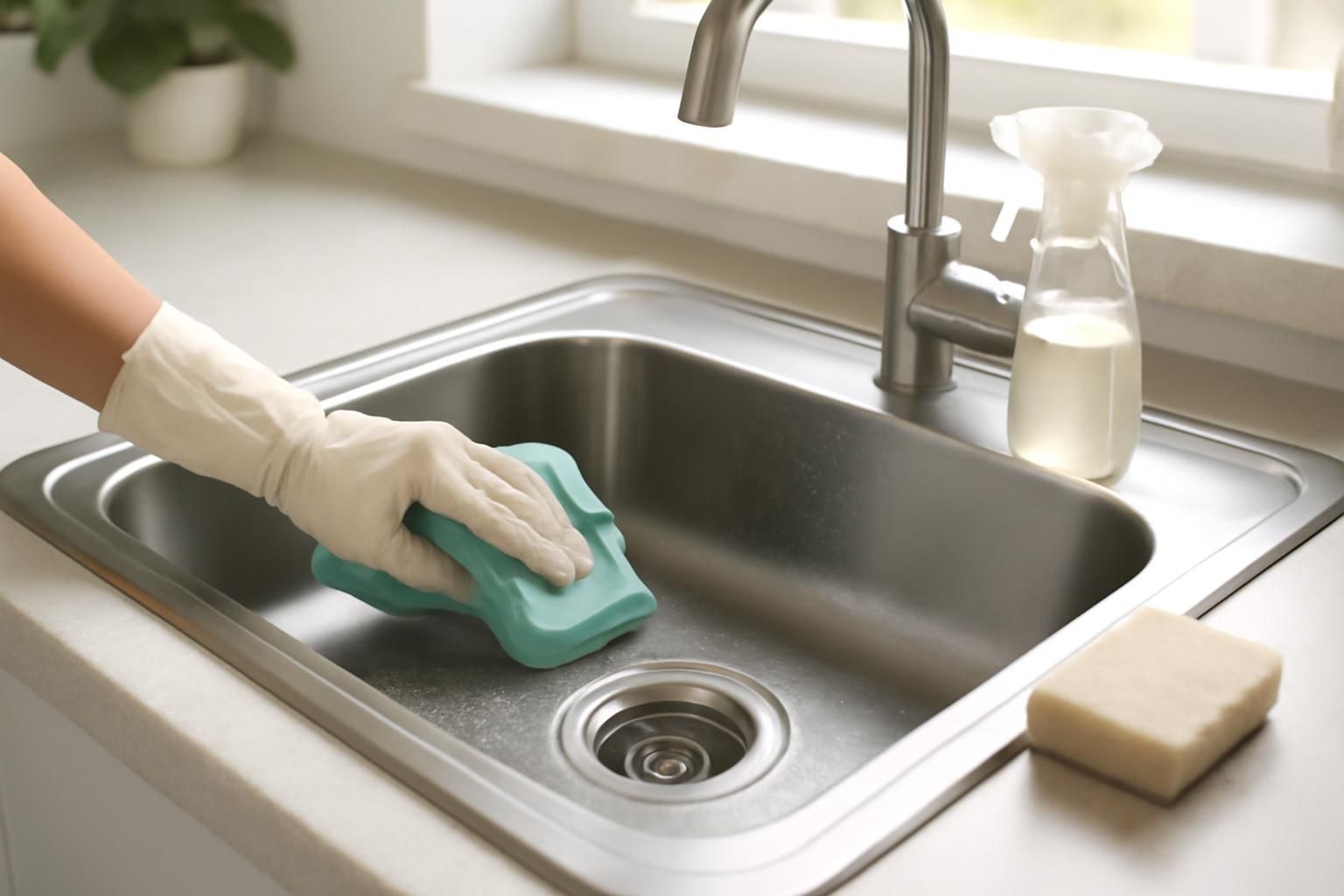
Rinse the sink and sprinkle a cup of baking soda over the damp surface. Scrub with a soft sponge in the direction of the brushed grain. Spray with white vinegar, wait for the fizz to stop, then rinse and dry with a microfibre cloth. For daily care, wipe the sink dry after each use to stop hard-water marks forming.
A stainless steel sink can look dull from water marks, grease, or micro-scratches. Most damage is surface-level and fixable with the right method. Match your cleaning to the problem: limescale needs an acid rinse, grease needs detergent, and scratches need gentle buffing with the grain.
What you’ll need
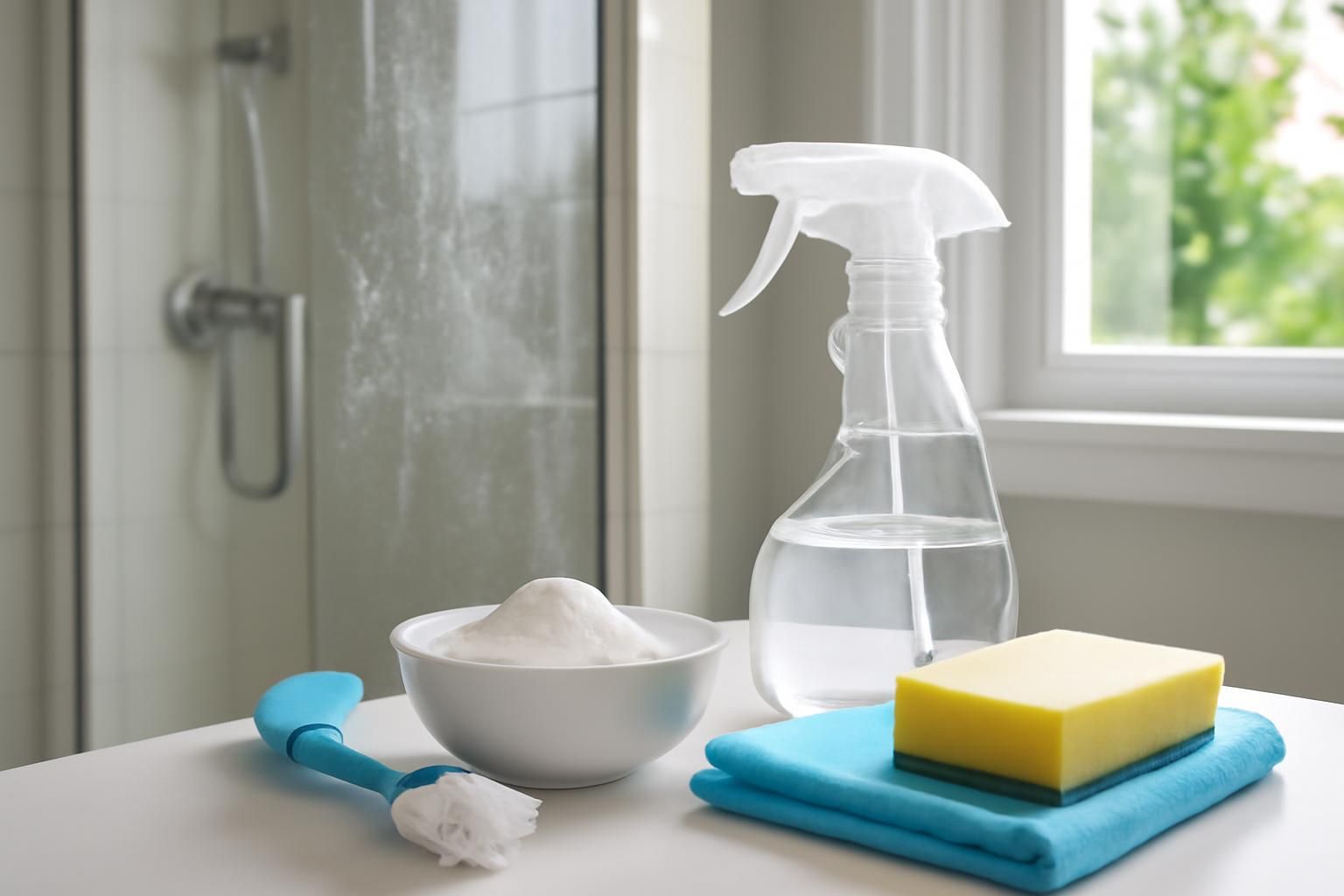
- Baking soda (about 100 g)
- White vinegar in a spray bottle
- Washing-up liquid
- Soft non-scratch sponge
- Microfibre cloth
- Old toothbrush (optional)
Step by step
- 1
Clear and rinse the sink
Remove dishes and food debris. Rinse the whole basin with warm water so the surface is damp but not pooled.
- 2
Apply the baking soda paste
Sprinkle a thin, even layer of baking soda across the damp sink bottom and sides. The moisture will form a mild abrasive paste. Do not add water directly; let the damp surface do the work.
- 3
Scrub with the grain
Look closely at the brushed finish to see which way the grain runs. Scrub only in that direction with a soft sponge. Going across the grain drives residue into the microscopic grooves and creates visible scratches that cannot be buffed out. Pay extra attention to the drain rim and around the tap base where limescale collects.
- 4
Spray with vinegar and rinse
Mist the scrubbed surface with white vinegar. Let it fizz for 30 seconds to break down mineral deposits. Rinse thoroughly with warm water. If you are using washing-up liquid that contains bleach, skip the vinegar step and rinse the sink completely before applying any acidic cleaner.
- 5
Dry thoroughly
Wipe the sink completely dry with a microfibre cloth. Water left to evaporate naturally leaves white mineral deposits in hard-water areas. A 30-second dry after each use prevents build-up.
- 6
Address scratches and grease
For grease streaks, wash first with washing-up liquid and warm water, then do the baking soda step. For light scratches, rub a small amount of baking soda paste along the grain with a soft cloth. Deep scratches usually require a specialist stainless steel scratch kit.
The biggest hazard is using the wrong chemical or abrasive and permanently damaging the finish. Never mix bleach-based cleaners with vinegar or other acids — the reaction releases toxic chlorine gas and can pit the steel. Check whether your washing-up liquid contains bleach before adding vinegar. Do not use steel wool, abrasive scouring powders, or bleach-based sprays: these scratch or corrode the surface and often void the sink warranty. Follow the product label on any commercial cleaner.
Common mistakes
- Leaving water pooled in the sink between uses. This is the main cause of white water marks in hard-water areas.
- Using bleach-based cleaners regularly. They pit the steel surface over time and can void warranties.
- Wiping across the brushed grain with a rough cloth. This creates micro-scratches that trap dirt and dull the finish permanently.
Frequently asked
How do I remove deep scratches from a stainless steel sink?
Deep scratches need a specialist stainless steel scratch-removal kit with graduated abrasive pads. Work only with the grain, starting with the finest grade. If the scratch has cut through the surface completely, the damage is permanent and you may need to replace the sink or consult a specialist.
Why does my sink look dull and streaky even after cleaning?
Streaks usually mean residue from cleaner or hard-water minerals left behind. Rinse more thoroughly and dry with a clean microfibre cloth immediately after washing. Avoid air-drying.
Is it safe to use lemon juice on stainless steel?
Lemon juice is acidic and can etch stainless steel if left to sit. It is not recommended. Use white vinegar instead, and always rinse it off promptly.