Quick answer
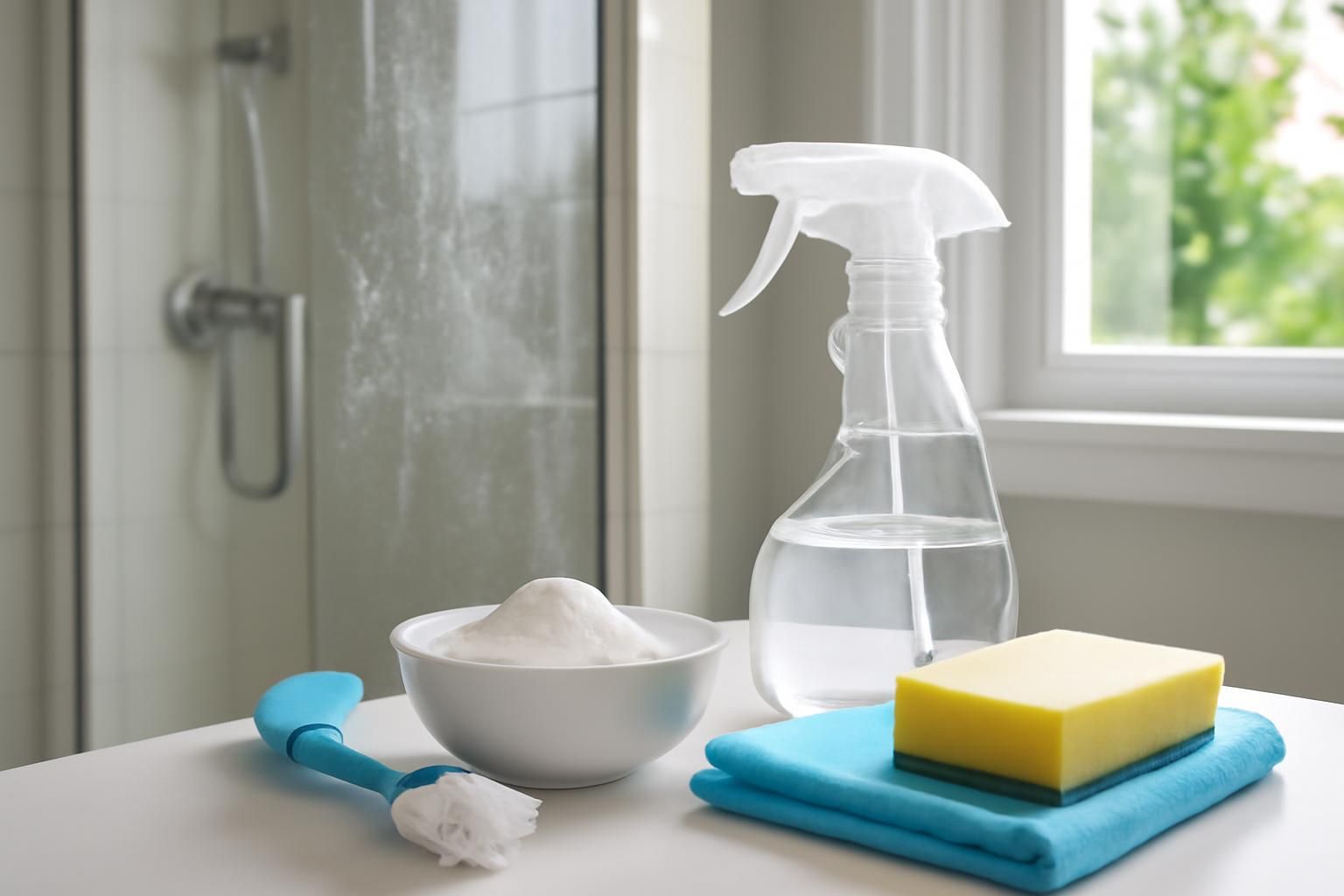
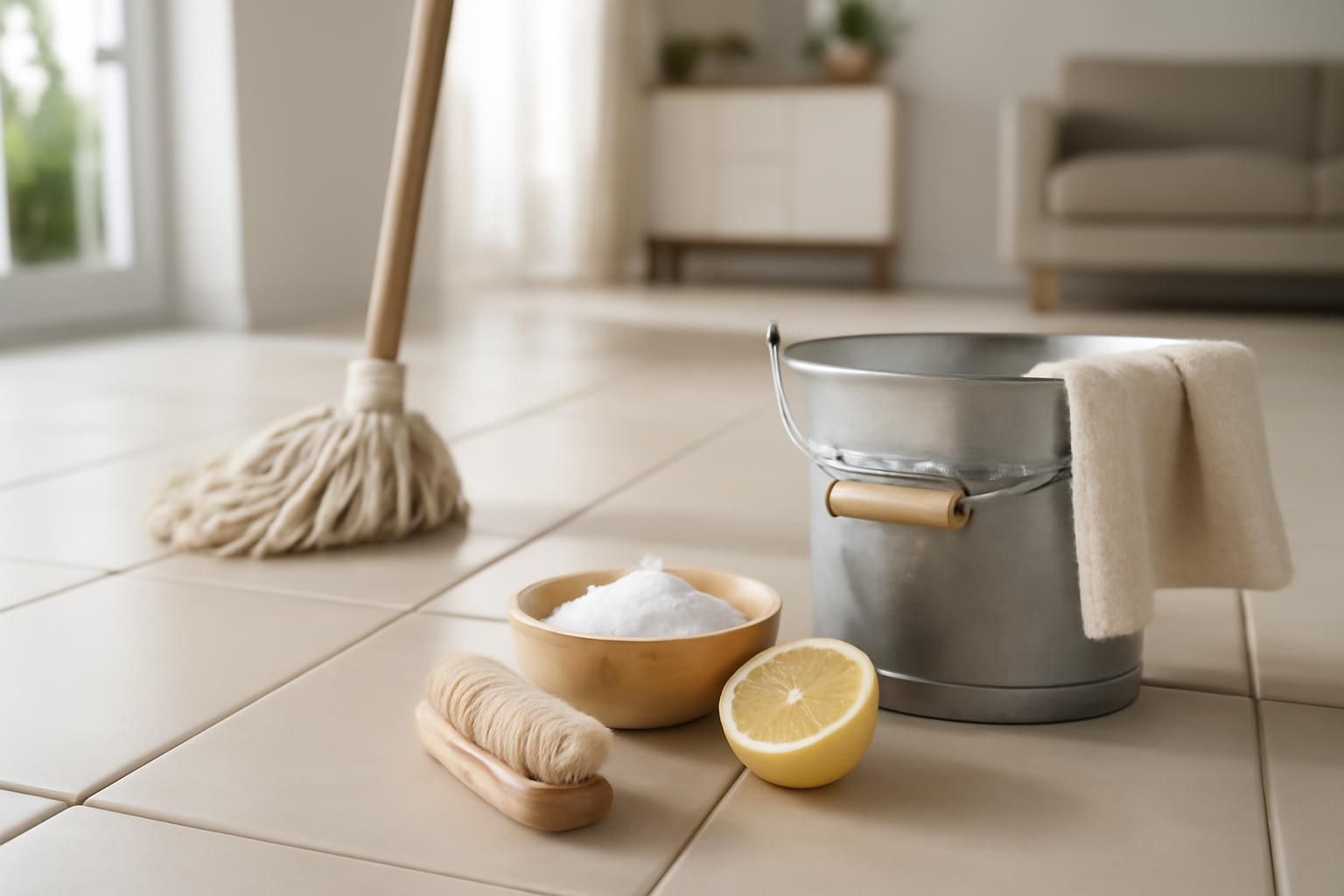
Sweep or vacuum the floor first. Mix warm water with white vinegar in a bucket. Mop the tiles with a microfibre mop. Tackle grout stains with a paste of bicarbonate of soda and lemon juice. Rinse with clean water and let the floor air-dry.
Chemical floor cleaners can leave strong scents and sticky residue. Natural acids in vinegar and lemon cut through grease and soap scum on tiles just as effectively.
What you’ll need
- warm water
- white vinegar
- bicarbonate of soda
- mop with microfibre head
- bucket
- soft brush
- lemon juice
Step by step
- 1
Clear loose dirt
Remove rugs and furniture from the area. Sweep thoroughly or vacuum with a hard-floor attachment to pick up dust, grit and hair. Loose dirt turns to mud when wet.
- 2
Prepare the cleaning solution
Fill a bucket with four litres of warm water and add 120 ml of white vinegar. Stir briefly. The mild acidity dissolves greasy film without damaging glazed tiles.
- 3
Mop the tiles
Dip a microfibre mop into the solution and wring it out well. Mop in figure-of-eight strokes, rinsing the mop head regularly. Change the water if it turns grey.
- 4
Scrub grout lines
Mix three parts bicarbonate of soda to one part lemon juice into a paste. Apply it to stained grout with a soft brush. Leave it for five minutes, then scrub gently and wipe away.
- 5
Rinse and dry
Go over the floor again with a mop rinsed in clean warm water. This removes any soda or lemon residue. Open windows or turn on a fan to speed up drying.
Do not use vinegar or lemon juice on unsealed natural stone such as marble, travertine or limestone — the acid etches the surface permanently. Use a pH-neutral cleaner on stone.
Frequently asked
Will vinegar damage my tiles?
No. Diluted white vinegar is safe for glazed ceramic and porcelain tiles. Do not use it on unsealed stone such as marble or travertine.
Can I add essential oils to the mop water?
Yes, a few drops will scent the room. They are optional and do not improve cleaning power.