Quick answer
Sprinkle coarse salt over the board surface. Scrub it with half a lemon, squeezing as you go. Let it sit for five minutes. Scrape off the residue and rinse the board under warm water. Stand it on its edge to dry completely. Oil it monthly with food-safe mineral oil or beeswax.
Wooden boards absorb food odours and can harbour surface bacteria in knife grooves. A salt-and-lemon scrub helps reduce odours and surface bacteria without damaging the wood. For boards used with raw meat, the most important steps are washing thoroughly in hot soapy water and drying completely — never leave a damp board sitting flat.
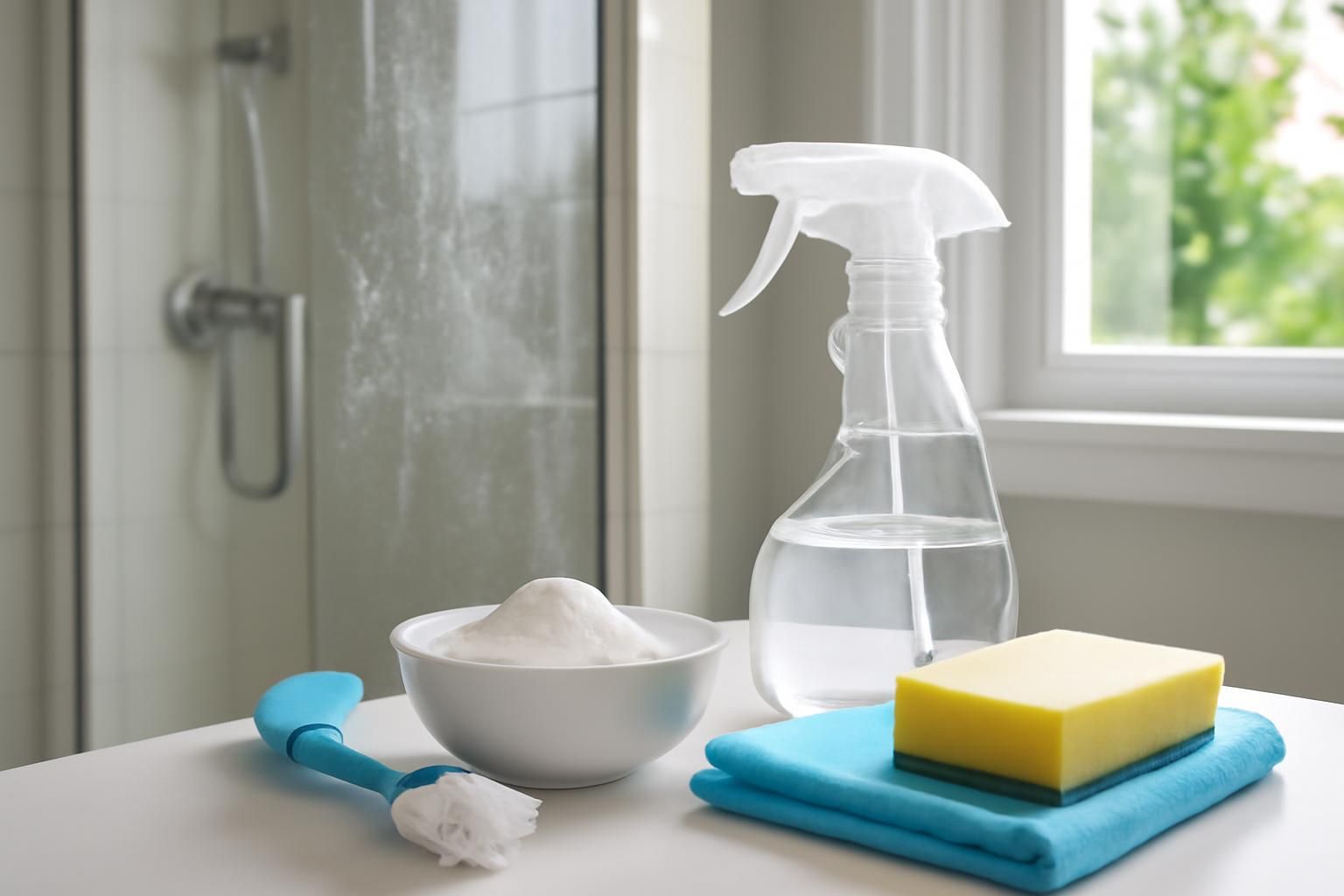
What you’ll need
- coarse salt
- lemon
- white vinegar
- warm water
- clean towel
- food-safe mineral oil or beeswax
Step by step
- 1
Scrub with salt and lemon
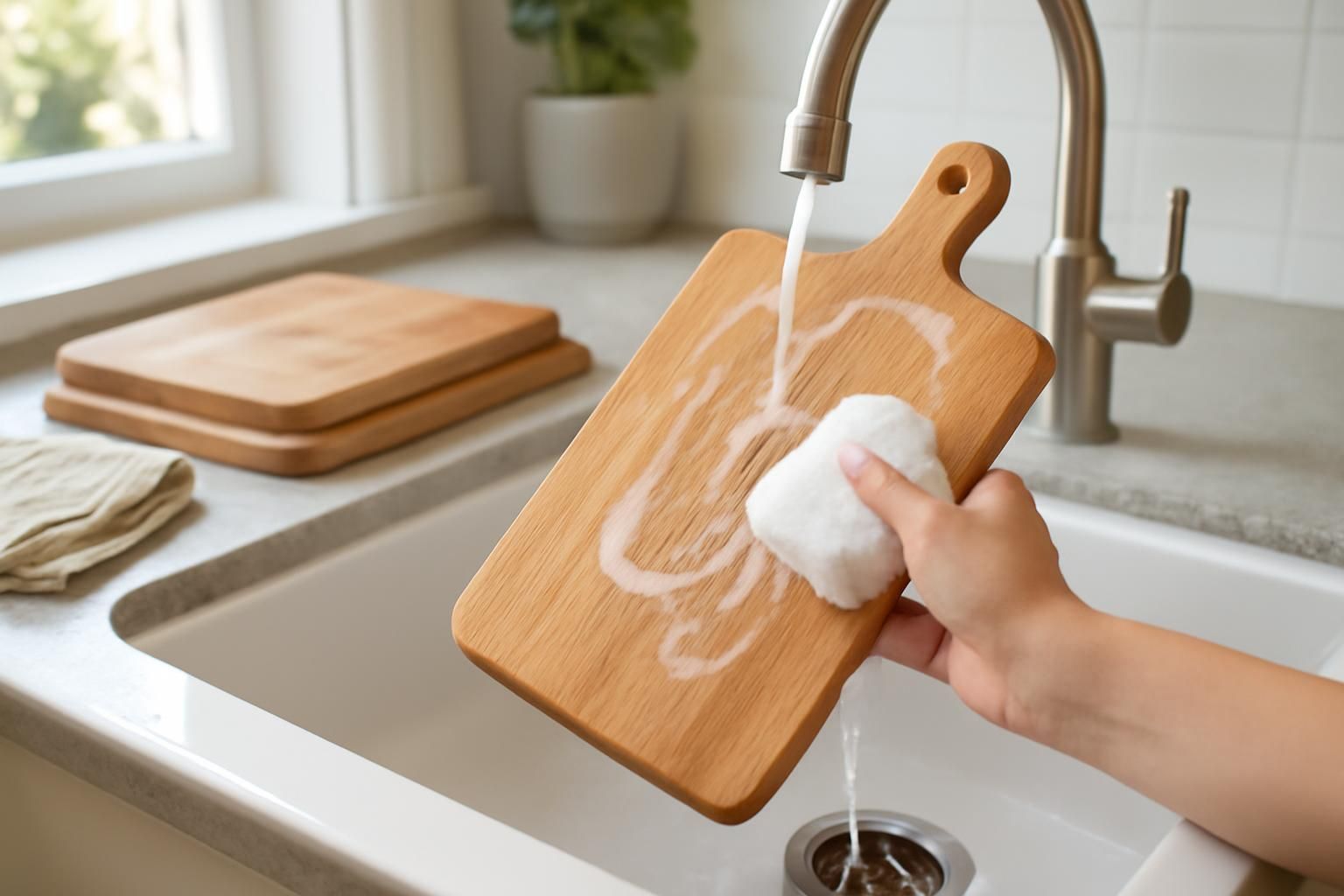
Sprinkle a generous layer of coarse salt over the board. Take half a lemon and scrub the salt into the wood using circular motions. Squeeze the lemon as you go to release juice.
- 2
Let it rest
Leave the salt and lemon paste on the board for five minutes. This draws out stains and neutralises garlic, onion and meat smells.
- 3
Scrape and rinse
Use the flat edge of a knife or a spatula to scrape off the gritty residue. Rinse the board under warm running water.
- 4
Wash and dry after raw meat
For boards used with raw meat, wash the board in hot soapy water immediately after use. Scrub all surfaces — including the sides and underside. Rinse thoroughly, then stand on its edge to dry completely in a draught. Spraying white vinegar afterwards can help reduce surface bacteria further, but is not a substitute for hot soapy water.
- 5
Dry thoroughly
Pat the board with a clean towel. Stand it on its long edge in a draught so air reaches both sides. Never leave it flat on a wet surface.
- 6
Oil the board monthly
When the board is completely dry, rub a thin layer of food-safe mineral oil or beeswax over the entire surface. Wipe off excess after a few hours.
Never soak a wooden chopping board in water or put it in a dishwasher. Prolonged wetting causes warping, splitting and glue failure.
Common mistakes
- Soaking the board in the sink
- Using vegetable or olive oil instead of mineral oil, which turns rancid
- Putting a wet board away in a cupboard
- Scrubbing with steel wool, which gouges the surface
Frequently asked
Can I use bleach on a wooden chopping board?
Avoid bleach. It soaks into the wood and can leave harmful residue. Salt, lemon and vinegar are safer and effective.
How often should I oil my chopping board?
Oil it once a month, or whenever the wood looks dry or pale. In very dry kitchens, every two weeks is better.
My board has deep knife marks. Should I sand it?
Yes. You can sand the surface lightly with fine-grit sandpaper to smooth grooves. Wash, dry and oil it afterwards.