Quick answer
Soften crayon wax with a hairdryer on low heat, then wipe away the excess with a paper towel. Rub non-gel toothpaste or a baking-soda paste onto any remaining colour with a microfibre cloth, working in small circles. Rinse with warm water and dry the wall.
Crayon marks on walls look worse than they are. You can usually lift the wax and pigment without repainting. Work gently so you do not damage the paint finish.
What you’ll need
- baking soda
- warm water
- microfibre cloth
- non-gel toothpaste
- magic eraser (optional)
- hairdryer
- paper towels
Step by step
- 1
Heat the crayon wax
Aim a hairdryer on a low or medium setting at the crayon marks. Hold it about 15 centimetres from the wall. Warm the wax for 30 to 60 seconds until it feels soft to the touch.
- 2
Wipe away the softened wax
Use a paper towel to wipe off as much wax as you can. Work from the top of the mark downward so you do not spread it. Discard the paper towel.
- 3
Apply toothpaste or baking soda paste
Squeeze a small amount of non-gel toothpaste onto a damp microfibre cloth. Alternatively, mix a teaspoon of baking soda with a few drops of water to make a paste. Rub the cleaner over the stain in small circular motions.
- 4
Rinse and dry the area
Dampen a clean cloth with warm water and wipe away the residue. Dry the wall with a fresh cloth or paper towel. Check if any colour remains.
- 5
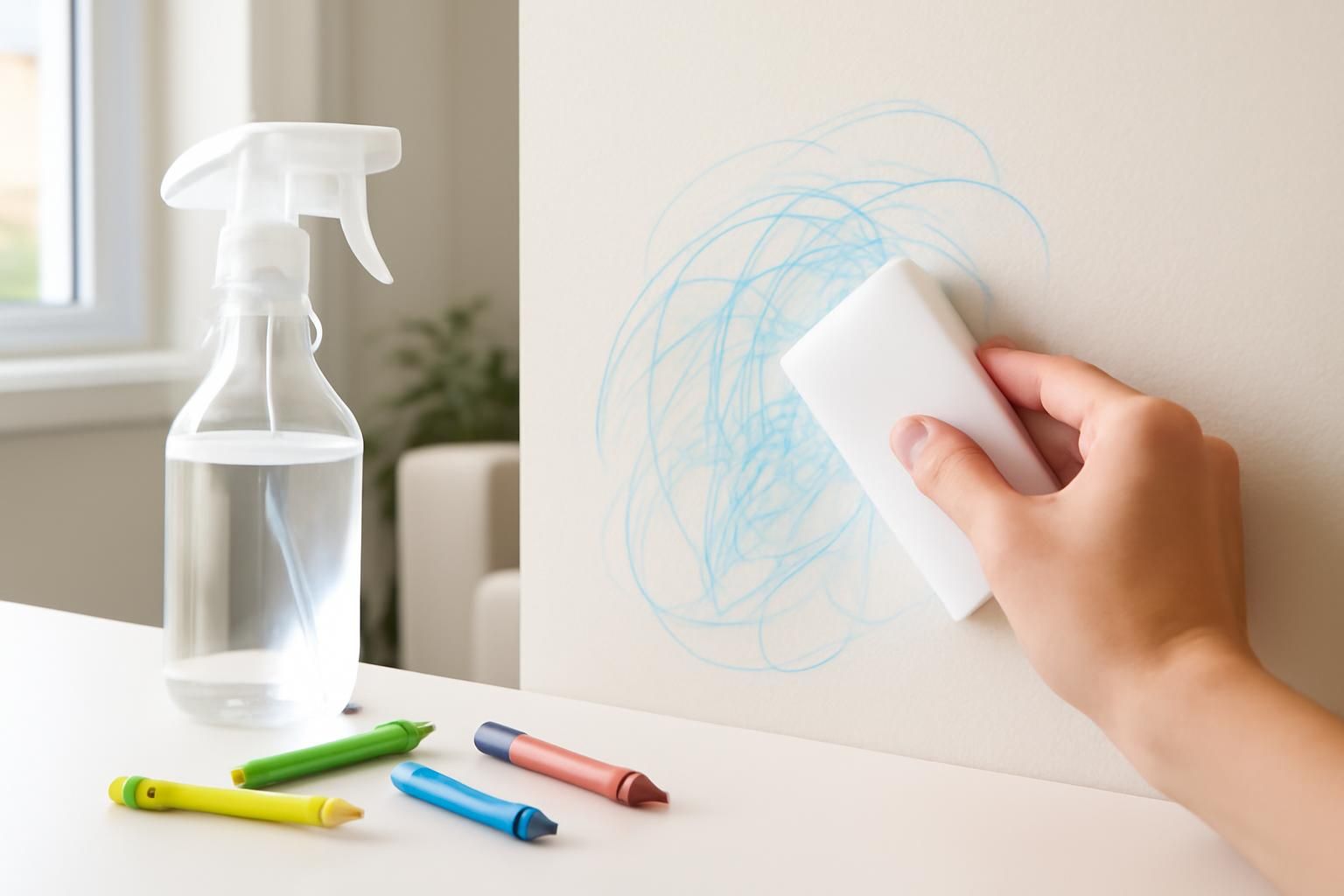
Tackle stubborn marks with a magic eraser
If a faint mark is still visible, gently rub it with a damp magic eraser. Test it on an inconspicuous patch first. Do not scrub hard, as the melamine foam can dull some paint finishes.
A hairdryer blows hot air. Keep it away from water and do not let children hold it. Do not overheat the paint, as blistering can occur.
Common mistakes
- Scrubbing hard with abrasive pads that strip the paint
- Using gel toothpaste, which often contains dyes that add colour
- Applying water directly to wallpaper instead of spot-treating gently
- Forgetting to test the magic eraser on a hidden area first
Frequently asked
Will these methods damage matte paint?
They are safe for most emulsion finishes if you rub gently. Matte paint can be more delicate, so test any method behind furniture first.
Can I use this on wallpaper?
Use only a damp cloth and a tiny amount of paste. Too much water can soak through wallpaper seams and loosen the adhesive.
What if the mark is still there after cleaning?
If pigment has soaked into porous paint, you may need to touch up the area with matching paint after cleaning.