Quick answer
Mix warm water with a few drops of washing-up liquid. Wring the cloth almost dry, wipe from the top down, and dry with a second cloth. For stubborn grease, use a bicarbonate of soda paste. Never use undiluted vinegar on painted or lacquered wood.
Cooking grease settles on cabinet doors and tops as a sticky film that attracts dust. The right method depends on the finish: painted, laminate, and vinyl-wrapped cabinets tolerate mild soapy water, while real wood and lacquered finishes need gentler treatment. Always test on a hidden spot first.
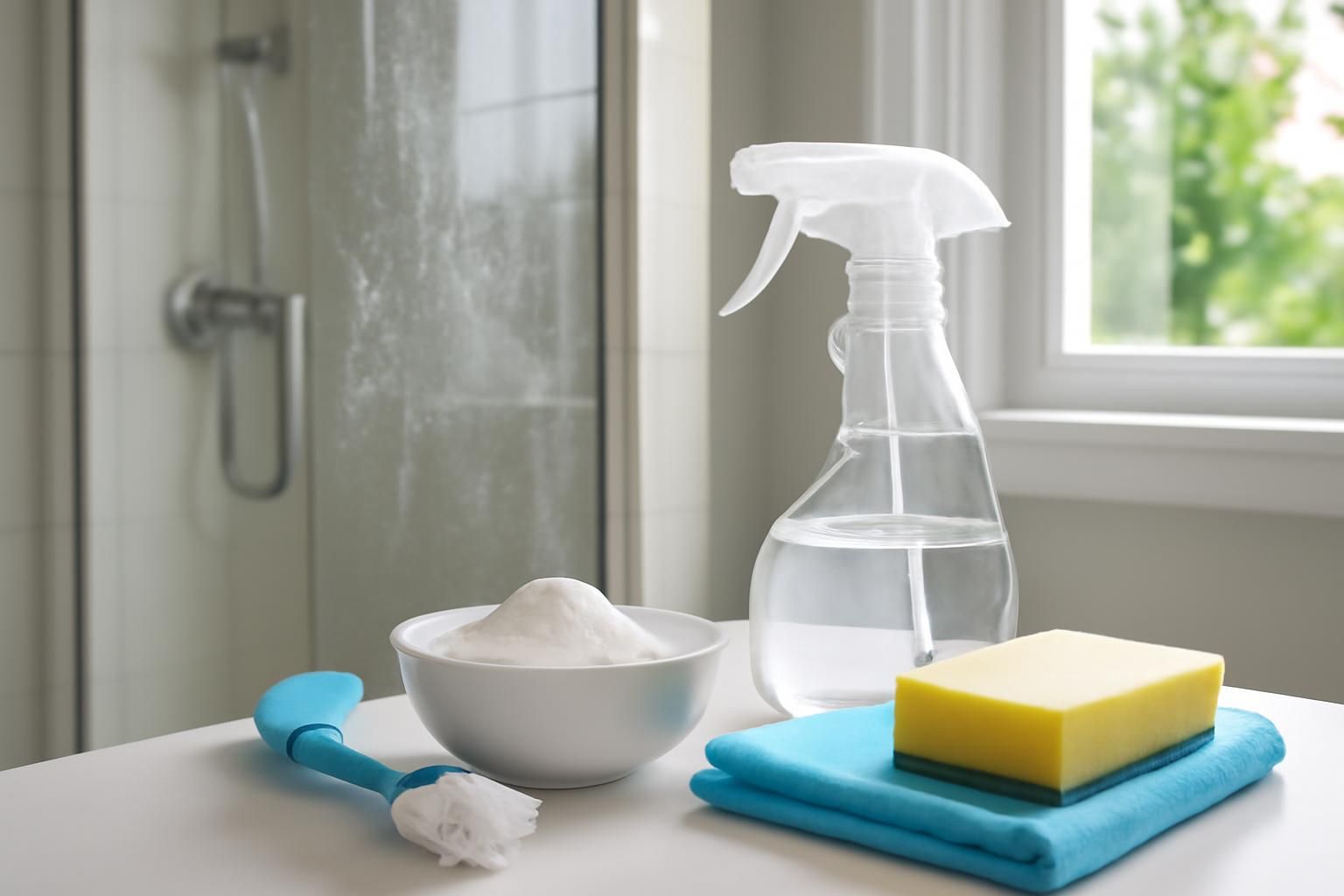
What you’ll need
- Warm water
- Washing-up liquid
- Two soft microfibre cloths
- Bicarbonate of soda
- Small bowl
- Step stool (optional)
Step by step
- 1
Test first
Dab your chosen cleaner on the inside of a door hinge or another hidden area. Wait five minutes, then wipe and check for discolouration or dulling before you clean the whole surface.
- 2
Mix the cleaner
Fill a bowl with warm water and add a few drops of washing-up liquid. For glass splashbacks or tile, a 50/50 mix of white vinegar and water works well; do not use this undiluted on painted or lacquered wood.
- 3
Wipe from the top down
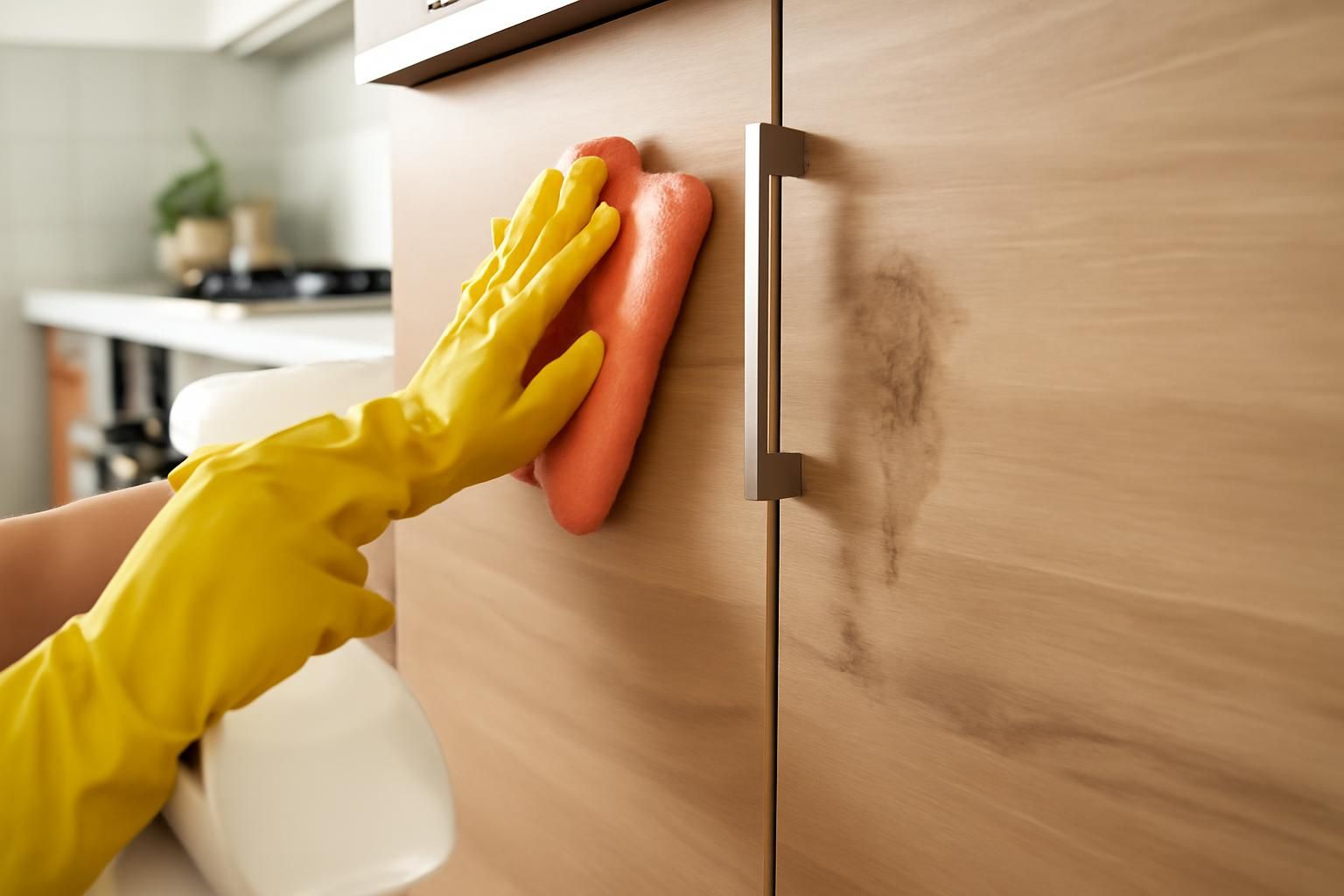
Start with the cabinet tops, where grease is thickest. Dip one cloth in the solution, wring it almost dry, and wipe in smooth strokes. Follow immediately with the dry cloth so no water sits on edges or seams.
- 4
Tackle stubborn grease
For baked-on spots, make a paste from bicarbonate of soda and a little water. Apply with the damp cloth, rub gently, then wipe clean and dry. Do not use abrasive scourers on gloss or lacquered surfaces.
- 5
Finish and maintain
Dry all surfaces thoroughly. Make a habit of a quick wipe after cooking to prevent heavy build-up.
Never mix bleach with acids or ammonia, and check whether your washing-up liquid contains bleach before adding vinegar. Undiluted vinegar and citrus-based cleaners can strip or dull painted, lacquered, and some vinyl finishes. Soaking a cloth so that drips run into door-frame joins causes swelling and delamination over time.
Common mistakes
- Using undiluted vinegar or citrus cleaners on matt-painted cabinets, which dulls and strips the finish.
- Scrubbing with an abrasive scourer on gloss or lacquered doors, leaving permanent scratches.
- Soaking the cloth so water drips into joints, causing swelling and delamination.
- Skipping the test patch and discovering discolouration across a whole door.
Frequently asked
What is the best homemade degreaser for kitchen cupboards?
Warm water with a few drops of washing-up liquid is safe for most finishes. For stubborn grease, a paste of bicarbonate of soda and water works well without harsh chemicals.
How do I remove the sticky residue that builds up on top of kitchen cabinets?
Wipe the tops first with warm soapy water and a well-wrung cloth. If the film is thick, lay a damp soapy cloth over the spot for two minutes to soften it, then wipe and dry.
Can I use washing-up liquid on real wood cabinet doors?
Yes, if diluted and applied with a well-wrung cloth. Wipe up immediately with a dry cloth and do not let water pool on the surface or seep into joints.