Quick answer
Soak old cloths or kitchen paper in white vinegar. Wrap them tightly around the tap spout and aerator. Secure with rubber bands. Leave for fifteen to thirty minutes. Remove the cloths and scrub remaining deposits with an old toothbrush. Rinse and buff with a dry cloth.
Hard water leaves chalky white deposits on taps. These look unsightly and can block water flow. Vinegar dissolves the calcium build-up without harsh chemicals.
What you’ll need
- white vinegar
- old cloths or kitchen paper
- rubber bands
- old toothbrush
- lemon juice
- spray bottle
Step by step
- 1
Prepare the vinegar wrap
Soak a cloth or a few sheets of kitchen paper in white vinegar. Wring them out slightly so they are wet but not dripping.
- 2
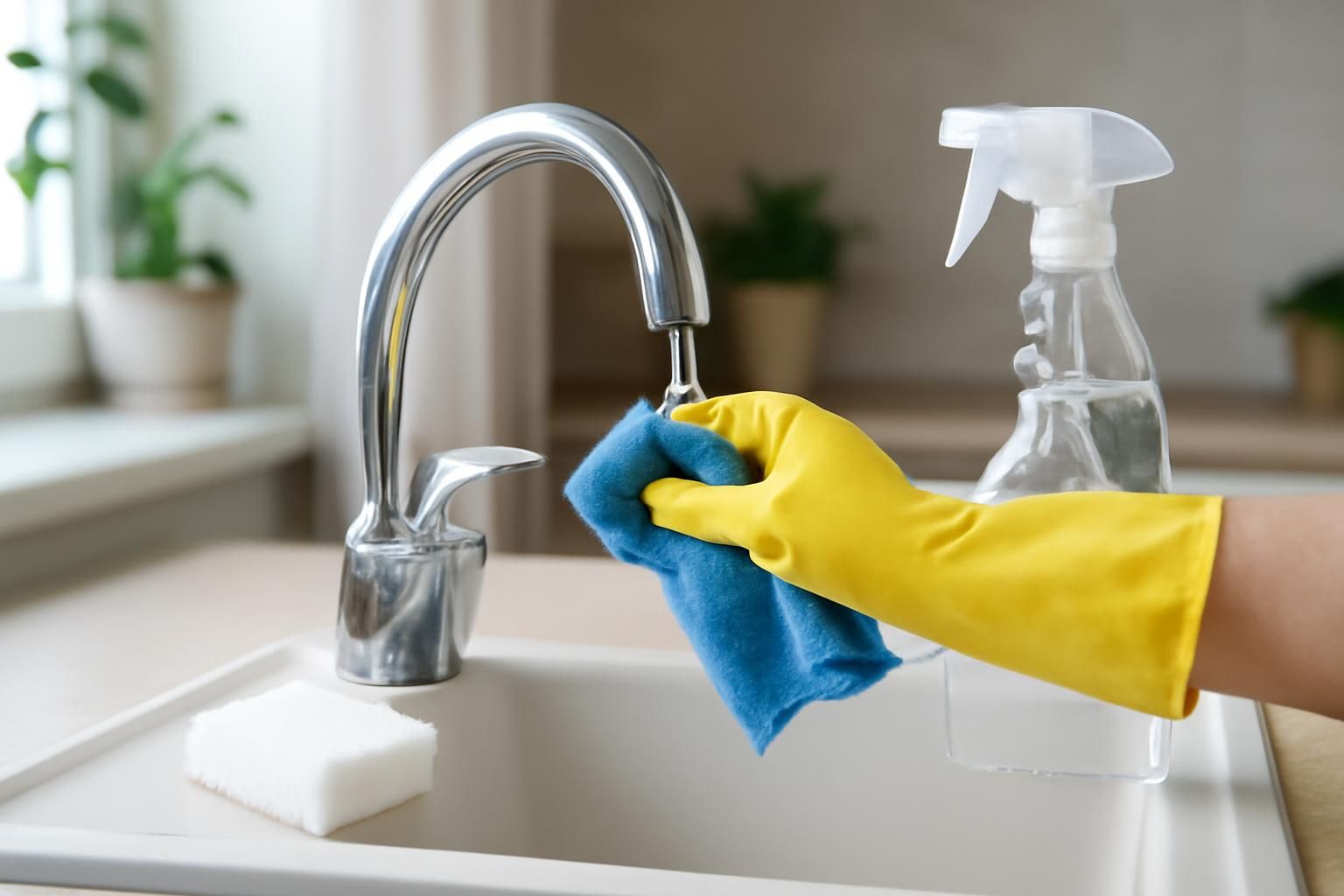
Wrap the tap spout
Press the soaked cloth firmly around the spout, especially where limescale is thickest. Wrap the aerator at the tip as well.
- 3
Secure with rubber bands
Stretch rubber bands around the cloth to hold it in place. Make sure the vinegar-soaked material touches all crusted areas.
- 4
Wait fifteen to thirty minutes
Leave the wrap to work. For thick build-up, check after fifteen minutes and re-wet the cloth if it has dried out.
- 5
Scrub away residue
Remove the cloth. Scrub the tap with an old toothbrush dipped in fresh vinegar or lemon juice. Pay attention to the aerator mesh and base seams.
- 6
Rinse and polish
Run the tap to flush out loosened flakes. Wipe the whole fixture with a damp cloth, then buff it dry for a shiny finish.
Do not use vinegar on plated or gold-finished taps without care. On plated or gold-finished taps, limit vinegar contact to about 15 minutes and rinse immediately — prolonged acid contact dulls the finish. Test on a hidden spot first.
Common mistakes
- Using a metal scouring pad that scratches chrome
- Leaving vinegar on gold-plated taps for hours
- Forgetting to clean the aerator, which affects water pressure
- Rinsing with cold water before scrubbing, which hardens residue again
Frequently asked
Can I use lemon juice instead of vinegar?
Yes. Lemon juice works well and smells fresher. It contains citric acid that dissolves calcium deposits effectively.
How do I clean inside the aerator?
Unscrew the aerator with pliers wrapped in cloth to protect the finish. Soak the parts in vinegar, then poke debris out of the holes with a toothpick.
Will this work on shower heads too?
Yes. Submerge a detachable shower head in a bowl of vinegar. For fixed heads, fasten a vinegar-filled bag over it with a rubber band.