Quick answer
Fill the kettle with equal parts white vinegar and water, or one tablespoon of citric acid per 500 ml of water. Boil, leave to soak for an hour, then scrub gently with a soft cloth or toothbrush. Rinse the filter and spout, then boil and discard one full kettle of plain water to clear any residue.
Limescale is calcium carbonate left behind when hard water is heated. It coats the heating element, slows boiling and can flake into your drinks. If you live in a hard-water area such as London, the South East or East Anglia, descale every 1–3 months. In soft-water areas such as Scotland, Wales or the South West, every 6–12 months is usually enough.
What you’ll need
- White vinegar or citric acid
- Water
- Soft cloth
- Old toothbrush
Step by step
- 1
Prepare the descaling solution
Choose either white vinegar or citric acid. For vinegar, fill the kettle halfway with white vinegar and top up with water to the maximum fill line. For citric acid, dissolve one tablespoon in 500 ml of water and pour it into the kettle.
- 2
Boil and soak
Switch the kettle on and let it boil. Turn it off and unplug it. Leave the solution to soak for at least one hour, or overnight for heavy scaling. The acid reacts with the calcium carbonate and breaks it down.
- 3
Scrub gently
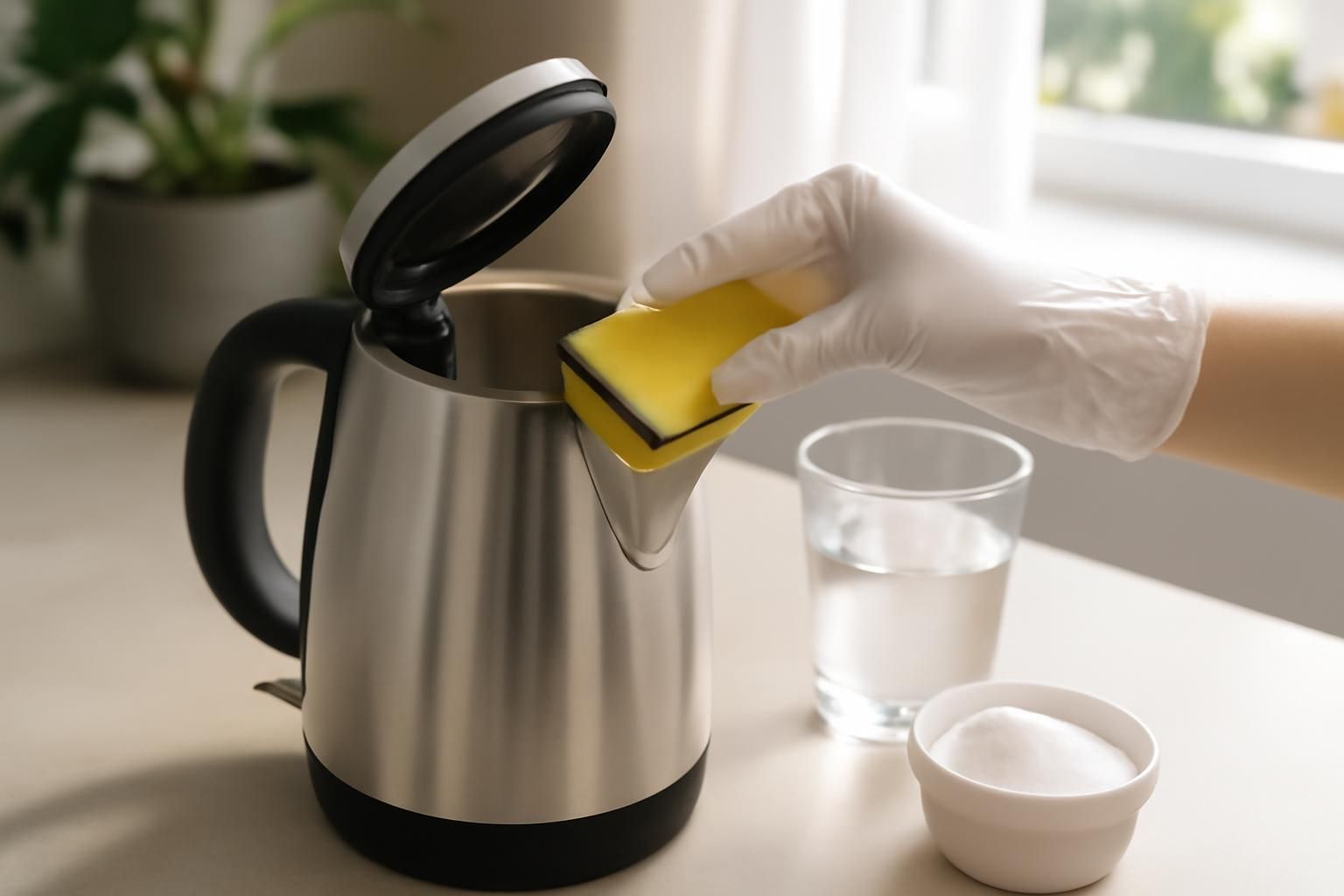
Pour out most of the liquid. Use a soft cloth or an old toothbrush to wipe the inside of the kettle, the element and the base. Dislodged scale should come away easily. Do not use a metal scourer on the element.
- 4
Clean the filter and spout
Remove the mesh filter if your kettle has one and rinse it under running water, rubbing away scale with your fingers or the toothbrush. Tip the kettle upside down and rinse the spout and lid hinge to flush out any flakes lodged there.
- 5
Rinse thoroughly
Fill the kettle with fresh water, boil it and pour it away. Repeat this boil-and-discard step at least once more. This removes any residual acidic taste so your next cup of tea does not taste of vinegar.
Never scrub the heating element with a metal scourer — it strips the protective coating and can damage the kettle permanently. Avoid undiluted vinegar, which may degrade rubber seals and leave a taste that persists for multiple boils. If the kettle casing is cracked or the element shows visible damage, replace the appliance rather than attempting further descaling.
Common mistakes
- Using undiluted vinegar, which can damage rubber seals in some kettles and leaves a taste that persists for multiple boils.
- Scrubbing the heating element with a metal scourer — this strips the protective coating and accelerates future scaling.
- Forgetting to descale the spout and lid hinge area where scale flakes lodge and end up in drinks.
Frequently asked
Can I use lemon juice instead of vinegar or citric acid to descale a kettle?
Yes, lemon juice works because it contains citric acid. Use the juice of two lemons mixed with water, or dilute bottled lemon juice to roughly the same strength. It is safe and leaves a fresher smell than vinegar, though it may cost more.
Will descaling remove the brown stains on the outside of the kettle?
No. The methods described here only tackle limescale inside the kettle. Brown stains on the outside are usually discolouration from heat, water marks or surface rust on metal parts. Wipe the exterior with a damp cloth and a little washing-up liquid.
How do I know if my water is hard enough to need regular descaling?
Look up your local water hardness on your supplier's website. Above 200 parts per million is considered hard. You can also judge by how quickly limescale returns: if you see white flakes in the kettle within a month of cleaning, you are in a hard-water area and should descale regularly.