Quick answer
Rub a small amount of mayonnaise or petroleum jelly into the watermark with a soft cloth. Leave it for several hours or overnight, then buff away. For dark stains, make a paste of baking soda and white vinegar, rub gently and wipe clean.
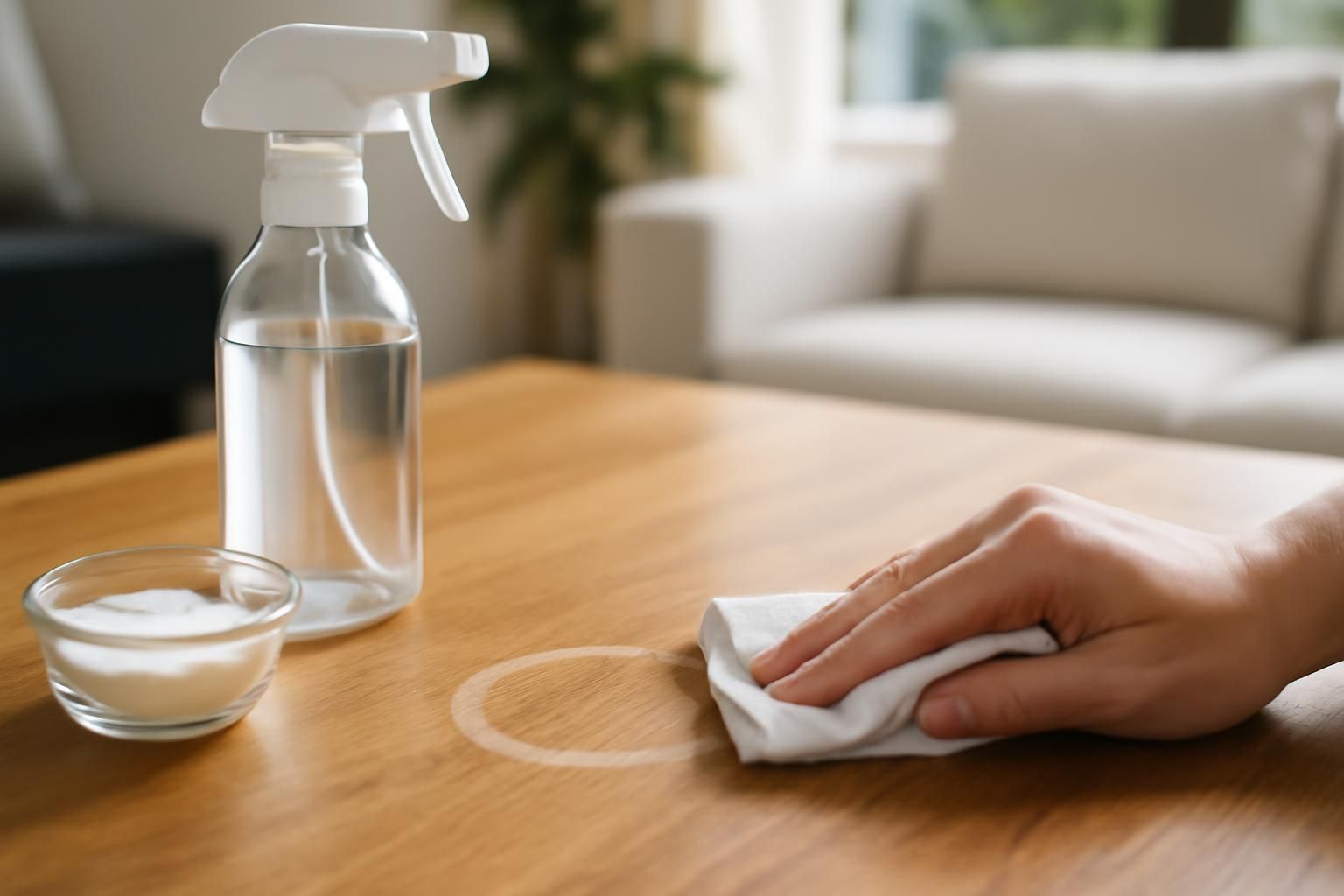
Watermarks on wood furniture fall into two types: white rings, where moisture is trapped in the finish, and dark stains, where water has reached the wood. You can treat both with items from your kitchen.
What you’ll need
- soft cloth
- mayonnaise or petroleum jelly
- baking soda
- white vinegar
- hairdryer
- furniture polish
Step by step
- 1
Identify the stain type
Look at the colour of the mark. A cloudy white ring means moisture is sitting in the finish. A dark brown or black patch means the water has penetrated the wood itself. Treat white rings first with oil; use the paste method for dark stains.
- 2
Apply mayonnaise or petroleum jelly
Spread a thin layer of mayonnaise or petroleum jelly over the white watermark with a soft cloth. The oils help displace the trapped moisture. Cover the area with a cloth if you are leaving it overnight to keep dust off.
- 3
Buff the area
Wait at least two hours, or leave it overnight for deeper rings. Wipe away the residue with a clean cloth and buff the wood in the direction of the grain. Inspect the mark.
- 4
Use a hairdryer for fresh rings
If the stain is new and white, set a hairdryer to low heat and hold it 15 to 20 centimetres above the mark. Move it in slow circles for a few minutes. The heat draws moisture out of the finish. Wipe and buff immediately afterwards.
- 5
Treat dark stains with baking soda paste
Mix a teaspoon of baking soda with a few drops of white vinegar to form a thick paste. Test on an inconspicuous area first, especially on dark-stained or open-grain wood, as the paste can lighten the grain. Dab it onto the dark stain with a cloth. Rub very gently along the grain for no more than a minute. Wipe away with a damp cloth and dry thoroughly.
- 6
Polish the surface
Once the mark has faded and the wood is dry, apply a small amount of furniture polish to a soft cloth. Buff the entire surface evenly to restore the sheen and protect the finish.
Keep a hairdryer on low heat and do not hold it close to the wood. Excessive heat can damage the finish or warp veneer. Do not use sandpaper unless you plan to refinish the whole piece.
Common mistakes
- Rubbing across the wood grain, which creates fine scratches
- Leaving mayonnaise on for days, which turns rancid and smells
- Using too much vinegar on an open-grain wood, which can bleach it
- Applying polish before the wood is fully dry, trapping moisture inside
Frequently asked
Will this work on veneered furniture?
Yes, but be extra gentle. Veneer is thin and easy to wear through. Avoid abrasive pastes and test any method on the underside first.
Can I use an iron and cloth instead of a hairdryer?
Some people place a cloth over the ring and iron on low heat. This can work, but it risks heat damage. A hairdryer is safer and gives you more control.
What if the dark stain will not budge?
Deep stains may need oxalic acid or professional refinishing. If the paste does not lift it after two attempts, consult a furniture restorer.