Quick answer
Scrape algae, vacuum gravel, rinse filter media in old tank water, then replace 25–30 % with dechlorinated water matched to tank temperature.
Fish tanks need regular cleaning, but a full strip-down kills fish. The goal is a partial water change that removes waste while preserving the beneficial bacteria that keep the water safe. This guide explains the correct order and what never to do.
What you’ll need
- Gravel vacuum or siphon
- Algae scraper or pad
- Clean bucket (never used for chemicals)
- Dechlorinator
- Thermometer
- Fish net (optional)
Step by step
- 1
Turn off equipment
Switch off the filter, heater, and any air pumps before you start. This prevents the filter from running dry and the heater from cracking when exposed to air.
- 2
Scrape algae from the glass
Use an algae scraper or pad to clean the inside glass. Work from top to bottom. Do not use soap or household cleaners — even residue is toxic to fish. Rinse the scraper in old tank water only.
- 3
Vacuum the gravel
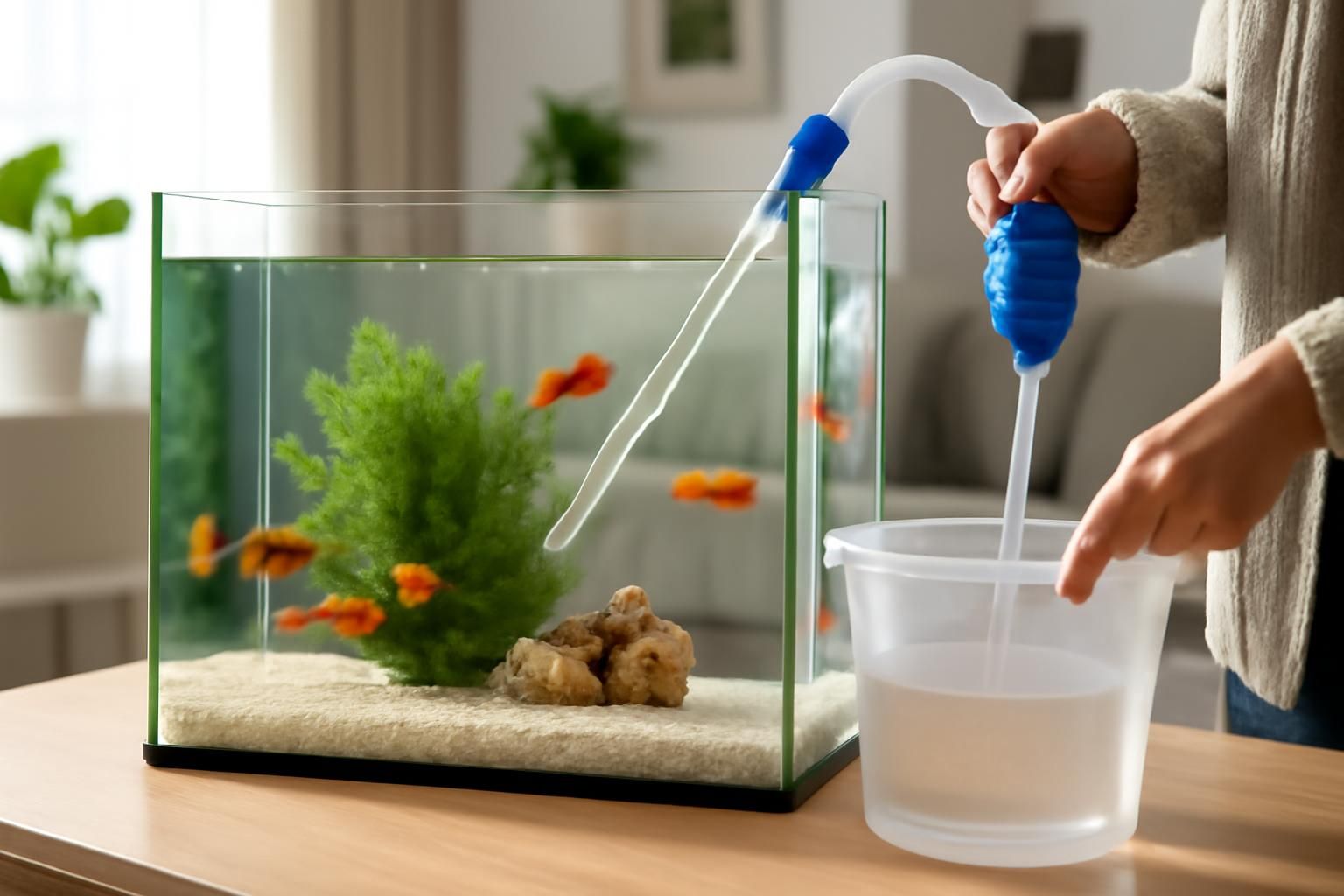
Push the gravel vacuum into the substrate to lift detritus and uneaten food. Siphon the dirty water into your bucket. Remove no more than 25–30 % of the total water volume.
- 4
Rinse filter media
Remove sponge or ceramic media from the filter. Rinse it gently in the bucket of old tank water you just removed. Never rinse under the tap — chlorine kills the bacteria that process ammonia.
- 5
Prepare replacement water
Fill a clean container with tap water. Add dechlorinator according to the label, or let the water stand for at least 24 hours. Match the temperature to the tank water with a thermometer before adding it.
- 6
Refill the tank
Pour the treated water slowly into the tank, aiming at a plate or your hand to avoid disturbing the gravel. Replace any decorations you moved. Wait 10 minutes, then switch the equipment back on.
Soap, bleach, and household cleaners are acutely toxic to fish and can kill them even in trace amounts. Never use these inside the tank or on any equipment. If you experience a mass die-off, cloudy water with a chemical smell, or fish gasping at the surface after cleaning, consult a specialist aquatic retailer immediately — diagnosing a poisoned or crashed tank is not a DIY fix.
Common mistakes
- Rinsing filter sponges under the tap — this kills beneficial bacteria and causes an ammonia spike within days.
- Doing a 100 % water change thinking it is more thorough — it strips bacteria and sends fish into shock.
- Not matching replacement water temperature to tank temperature before adding — sudden cold-water shock can kill tropical fish.
- Using the same bucket for household chemicals and fish water — residue is fatal.
Frequently asked
How often should I clean a fish tank?
Perform a 25–30 % water change every one to two weeks. Scrape algae and vacuum gravel during each change. Clean the filter media monthly by rinsing it in old tank water, not tap water.
Can I use tap water to top up my tank, and what should I add to it?
Tap water contains chlorine and chloramine that kill fish. Always add a dechlorinator according to the product label, or let the water stand for at least 24 hours before use.
My tank water looks clear but the fish seem stressed — what is wrong?
Clear water can still contain toxic ammonia or nitrite. Test the water with an aquarium test kit. Stressed fish after a water change usually means chlorine exposure, temperature shock, or a crashed nitrogen cycle.