Quick answer
Scratching is normal claw care and scent marking. Place a scratching post of matching orientation directly beside the scratched furniture. Cover the furniture with double-sided tape or foil. Reward your cat for using the post. Never punish scratching — it increases anxiety and makes the behaviour worse.
Cats scratch to maintain claws and leave scent marks. It is not spite or bad behaviour. Punishment backfires. The fix is to make an alternative surface more appealing than your sofa, right where the scratching already happens.
What you’ll need
- scratching post matching the furniture orientation
- double-sided tape or aluminium foil
- anti-scratch panels (optional)
- cat treats or clicker for reward
- nail caps (optional)
Step by step
- 1
Match the post to the scratching style
Watch how your cat scratches. A cat that scratches sofa arms wants a horizontal or angled scratcher. One that scratches carpet or curtains wants a vertical post. The texture and angle must match the preferred surface, or the cat will ignore it.
- 2
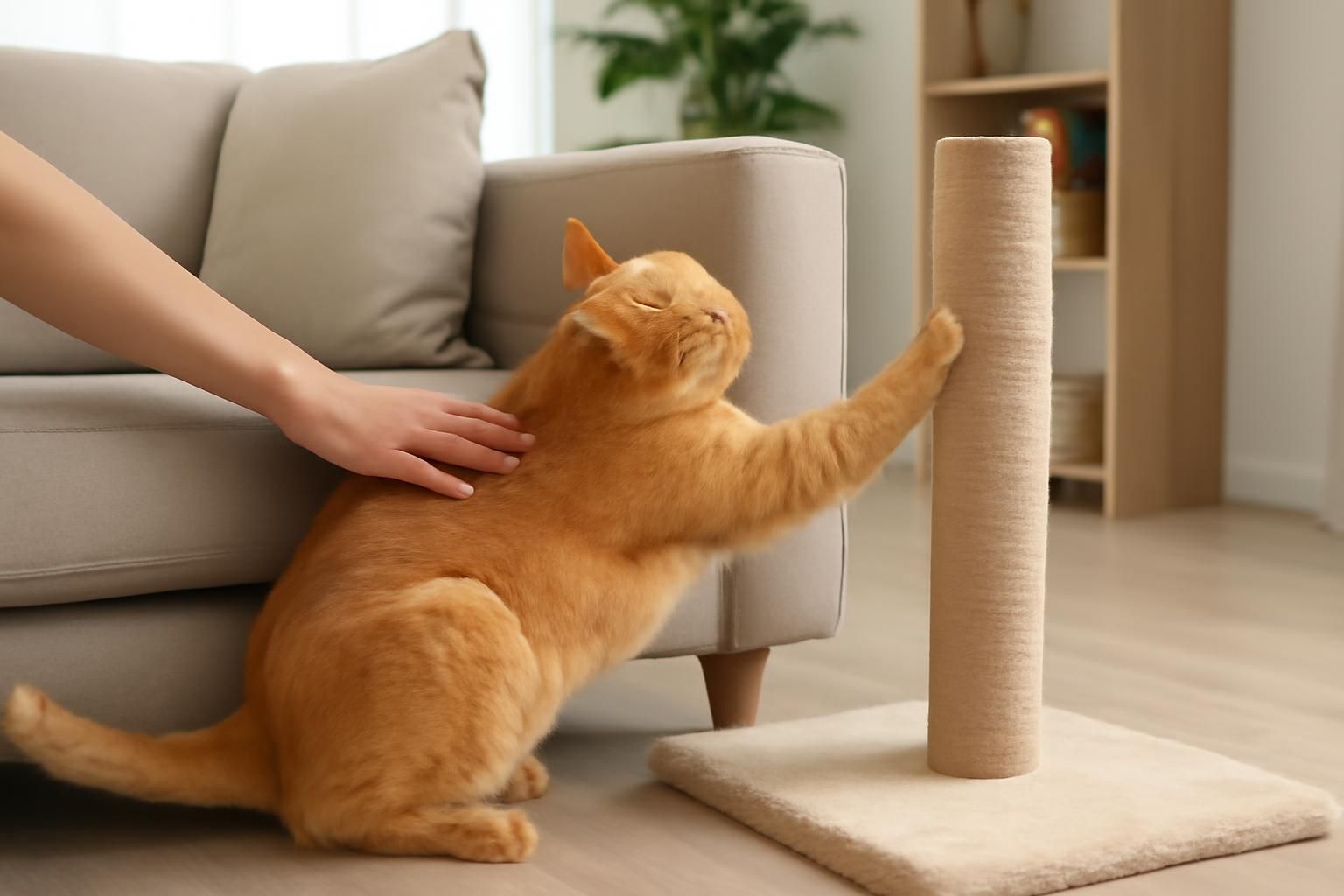
Place the post directly beside the target
Put the new post right next to the furniture being scratched, not in another room. Cats scratch in specific locations. The post must be the better option exactly where the habit already exists. Leave it there for at least two weeks before any gradual relocation.
- 3
Protect the furniture temporarily
Apply double-sided sticky tape, aluminium foil, or anti-scratch panels to the exact spots being targeted. Most cats dislike the texture. These deterrents give immediate relief while the new post habit builds. Remove them only once the cat consistently uses the post.
- 4
Reward the right choice
When your cat uses the post, reward immediately with a treat or clicker praise. Positive reinforcement cements the new habit faster than punishment ever could. Keep treats nearby so you can respond within seconds.
- 5
Consider nail caps for short-term protection
If you are in rented accommodation or protecting a valuable piece, nail caps can reduce damage while you train. They must be applied correctly and replaced every 4–6 weeks. They are a temporary measure, not a substitute for providing a proper scratching surface.
If your cat suddenly starts scratching much more than usual, or targets new areas, it may signal stress, pain, or a medical issue such as arthritis. Consult a vet to rule out physical problems before treating it purely as a behaviour issue. Never use physical punishment or spray devices — they increase anxiety and often make scratching more frequent.
Common mistakes
- Buying a single small post and placing it away from the scratched area — cats need the post to be a better option right where they already scratch, not a separate cat zone.
- Scolding or spraying the cat while scratching — this creates anxiety, which increases scratching frequency rather than reducing it.
- Giving up on the scratching post after a week — post adoption typically takes 2–4 weeks of consistent redirection before it becomes the default.
Frequently asked
My cat ignores the scratching post entirely — how do I make it more appealing?
Check the orientation matches your cat's style. Rub a little catnip on the post or hang a toy from the top. Place it directly beside the scratched furniture. Try a different material — sisal, cardboard, or carpet — until you find one your cat prefers.
Will trimming my cat's claws stop the damage?
Regular trimming reduces damage but will not stop scratching, because scratching is also about stretching and scent marking. Trim the sharp tips every 2–3 weeks using proper cat nail clippers, but always provide an acceptable scratching surface too.
Are there any sprays that safely deter cats from specific furniture?
Some commercial anti-scratch sprays use herbal scents cats dislike. Test on a hidden area first to check for staining. Sprays alone rarely work — they must be paired with an attractive post placed right next to the treated furniture.