Quick answer
Tighten the gland nut slightly or re-wrap the spindle with PTFE tape. If the leak is from the compression fitting below the valve, isolate the radiator, loosen the nut, check the olive, and retighten in quarter-turn increments. If the drip persists on a pressurised system, call a Gas Safe engineer.
A leaking radiator valve usually drips from one of two places: the packing gland at the top of the spindle, or the compression fitting where the valve meets the pipe. The fix differs for each, so look closely before you start. Most gland-nut leaks can be repaired without draining the system; compression-fitting leaks need the water isolated first.
What you’ll need
- Adjustable spanner
- PTFE tape
- Old towel or cloth
- Small container to catch drips
- Radiator bleed key (optional)
Step by step
- 1
Find the leak point
Dry the valve with a cloth and watch where the drip appears. A drip from the spindle or gland nut means the packing seal has failed. A drip from the nut below the valve body points to the compression fitting.
- 2
Fix a gland-nut leak
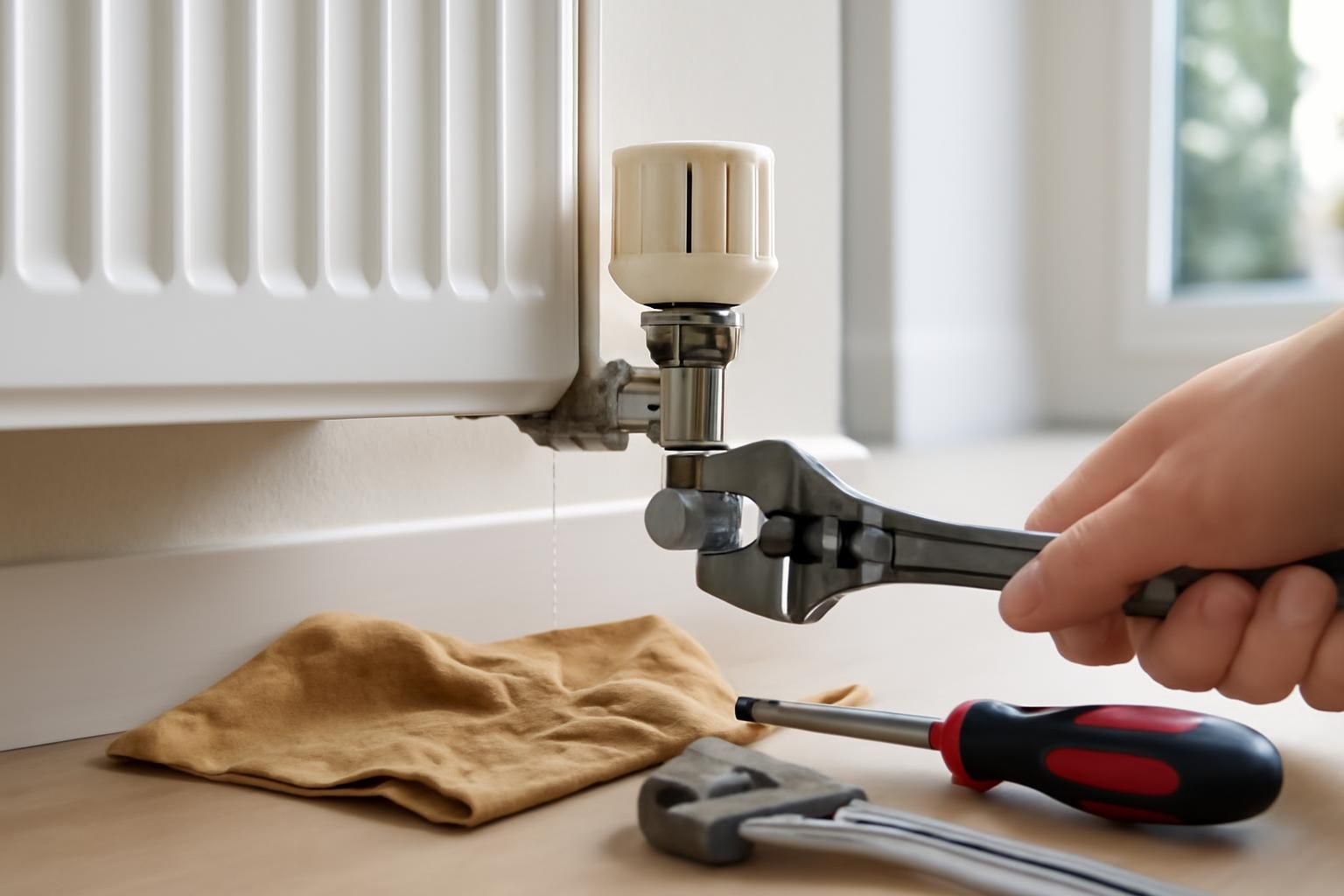
Turn the valve fully off. Hold the valve body with one spanner and loosen the gland nut just enough to lift it. Wind 3–5 turns of PTFE tape clockwise around the spindle thread so it tightens as the nut goes back on. Push the nut down and tighten firmly, but do not force it. Open the valve and check for drips.
- 3
Fix a compression-fitting leak
Close both radiator valves and place a towel and container underneath. Use a spanner to loosen the compression nut. Slide it back, inspect the olive for cracks or distortion, and replace it if necessary. Slide the nut forward and tighten by hand, then give it a quarter turn with the spanner. Test; add another quarter turn only if still dripping.
- 4
Re-check the system
Open the valves and wipe everything dry. Wait five minutes and check again. On a pressurised system, check the boiler pressure gauge. If pressure drops after the repair, the leak may have masked a deeper system fault.
A leaking valve on a pressurised heating system can hide low system pressure or a failing pressure-relief valve. If you fix the drip and the boiler pressure keeps falling, stop and call a Gas Safe registered engineer. Do not attempt to work on the boiler itself. When isolating a compression fitting, expect some water to escape; have towels and a container ready.
Common mistakes
- Tightening a compression nut with force instead of small increments, which crushes the olive and causes a worse leak.
- Wrapping PTFE tape anticlockwise so it unwinds as you tighten the nut.
- Using PTFE tape on the wrong thread type without checking first.
- Failing to isolate the radiator before loosening a compression fitting, causing a flood.
Frequently asked
Can I fix a leaking radiator valve without draining the whole system?
Yes. Most gland-nut leaks can be fixed with the system live. Compression-fitting repairs need both radiator valves closed, which isolates that single radiator without a full drain.
Why is my radiator valve leaking from the bottom after I just tightened it?
You have probably over-tightened the compression nut and crushed the olive. Loosen the nut, inspect the olive for damage, and replace it if necessary. Retighten in quarter-turn increments only.
Is a small drip from a radiator valve dangerous to ignore over winter?
A constant drip can corrode the valve and stain flooring. On a pressurised system it may also mask dropping boiler pressure. Fix it promptly; do not leave it.