Quick answer
Check where it's cold, ensure valves are open, free a stuck TRV pin, bleed for air, then call an engineer for sludge or boiler faults.
Diagnose why one radiator stays cold when others work, and fix the most common causes yourself.
What you’ll need
- Basic DIY
Step by step
- 1
Diagnose by where it's cold
Run the heating and feel the radiator. Cold at the top means trapped air. Cold at the bottom suggests sludge. Cold all over when other radiators are hot points to a valve or balancing issue. If every radiator is cold, the fault is at the boiler or pump.
- 2
Check the valves are open
Make sure the thermostatic radiator valve (TRV) is set to a number above zero and the lockshield valve at the opposite end is open. Someone may have turned either one off by accident.
- 3
Free a stuck TRV pin
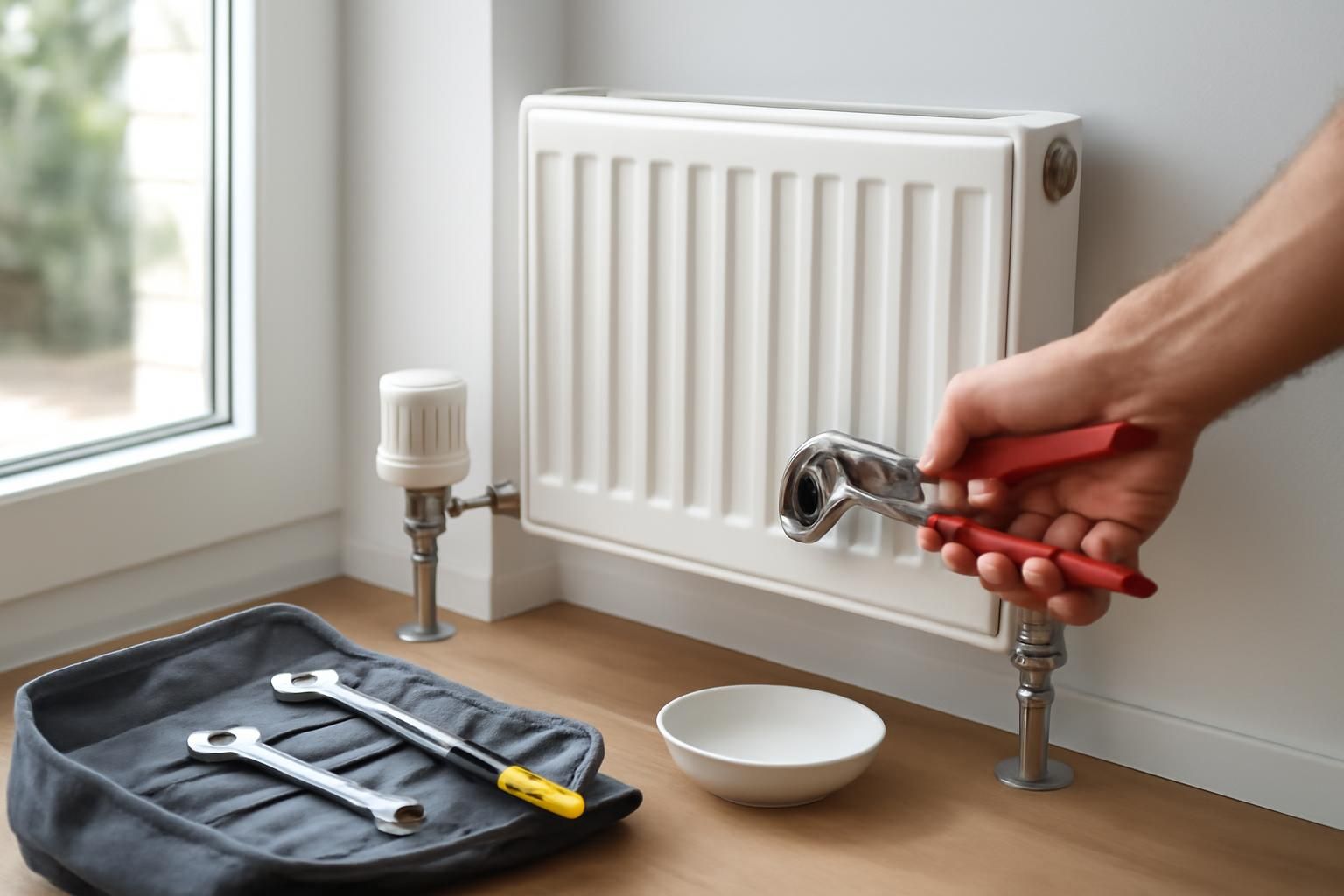
Remove the TRV head by unscrewing or pulling it according to the design. Look for the metal pin in the valve body. If it is depressed, press it gently with the edge of a spanner a few times until it springs up and down freely. Replace the head.
- 4
Bleed for trapped air
With the heating off and the radiator cold, open the bleed valve at the top with a bleed key. Let the air hiss out until water runs steadily, then close the valve. Catch drips with a cloth.
- 5
Check lockshield and balancing
If the radiator furthest from the boiler is always coolest, the system may need balancing. This involves adjusting lockshield valves across the house to even out flow. It is safe to open a partially closed lockshield, but full system balancing is best done by a heating engineer.
- 6
Identify sludge buildup
A radiator that is cold at the bottom but warm at the top usually has a sludge buildup blocking water flow. Flushing the radiator yourself rarely fixes this. A power flush by a qualified heating engineer is the proper cure.
- 7
Know when it's a boiler or system issue
If all radiators are cold, check the boiler display for fault codes and verify the pressure gauge reads around 1–1.5 bar. Top up pressure via the filling loop if needed. Do not open the boiler casing. Persistent faults need a Gas Safe engineer.
Common mistakes
- Assuming one fix when the symptom location points elsewhere, such as bleeding a radiator that is cold at the bottom.
- Not realising the TRV pin is stuck down, which is fixed by a gentle tap or wiggle.
- Treating a sludge blockage as a DIY job instead of calling a heating engineer for a power flush.
Frequently asked
My radiator is cold at the bottom but warm at the top — why?
This pattern usually means sludge or rust has settled at the bottom and is blocking water flow. A power flush by a heating engineer is the most effective solution. Bleeding will not help because the problem is not air.
How do I free a stuck radiator valve (TRV) pin?
Remove the TRV head, then press the small metal pin in the valve body gently with the edge of a spanner. It should move up and down freely. If it is seized, a few light taps can free it. Replace the head and test the heating.
Only the radiator furthest from the boiler is cold — what's wrong?
The system is probably unbalanced. Water takes the path of least resistance, so radiators near the boiler get more heat. A heating engineer can balance the system by adjusting lockshield valves to even the flow.
All my radiators are cold — is it the boiler?
Yes. Check the boiler pressure, timer settings, and any fault codes on the display. If the pressure is low, top it up with the filling loop. If the boiler will not fire or shows an error code, call a Gas Safe engineer.
When does a cold radiator need a power flush?
If the radiator is cold at the bottom, makes knocking noises, or stays cold after bleeding and valve checks, sludge is likely. A power flush circulates cleaning chemicals through the system to remove it. This is not a DIY task.