Quick answer
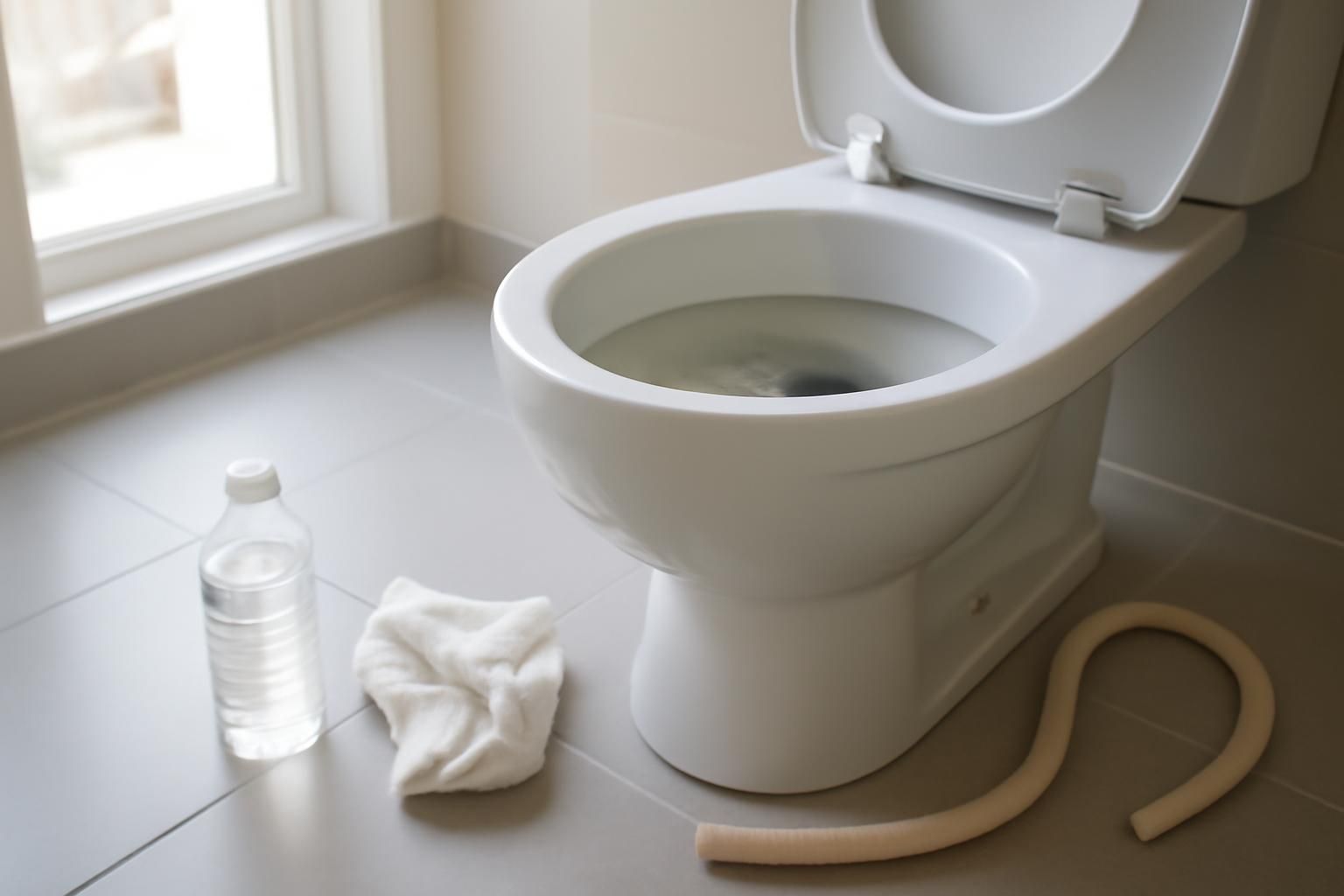
Pour a generous squirt of washing-up liquid into the bowl. Wait five minutes. Add a bucket of hot tap water from waist height. If the water level drops, flush. For stubborn blocks, pour in baking soda followed by vinegar, wait twenty minutes, then add hot water. A straightened wire coat hanger can break up solid obstructions near the top of the pipe.
A blocked toilet is unpleasant but you can usually clear it without a plunger. Household items like washing-up liquid, hot water and a wire coat hanger are often enough to break up the obstruction.
What you’ll need
- washing-up liquid
- hot tap water
- baking soda
- white vinegar
- wire coat hanger
- rubber gloves
- bucket
Step by step
- 1
Put on rubber gloves
Remove any items from the floor around the toilet. Lay down old towels in case of splashes. Keep children and pets out of the bathroom while you work.
- 2
Pour in washing-up liquid
Squeeze a large amount into the bowl. The soap lubricates the pipe and helps break up waste. Wait five minutes before the next step.
- 3
Add hot water
Fill a bucket with hot water from the tap. Pour it into the bowl from waist height. The force and heat can dislodge the blockage. Wait to see if the water level drops.
- 4
Use baking soda and vinegar
If the toilet is still blocked, pour one cup of baking soda into the bowl. Follow with two cups of white vinegar. Wait twenty minutes for the fizzing reaction to work.
- 5
Flush with hot water again
Pour another bucket of hot tap water into the bowl. Check if the water drains freely. If it does, flush once to confirm the blockage is gone.
- 6
Break up the blockage manually
Unwind a wire coat hanger and wrap the end in an old cloth. Insert it gently into the drain and twist to break up solid matter near the top. Pull out any debris.
Do not pour boiling water into the toilet. Boiling water can crack the porcelain bowl. Do not use chemical drain cleaners unless the manufacturer states they are safe for toilets. Wear rubber gloves to protect your skin from bacteria.
Common mistakes
- Flushing repeatedly when the water is high. This causes an overflow.
- Using boiling water instead of hot tap water.
- Pouring in too much baking soda and vinegar at once. This creates foam that can overflow.
- Pushing the wire hanger too far down and scratching the ceramic or pipe.
Frequently asked
Can I use bleach to unblock a toilet?
Bleach disinfects but does not break up blockages. It can also react dangerously with other chemicals. Stick to soap, water and mechanical methods.
What if none of these methods work?
The blockage may be deep in the soil pipe. Call a plumber or hire a drain rod set to clear it from the outside.
Should I keep flushing to push the blockage through?
No. If the water level is high, extra flushing can flood the bathroom. Wait for the water level to drop before flushing again.