Quick answer
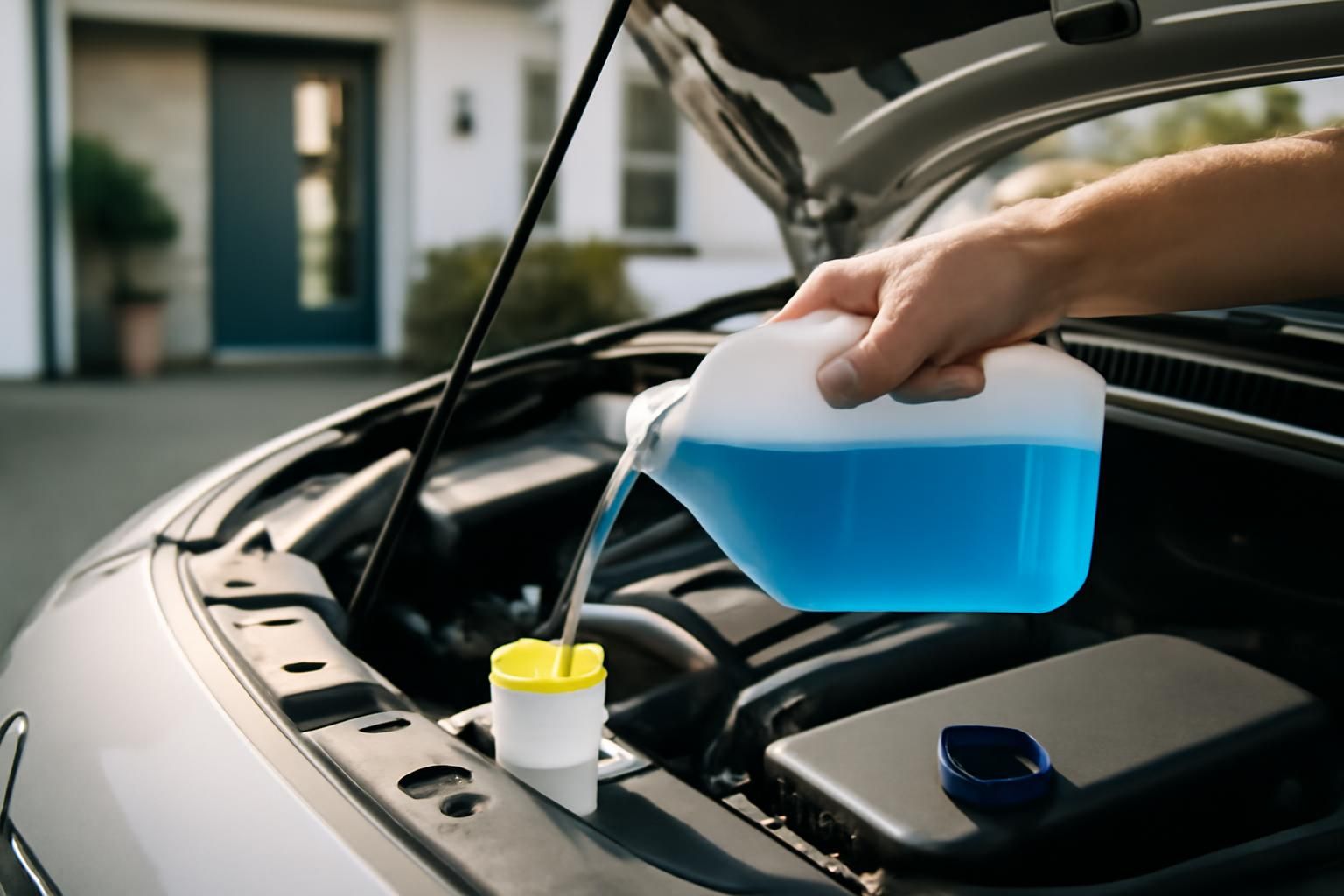
Open the bonnet and find the blue-capped reservoir with the windscreen symbol. Pour in ready-mixed screen wash or diluted concentrate up to the MAX line, then refit the cap.
Your windscreen washers stop working when you need them most because the reservoir ran dry. Topping up screen wash is a two-minute job, but choosing the wrong cap or fluid can damage your car or leave you with a frozen reservoir in winter.
What you’ll need
- Screen wash fluid (ready-mixed or concentrate)
- Water (for diluting concentrate)
- Funnel (optional)
Step by step
- 1
Find the correct reservoir
Open the bonnet. Look for a blue or light-coloured cap with a windscreen-and-wipers symbol. The reservoir is usually on one side of the engine bay. Do not open caps marked with a thermometer or brake symbol — those are coolant and brake fluid, and adding screen wash to either will damage the system.
- 2
Check the current level
Peer inside the filler neck or look at the translucent side of the reservoir. Most have a MAX line marked on the plastic. If the level is well below it, the pump may already be pulling air and wearing itself out.
- 3
Choose and prepare the fluid
If you bought ready-mixed fluid, pour it straight in. If you have concentrate, dilute it according to the label: roughly 1 part concentrate to 10 parts water for summer, and 1 part to 3 parts water — or use it neat — for winter in hard-freeze areas. Never use plain water year-round; it freezes, cleans poorly, and can harbour bacteria that aerosolise through the cabin vents.
- 4
Fill to the MAX line
Pour the fluid in steadily. Stop when the liquid reaches the MAX line on the reservoir wall or filler neck. Overfilling causes the cap to weep fluid onto the engine bay when the car moves.
- 5
Refit the cap and test the jets
Push the cap down firmly until it clicks. Get back in the car and pull the washer stalk. If the spray is weak or uneven, the jets may be blocked with limescale rather than empty. Clear them by pushing a pin or fine needle into each nozzle and wiggling gently.
The biggest hazard is opening the wrong reservoir. Brake fluid is corrosive and coolant is toxic; adding screen wash to either reservoir causes serious damage. Double-check the cap symbol before you pour. If you get screen wash or any fluid in your eyes, rinse with plenty of water.
Common mistakes
- Adding neat concentrate to a reservoir that already contains dilute fluid — the resulting mix is too strong and leaves a sticky residue on the glass.
- Using washing-up liquid as a substitute — it froths at speed, obscures your vision, and can corrode the rubber seals around the jets.
- Ignoring the dashboard warning light for weeks — running the pump dry burns out the motor and may crack the reservoir if fluid freezes.
Frequently asked
How often should I top up screenwash — is there a mileage interval?
There is no fixed mileage interval. Check the level every few weeks, and more often in winter or if you use the washers frequently. Top up as soon as the warning light appears.
Can I use the same screenwash for my rear windscreen and headlight washers?
Yes. Most cars feed the rear screen and headlight washers from the same reservoir. The fluid type and dilution are identical.
My washer jets spray to the side rather than the screen — how do I adjust them?
Park the car on level ground facing a wall. Activate the washers and note where the spray lands. Insert a pin into the nozzle and gently pivot the jet until the spray hits the centre of the windscreen.