Quick answer
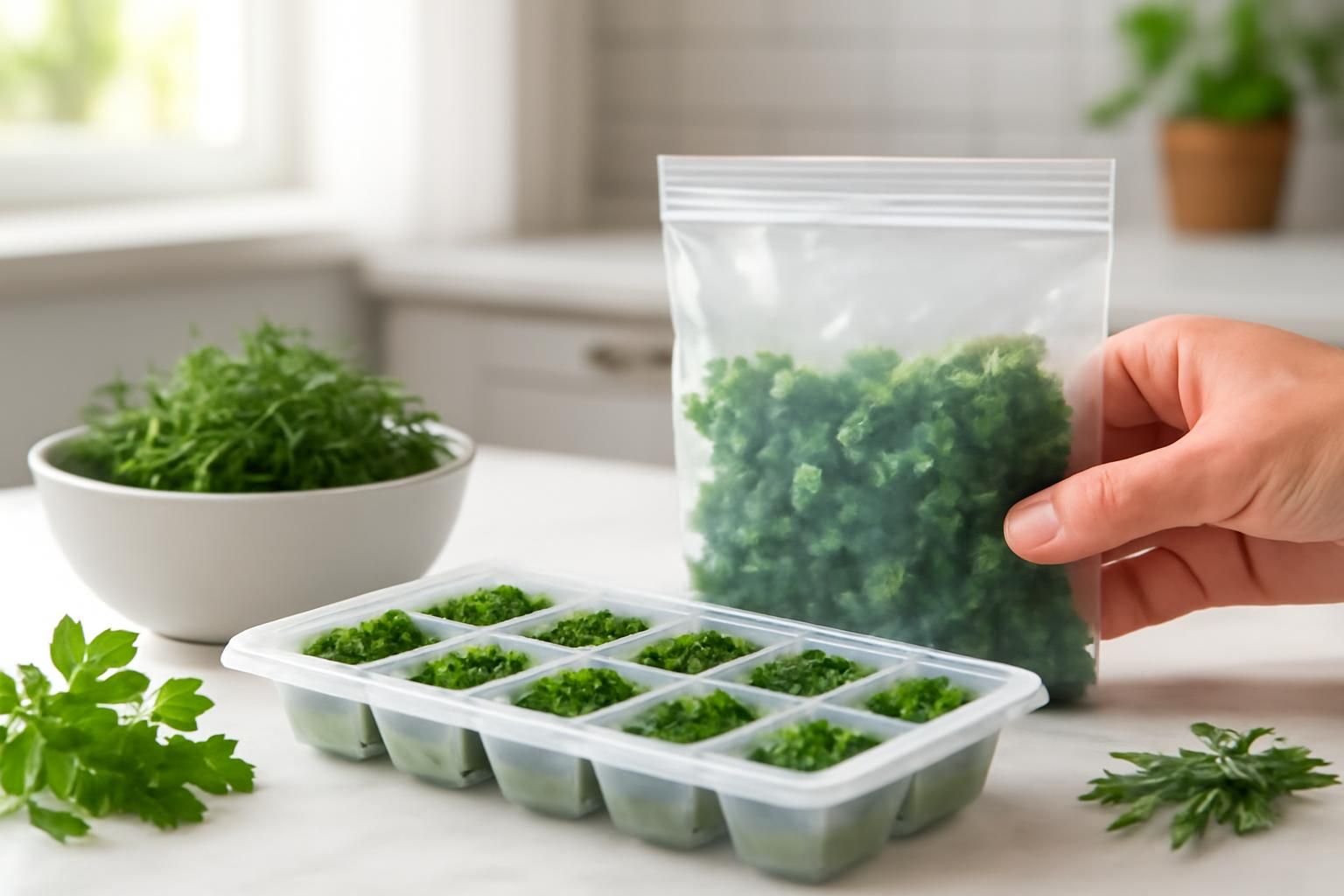
Wash and dry herbs thoroughly. Strip hardy herbs such as rosemary and thyme from the stem and freeze whole in zip-lock freezer bags. Chop soft herbs such as basil and coriander, mix with olive oil, and freeze in ice-cube trays. Decant into labelled bags and use within three months for cooking.
Fresh herbs wilt quickly in the fridge. Freezing preserves their flavour for cooking, though the texture softens and they are no good for garnishing. The method depends on the herb: hardy herbs freeze well whole, while soft herbs need oil or blanching to stop them turning black.
What you’ll need
- Fresh herbs
- Olive or neutral oil
- Ice-cube trays
- Zip-lock freezer bags or rigid freezer containers
- Kitchen paper
- Labels and permanent marker
Step by step
- 1
Sort and wash the herbs
Separate hardy herbs — rosemary, thyme, sage, oregano — from soft herbs — basil, coriander, parsley, chives. Wash under cold water and dry completely on kitchen paper. Wet herbs form large ice crystals that destroy cell structure.
- 2
Freeze hardy herbs whole
Strip the leaves from woody stems. Spread the leaves in a single layer on a tray and freeze for an hour. This stops them clumping. Transfer to a zip-lock freezer bag, press out the air, seal, and label with the name and date.
- 3
Blanch basil leaves
Basil turns black when frozen raw. Drop the leaves in boiling water for five seconds, then plunge into ice water. Pat completely dry. This preserves the bright green colour and stops enzymatic browning.
- 4
Make oil cubes for soft herbs
Chop soft herbs finely and pack into ice-cube trays. Cover with olive oil or a neutral oil and freeze solid. Once frozen, pop the cubes out and store in labelled freezer bags. One cube is roughly one tablespoon and can go straight into a hot pan.
- 5
Label everything
Frozen herbs look identical. Write the herb name, date frozen, and intended use — soup, sauce, marinade — on every bag. Use proper freezer bags or rigid containers; thin sandwich bags allow freezer burn within two to three weeks.
The biggest hazard is food waste from improper storage, but there is also a hygiene risk. Herbs must be clean and completely dry before freezing to prevent bacterial growth on thawing. Do not freeze herbs that are already wilting or slimy. Always thaw in the pan or dish, not at room temperature. Frozen herbs are for cooking only; do not use them raw in salads or as garnish.
Common mistakes
- Freezing basil leaves whole without blanching or coating in oil. They turn black within days and become unpalatable.
- Using wet herbs straight from washing. Excess moisture forms large ice crystals that destroy cell structure.
- Storing frozen herbs in thin sandwich bags. They allow freezer burn within two to three weeks; use proper freezer bags.
Frequently asked
How long do frozen herbs last in the freezer?
Frozen herbs keep good flavour for up to three months. After that they are still safe to eat but lose aroma and colour. Oil cubes tend to last slightly longer than plain frozen leaves.
Can I freeze dried herbs or do they have to be fresh?
Dried herbs are already preserved and do not need freezing. Keep them in an airtight jar in a dark cupboard. Freezing dried herbs adds moisture and ruins them.
Which herbs are not worth freezing at all?
Delicate herbs such as dill, tarragon, and mint lose much of their distinctive flavour when frozen. They are better used fresh or preserved in vinegar. Chervil also freezes poorly.