Quick answer
Move opened dry goods into clean airtight containers, label the purchase date, keep them cool and dark, and use the oldest package first.
Flour, grains, and spices fail for the same reasons: air, moisture, heat, light, and forgotten half-open bags. A compact labeling system solves most pantry chaos.
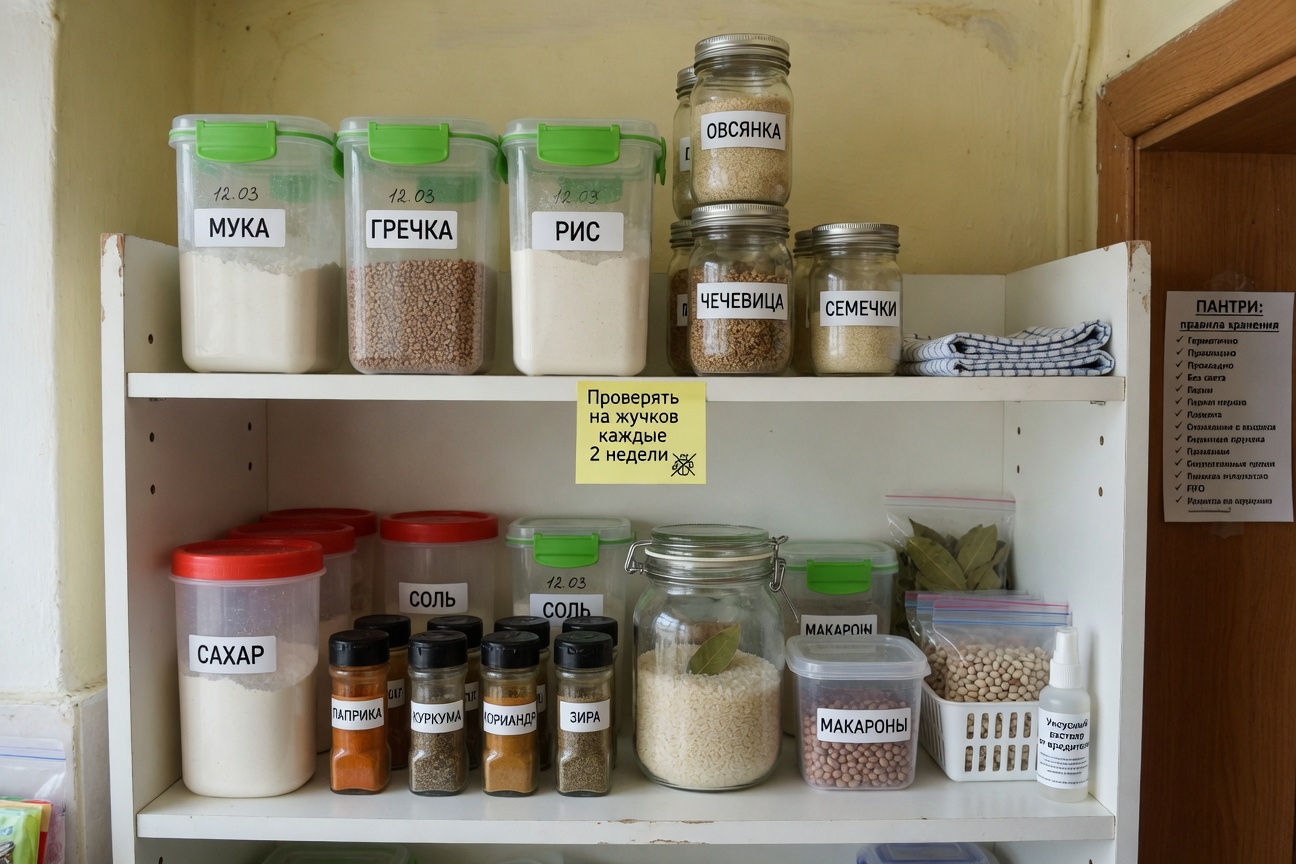
Materials
- Airtight containers
- Labels or masking tape
- Marker
- Small tray for spices
- Bay leaves or pest traps if needed
Step by step
- 1
Sort by category
Group flour, grains, pasta, legumes, baking supplies, and spices before buying containers.
- 2
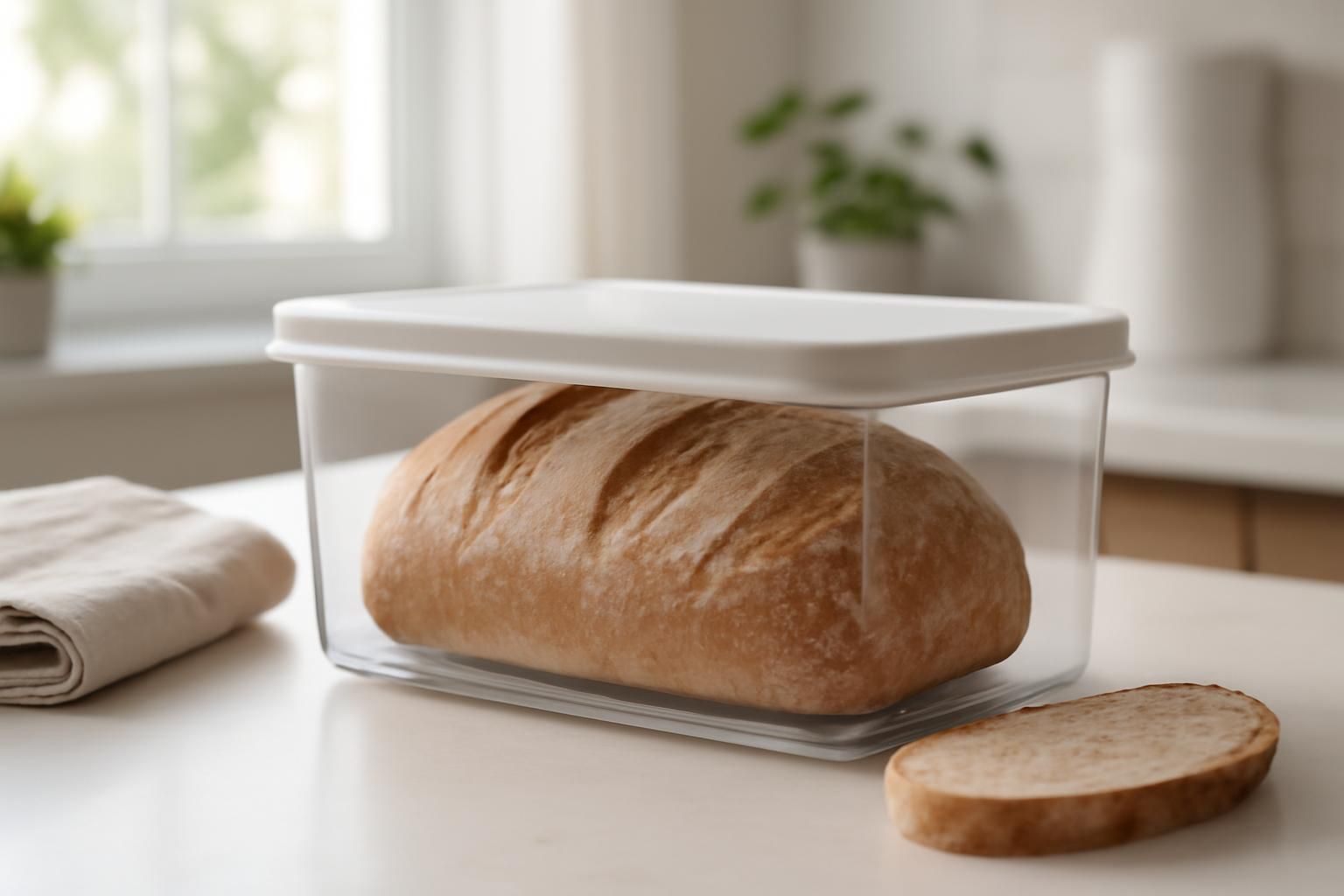
Choose airtight containers
Use containers that close firmly and fit the shelf. Clear containers make low supplies obvious.
- 3
Label date and contents
Write the item name and purchase or opening date. This matters when two flours or similar grains look alike.
- 4
Keep heat away
Do not store dry goods next to the oven, radiator, dishwasher, or sunny window.
- 5
Rotate from the back
Put newer refills behind older containers so the oldest food is used first.
When to refrigerate or freeze
Whole-grain flour, nuts, seeds, and some specialty grains contain more oils and can go rancid faster. If your kitchen is warm or you buy in bulk, freeze part of the supply in sealed bags.
A label with only the name is not enough. Add a date so stale pantry items stop blending into the background.
Common mistakes
- Keeping open paper bags on the shelf
- Buying containers before measuring the cabinet
- Storing spices over the stove
Frequently asked
Should spices go in clear jars?
Clear jars are fine inside a cabinet, but avoid direct light because it weakens flavor.
How do I spot pantry pests?
Look for webbing, dust-like residue, tiny holes in packaging, or moving specks near grains and flour.