Quick answer
Treat most herbs like cut flowers: trim the stems and stand them in a jar of water in the fridge. Basil is the one exception, and it stays on the counter. Tender, leafy herbs last 1 to 2 weeks this way. Sturdy woody herbs do better wrapped in a slightly damp towel.
Fresh herbs wilt fast because they keep losing water through their leaves after they're cut, and cold, dry fridge air speeds that up. The fix is matching the method to the herb. Soft tender herbs like parsley, cilantro, mint, dill, and basil want their stems in water. Woody herbs like rosemary, thyme, oregano, and sage want a little moisture and good airflow. Get the method right and a bunch lasts about twice as long.
What you’ll need
- A clean glass jar, drinking glass, or wide-mouth tumbler
- A sharp knife or kitchen scissors
- A cutting board
Materials
- Cool tap water
- A clean kitchen towel or a few paper towels
- A loose plastic bag (a produce or zip-top bag works) or a reusable beeswax/silicone bag
Step by step
- 1
Sort and inspect the bunch
Pull off any leaves that are already slimy, blackened, or yellow. A single rotting leaf releases moisture and ethylene that drags the rest down, so get it out before storing.
- 2
Decide tender vs. woody
Tender herbs have soft, leafy stems: parsley, cilantro, dill, mint, basil, tarragon, chives. Woody herbs have stiff stems: rosemary, thyme, oregano, sage, marjoram. Tender herbs go in water, woody herbs go in a towel. This one call matters more than anything else you do.
- 3
Trim the stem ends
For tender herbs, cut about 1 cm (half an inch) off the bottom of the stems on a board, the way you'd trim flowers. A fresh cut lets the stems drink instead of sealing over. Skip washing the leaves for now if you can. Surface water on the leaves speeds rot.
- 4
Stand tender herbs in water
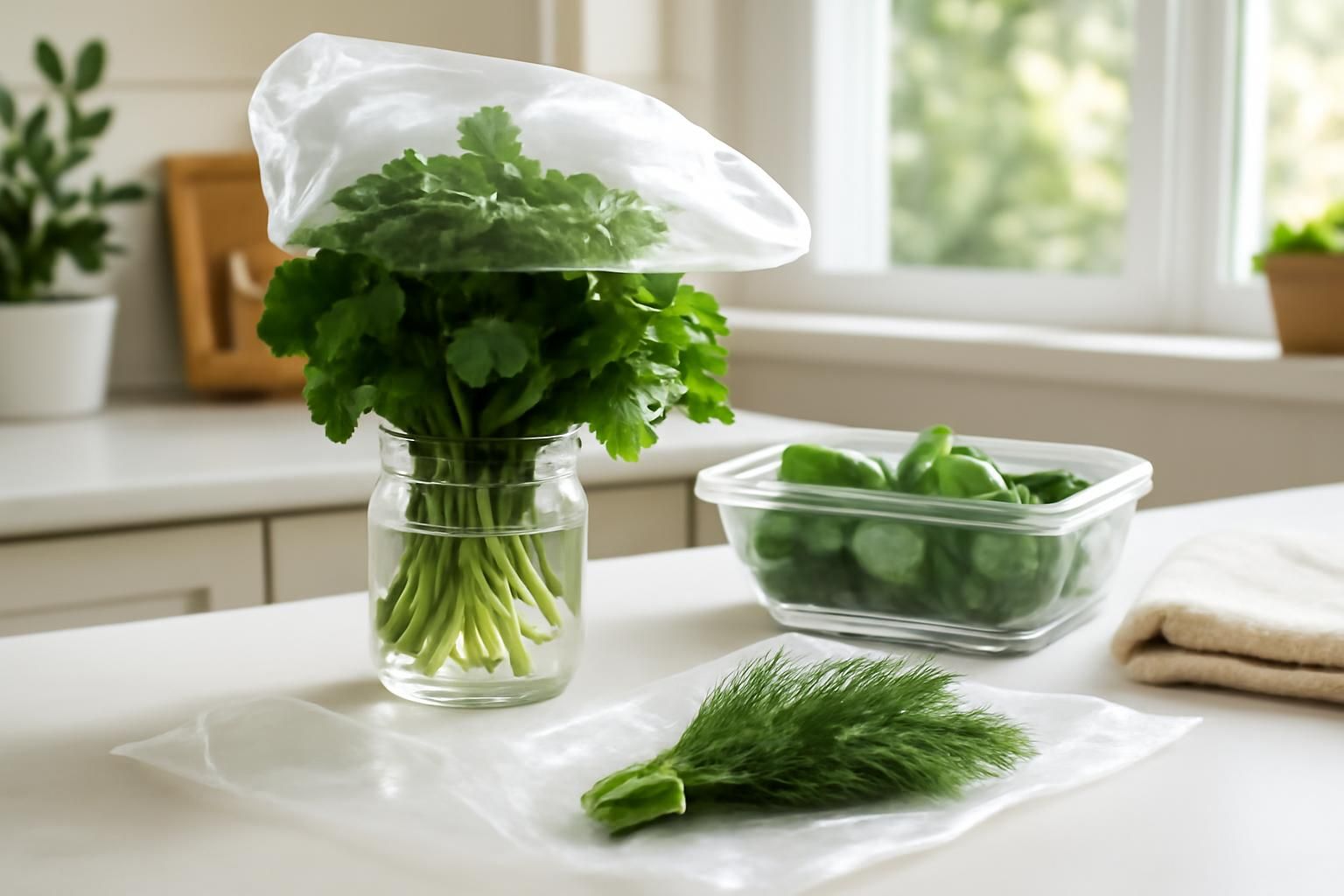
Fill the jar with 3 to 5 cm (a couple of inches) of cool water and set the trimmed bunch in so only the stems are submerged, never the leaves. Drape a plastic bag loosely over the top to hold humidity, but leave it open at the bottom so air still moves. Don't seal it.
- 5
Refrigerate the water-stored herbs, except basil
Put the jar in the fridge. Basil is the exception: cold turns it black, so leave basil on the counter out of direct sun, like a bouquet. Change the water every 2 to 3 days, or sooner if it looks cloudy.
- 6
Wrap woody herbs in a damp towel
Dampen a kitchen or paper towel so it's damp, not dripping. Lay the woody herbs on it and roll them up loosely. Slide the roll into a loose bag or container and store it in the crisper drawer. The towel keeps the herbs from going brittle without drowning them.
- 7
Check every few days
Every 2 to 3 days, glance at the jar and the towel roll. Refresh the water, pick out any leaf that's started to turn, and re-dampen the towel if it's dried out. That 10-second check is what stretches a bunch from a few days to a couple of weeks.
Throw out any herbs that smell sour, feel slimy, or grow visible mold. Rinsing won't make them safe, and mold can spread through soft leaves without showing on the surface. Never store and eat foraged or unlabeled greens you can't positively identify, since some look-alikes are toxic. And wash herbs only right before you use them, not before storing.
Common mistakes
- Submerging the leaves instead of just the stems. Wet leaves rot fast and turn the whole jar slimy.
- Putting basil in the fridge. Cold blackens it within a day. Basil belongs on the counter.
- Storing herbs wet from washing. Trapped surface moisture is the top cause of slime, so dry them well or wash just before use.
- Sealing the bag airtight. Herbs need a little airflow. A fully closed bag traps condensation and speeds up rot.
- Leaving one spoiled leaf in the bunch. It rots everything around it, so pull bad leaves the moment you spot them.
Frequently asked
How long will herbs actually last this way?
Tender herbs in water usually stay good 1 to 2 weeks if you change the water regularly. Woody herbs in a damp towel often go 2 to 3 weeks. It all depends on how fresh they were when you bought them.
Can I freeze herbs instead?
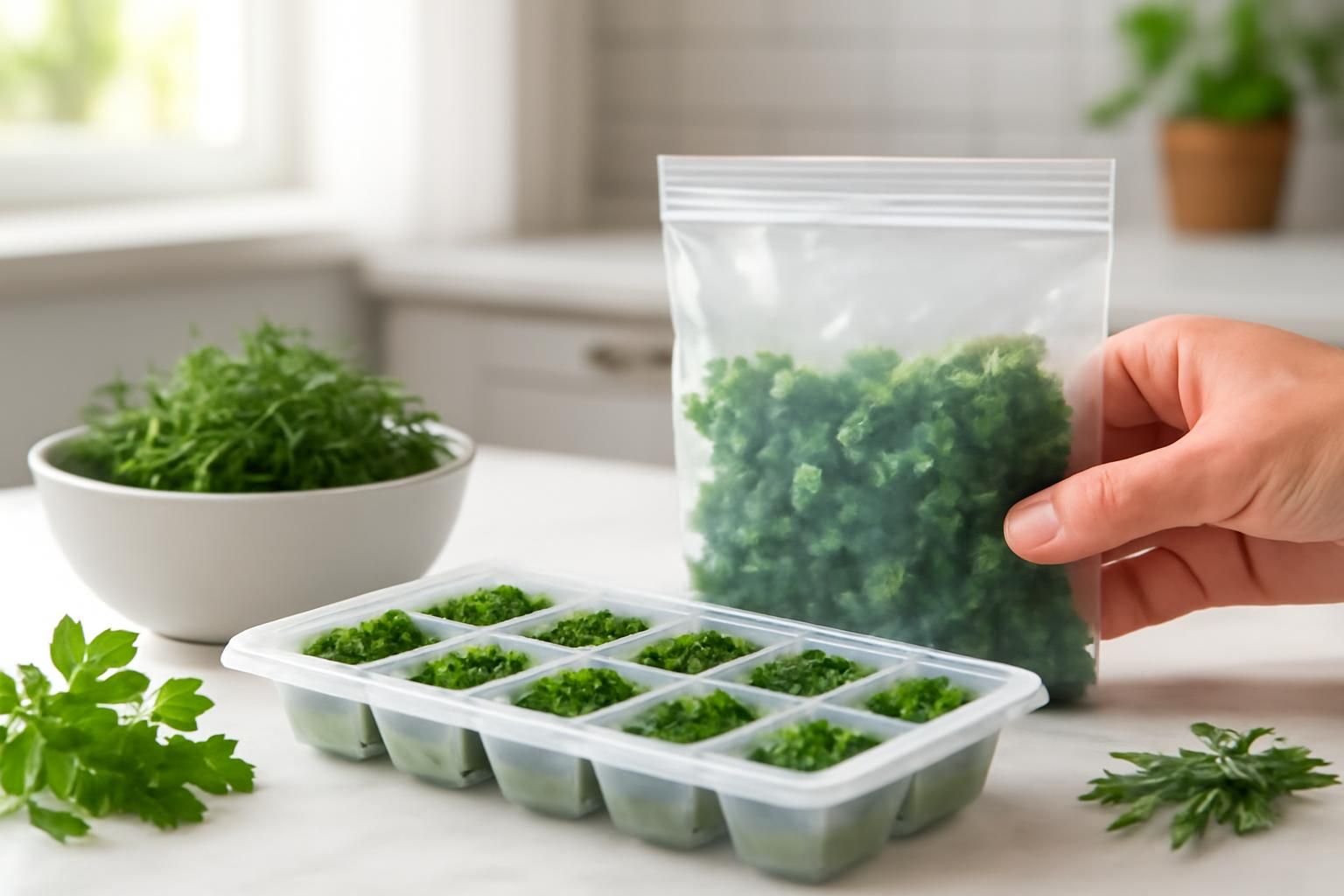
Yes, and it's a great move for herbs you'll cook with. Chop them, pack them into an ice cube tray, cover with water or olive oil, and freeze. Frozen herbs lose their crisp texture, so use them in soups, sauces, and sautes rather than raw as a garnish.
Crisper drawer or regular shelf?
Jarred herbs in water can sit on a regular shelf where you'll actually see and tend them. Towel-wrapped woody herbs do best in the crisper drawer, which holds humidity. Keep all of them away from the cold back wall, where they can freeze.
My cilantro and parsley look similar. Do they store the same way?
Yes. Both are tender herbs, so trim the stems and stand them in water in the fridge with a loose bag over the top. The water method works for the whole soft-herb family.
If a bunch is fading faster than you'll use it, don't wait. Blitz it into pesto, stir it into a compound butter, or freeze it in oil cubes. You capture the flavor before it's gone instead of tossing the bunch.