Quick answer
Most weak shower pressure comes down to mineral buildup in the showerhead, a flow restrictor, or a valve that isn't fully open. Unscrew the head and soak it in white vinegar, confirm your shower and main shutoff valves are open all the way, and clean the small inlet screen. If every faucet in the house is weak, the problem is upstream and may need a plumber or your water utility.
Weak shower pressure is rarely a mystery. It's almost always one of a few things: scale clogging the spray holes, a flow restrictor doing its job too well, a valve that isn't fully open, a worn pressure-balancing cartridge in the mixer, or low pressure feeding the whole house. Work through the causes from cheapest to hardest so you don't swap a $40 cartridge when a 10-minute vinegar soak would have done it. Start by figuring out the scope: is it only the shower, or every tap in the house? That one question rules out half the list.
What you’ll need
- Adjustable wrench or slip-joint pliers
- Soft cloth or rag (to protect the chrome finish)
- Old toothbrush or small stiff brush
- A pin, paperclip, or sewing needle
- Bucket or measuring jug (for a flow test)
- Phone timer
Materials
- White vinegar
- Plastic bag plus a rubber band or zip tie (to soak the head in place)
- Plumber's tape (PTFE / Teflon tape)
- Replacement showerhead washer or O-ring (if the old one is cracked)
Step by step
- 1
Find out if it's just the shower or the whole house
Run the kitchen sink and a bathroom faucet at full cold, then full hot. If those run strong and only the shower is weak, the fault is at the shower itself: the head, a valve, or the cartridge. If every tap is weak, the problem is upstream, in a main valve, a pressure regulator, or the supply. Also note whether the shower is weak on hot only, cold only, or both. That tells you which side is restricted.
- 2
Check that every valve is fully open
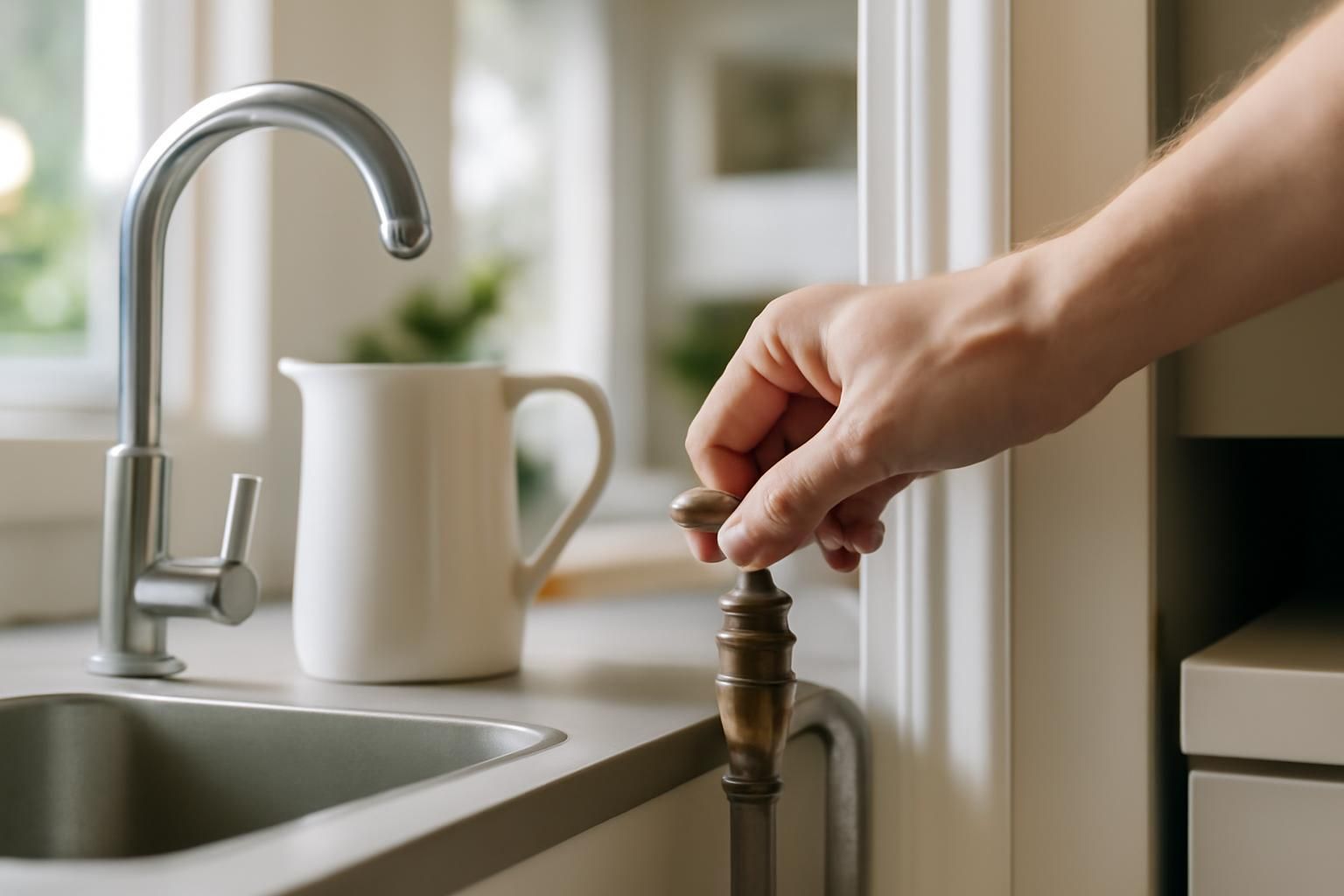
Find your main water shutoff, usually where the supply enters the house near the meter, and confirm it's open all the way. A lever valve should sit inline with the pipe; a round wheel should be backed off fully counterclockwise. A valve left half-closed after past work is a common, easy-to-miss cause. If your bathroom has its own isolation shutoffs, check those too.
- 3
Unscrew and inspect the showerhead
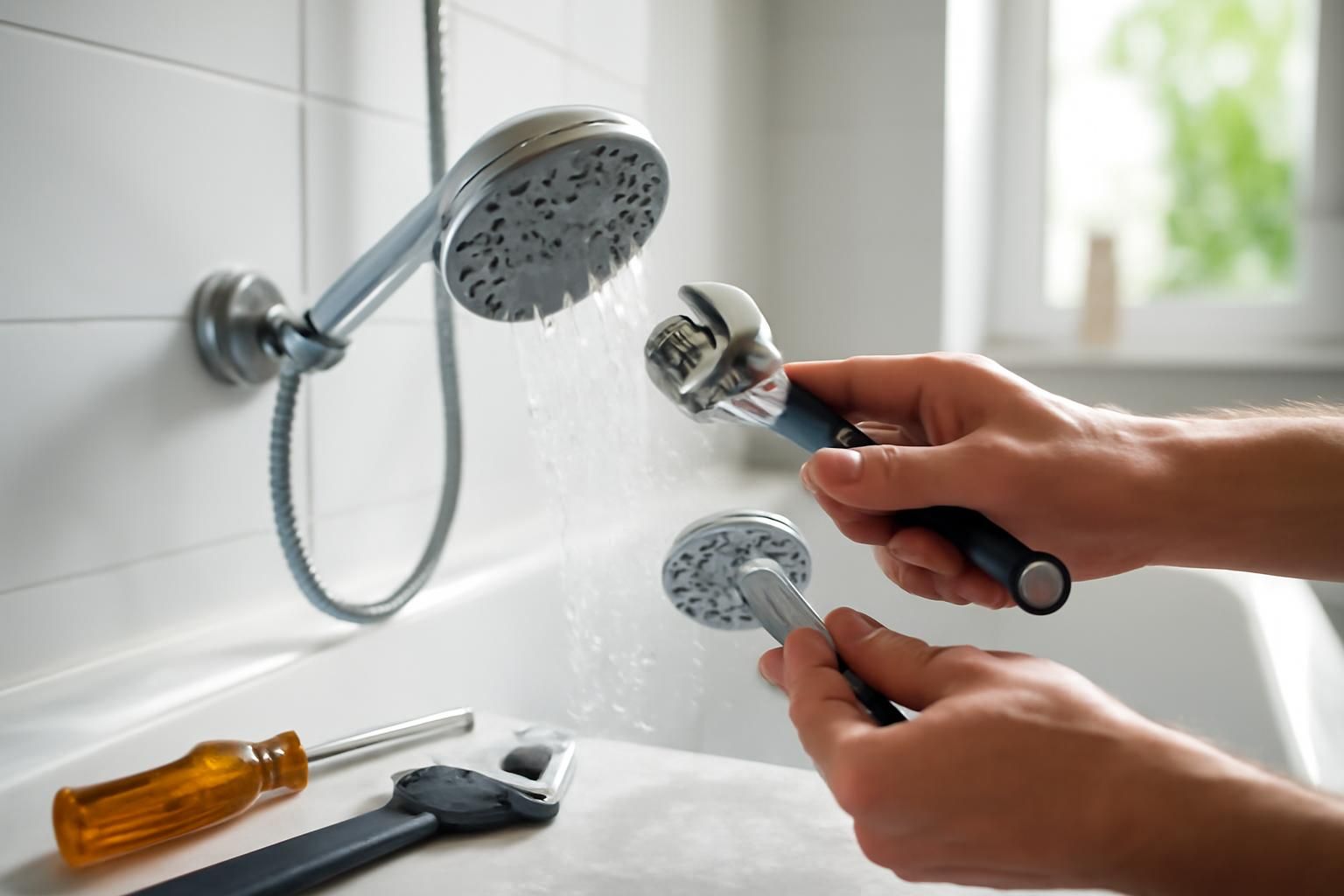
Wrap the connecting nut in a cloth to protect the finish, then turn it counterclockwise with pliers or a wrench to take the head off. Check the back inlet for a small screen or filter washer and look for trapped grit and scale. Then check the front spray face for the white chalky buildup that blocks the holes.
- 4
Soak the showerhead in vinegar
Submerge the head in a bowl of white vinegar for a few hours, or overnight for heavy scale. If it won't come off, fill a plastic bag with vinegar, slip it over the head so the spray face sits under the liquid, and secure it with a rubber band. After soaking, scrub the face with an old toothbrush and clear any nozzles that are still blocked. On rubber-tipped heads you can often just rub the nozzles with your thumb to pop the scale loose.
- 5
Clean the inlet screen and clear the nozzles
Rinse the inlet screen under a strong tap to flush out debris, or pull it and clean it directly. Poke any holes still blocked after soaking with a pin or needle. With the head off, run the supply pipe for a few seconds to flush loose grit out of the line, and aim it into a bucket so the debris doesn't drop down the open arm.
- 6
Decide whether to remove or swap the flow restrictor
Many heads have a flow restrictor: a small plastic disc with a star-shaped or narrow opening, usually sitting behind the inlet screen. Taking it out, or swapping it for a higher-flow one, raises pressure. It also raises your water and energy use, and in many places low-flow heads are required by code, so treat full removal as a last resort rather than a first move. If the head is old or cracked, replacing the whole thing is often the simpler fix.
- 7
Reinstall with fresh plumber's tape
Wrap two or three turns of PTFE tape clockwise around the shower arm threads, then thread the head on by hand and snug it with the cloth-wrapped wrench, about a quarter turn past hand-tight. Don't overtighten plastic fittings; they crack. Replace the washer or O-ring if the old one looks flattened or split. Run the shower and check for both stronger flow and any leak at the joint.
- 8
Still low? Look at the valve cartridge or call a pro
If the head is clean and the valves are open but flow is still weak, especially on only the hot or only the cold side, the mixing or pressure-balance cartridge inside the shower valve is likely clogged or worn. Replacing it is doable but means shutting off water to the shower, and the part is brand-specific, so match it to your valve. If you suspect a whole-house pressure regulator, or pressure is low everywhere, that's a job for a plumber or your water utility.
Removing a flow restrictor permanently raises your water and energy use and may violate local plumbing codes in areas with low-flow requirements. Never force a stuck showerhead at full strength. You can crack the shower arm inside the wall, which turns a cheap fix into an in-wall pipe repair. Loosen the joint first with a vinegar soak around the connection, then use steady, controlled pressure.
Common mistakes
- Replacing the head or cartridge before checking whether the whole house is affected. You can't fix a supply problem at the showerhead.
- Cleaning the spray face but forgetting the inlet screen, the tiny filter washer at the back where most grit collects.
- Overtightening plastic fittings until they crack, or skipping plumber's tape and ending up with a drip.
- Mistaking a half-closed main or isolation valve for a real pressure problem.
- Pulling the flow restrictor first instead of last, which just masks a clog you should have cleaned out.
Frequently asked
Why is only my hot water pressure low in the shower?
Weak flow on the hot side alone usually points to scale or sediment on the hot supply, a partly closed hot shutoff at the water heater, or sediment built up inside the water heater. Check the hot shutoff valve first, then consider flushing the tank.
Will a low-flow showerhead always feel weak?
No. A well-designed low-flow head uses smaller, faster jets and air mixing to feel strong while using less water. When a low-flow head feels weak, it's usually scale buildup or a too-aggressive restrictor rather than the low-flow rating itself.
How do I know if I have a pressure regulator problem?
If every fixture in the house lost pressure, gradually or all at once, and the main valve is fully open, a failing pressure-reducing valve (usually near where the main line enters) is a likely cause. You can test it with a pressure gauge screwed onto an outside spigot; replacement is typically a plumber's job.
Could the problem be on the city or utility side?
Yes. If pressure dropped across the whole house and nothing changed in your plumbing, call your water utility. There may be a main break, scheduled maintenance, or a supply issue in your area. Ask a neighbor whether they noticed it too.
Diagnose before you spend. Scope it (whole house or just the shower), open every valve, clean the head, then move to the cartridge. Work in that order and most people fix it in under an hour with vinegar and a wrench.