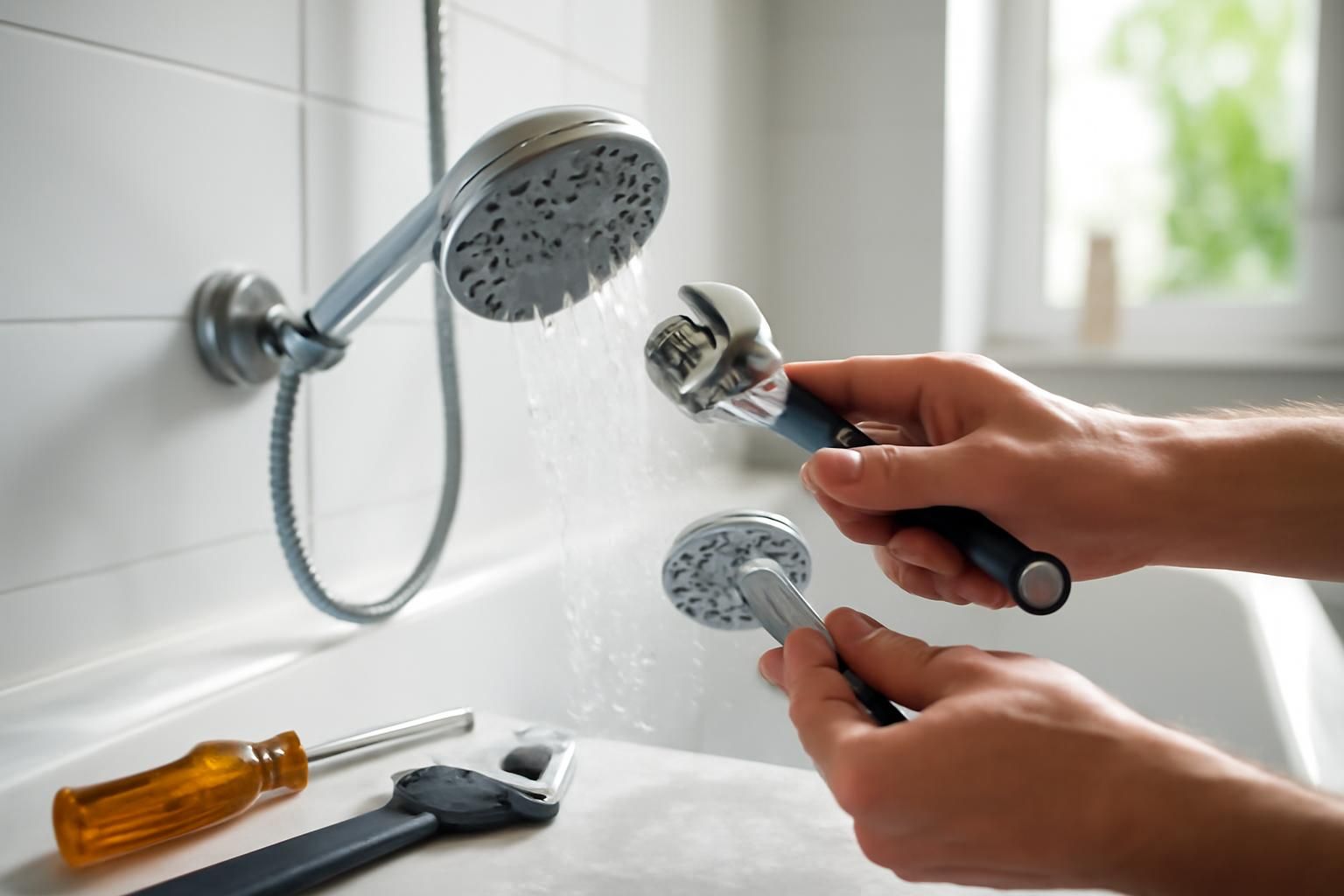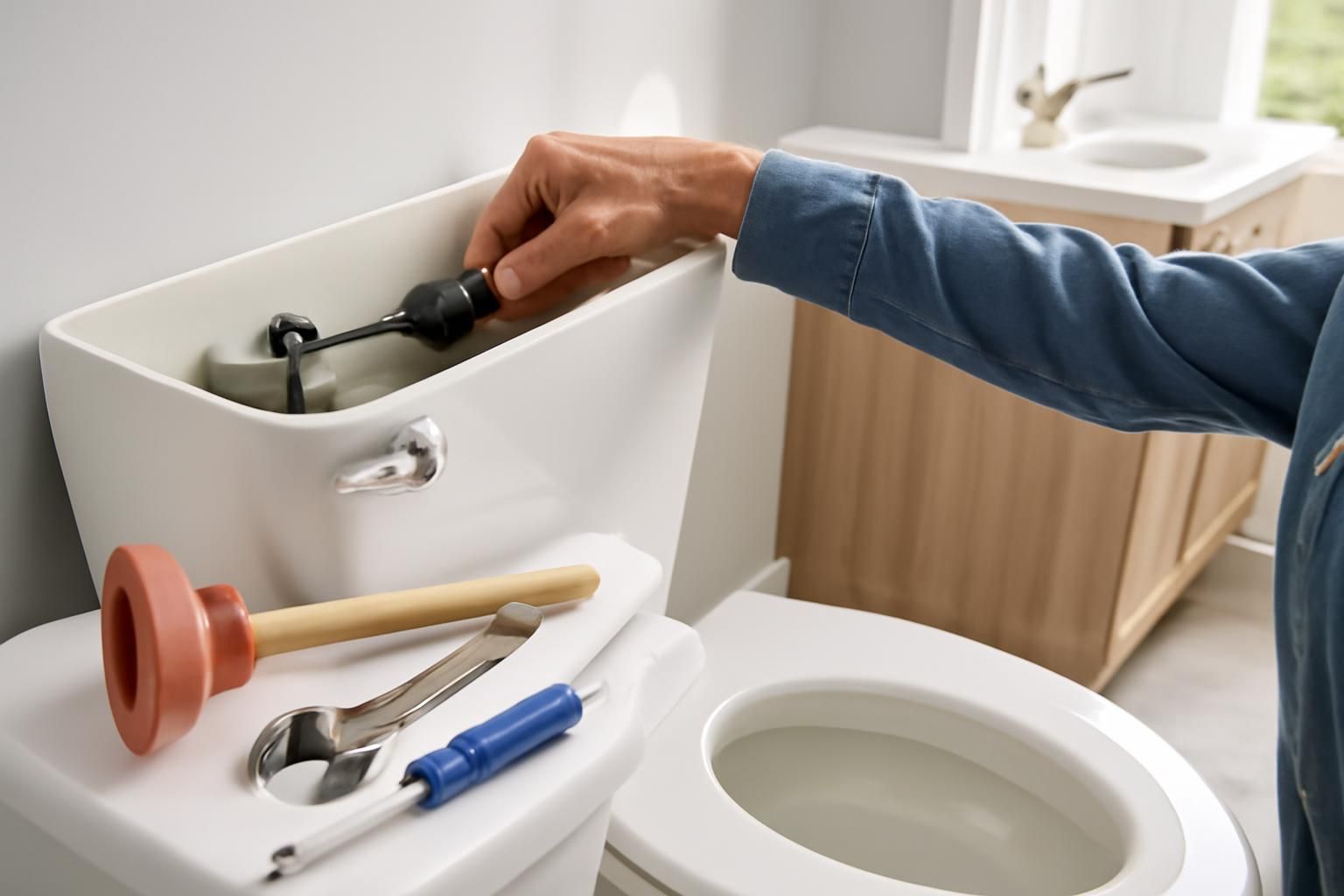
Quick answer
Find the internal stopcock under the kitchen sink or near the front boundary, turn it clockwise until firm, then open a cold tap to confirm the flow stops.
Learn where your internal and external stopcocks are, how to shut off the mains water safely, and how to free a stiff valve without causing damage.
What you’ll need
- Tool: Torch or phone light
- Tool: Adjustable spanner (optional)
- Tool: Penetrating oil or WD-40 (optional)
Materials
- Material: Old towel
- Material: Small container (to catch drips)
Step by step
- 1
Locate the internal stopcock before you need it
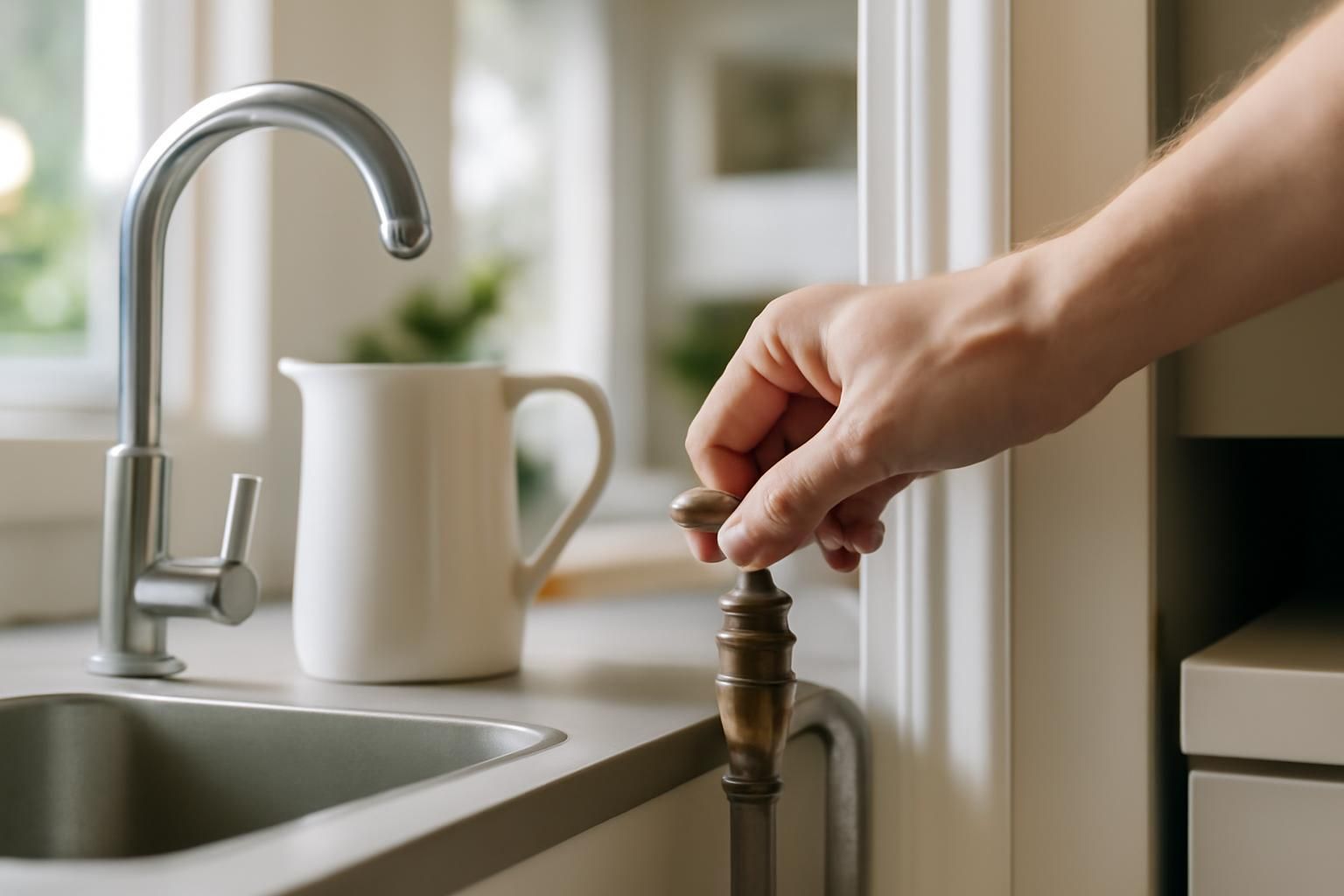
Look under the kitchen sink, in an airing cupboard, downstairs toilet, or near the front wall where the mains enters the house. It is usually a brass or plastic tap with a small round or oval handle. Shine a torch into dark cupboards so you can find it quickly in an emergency.
- 2
Identify the external stop valve
Find the small rectangular or round cover at the boundary of your property, often on the pavement or driveway. Lift the cover with a flat screwdriver to reveal the external stop valve. This is your backup if the internal stopcock fails.
- 3
Turn the internal stopcock clockwise to close
Place a towel beneath the valve. Grip the handle and turn it clockwise — righty-tighty — until you feel resistance. Most stopcocks close after a half to a full turn. Do not use excessive force.
- 4
Confirm the water is off
Open the cold tap in the kitchen and let it run. The flow should slow to a trickle and then stop completely. Leave the tap open in the open position so any residual pressure drains. If water keeps flowing, the stopcock may not be fully closed or there is a secondary supply.
- 5
Free a stiff valve gently
If the handle will not budge, spray a little penetrating oil around the spindle and wait ten minutes. Tap the body of the valve gently with a spanner to help the oil penetrate. Try again with steady, moderate pressure. Stop if it still will not turn.
- 6
Turn the water back on slowly
Close the open tap, then turn the stopcock anti-clockwise. Open it gradually over thirty seconds so the pipes refill smoothly. Turning it on too fast can cause a pressure surge or water hammer, which stresses joints and appliances.
- 7
Test the stopcock twice a year
Add a calendar reminder to turn the stopcock off and on every six months. After reopening, turn it a quarter-turn back from fully open. This stops the valve seizing in the fully open position and keeps it workable when you really need it.
Do not force a seized stopcock — old valves snap, turning a small job into a flood; if it won't turn with gentle effort, stop and call a plumber. After any leak, if you can't isolate the water or the leak continues with the stopcock closed, shut off the external stop valve and call a professional. This guide does not cover work on the boiler or pressurised heating system.
Common mistakes
- Only looking for the stopcock during an actual flood, wasting precious minutes.
- Forcing a seized valve hard and snapping the spindle, which makes the leak worse.
- Turning the water back on too fast, causing pressure surge and water hammer.
Frequently asked
Which way do I turn a stopcock to shut the water off?
Turn it clockwise — righty-tighty. Most stopcocks close after a half to a full turn. Stop when you feel firm resistance.
What do I do if the stopcock is stuck or won't turn?
Spray penetrating oil around the spindle and wait ten minutes. Tap the valve body gently and try again with steady pressure. If it still will not move, stop and call a plumber rather than forcing it.
What's the difference between the internal stopcock and the outside stop valve?
The internal stopcock controls water inside your property, usually under the kitchen sink. The external stop valve is at the property boundary and is owned by the water company or shared; use it only if the internal valve fails.
The stopcock is off but water still runs — why?
The valve may not be fully closed, the washer inside may be worn, or there may be a secondary supply such as a tank-fed system. Open a tap downstairs and upstairs to check. If flow continues, call a plumber.
Should I turn the water off when I go on holiday?
Yes. Shutting the stopcock before a long trip limits damage if a pipe bursts or a tap washer fails while you are away. Turn off the boiler only if the manufacturer advises it for your heating type.