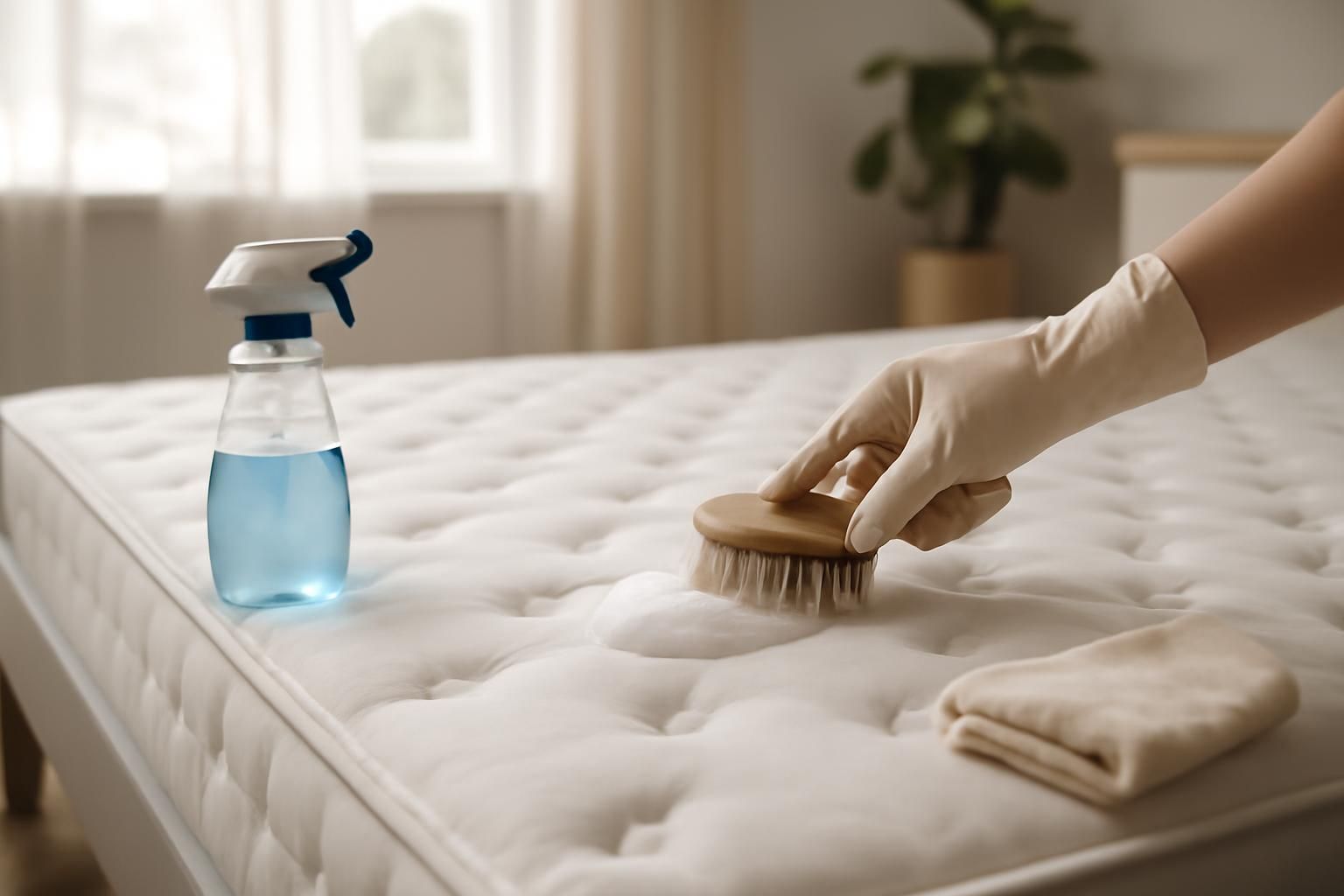
Quick answer
Strip the bed and vacuum with the upholstery attachment. Sprinkle baking soda over the surface, leave for several hours, then vacuum again. Treat blood stains with cold water, urine with diluted washing-up liquid, and pet accidents with an enzymatic cleaner. Use a damp cloth rather than soaking. Dry the mattress completely with a fan and open windows before replacing sheets.
A mattress collects dust, sweat and odours over time. You need three different approaches depending on the job: a routine refresh to remove dust and smells, targeted stain removal, or a deep clean after illness. Do not soak the mattress; foam and spring interiors hold moisture for days and can grow mould.
What you’ll need
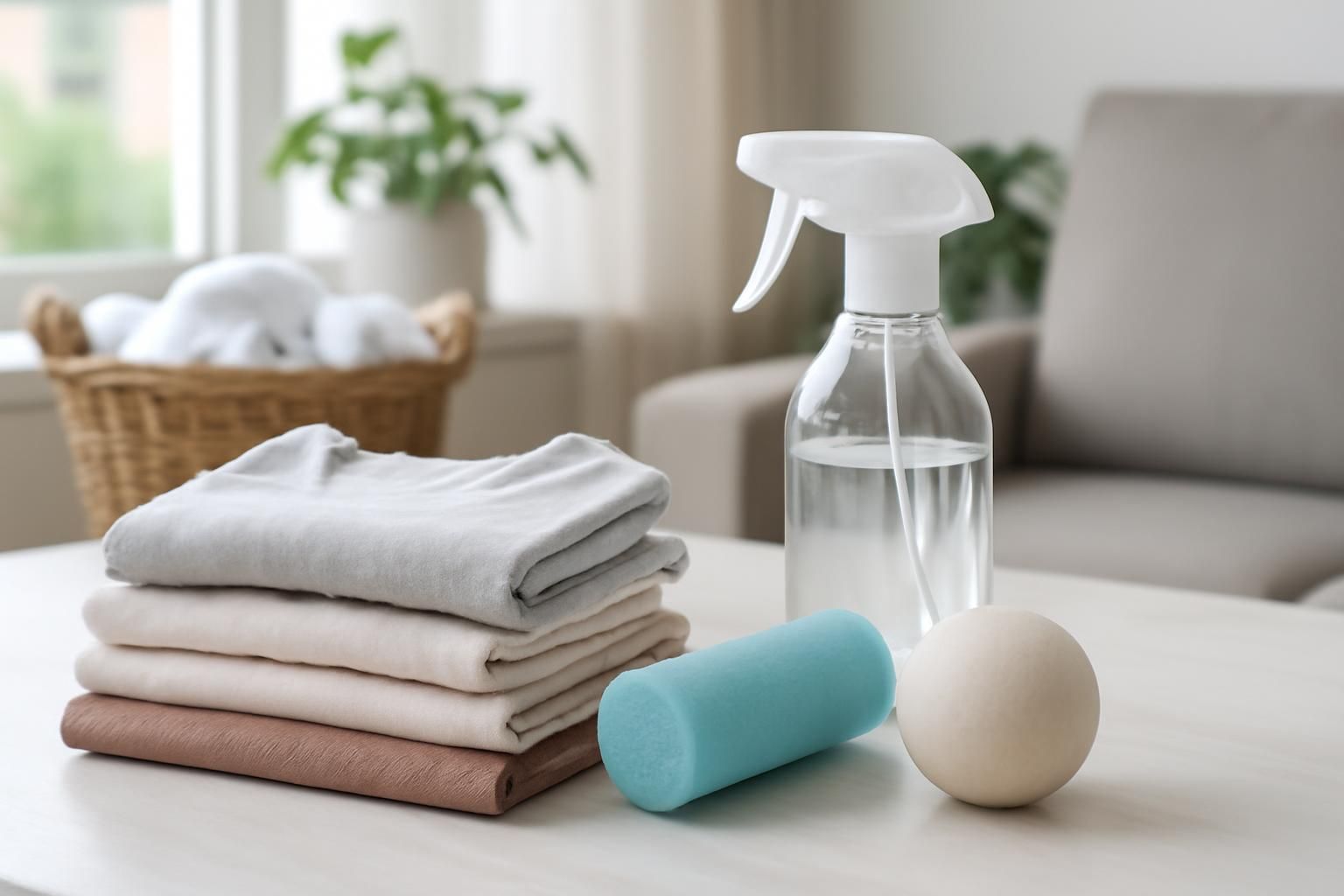
- vacuum cleaner with upholstery attachment
- baking soda
- clean cloths
- spray bottle
- cold water
- hydrogen peroxide (3%)
- washing-up liquid
- enzymatic cleaner
- fan (optional)
Step by step
- 1
Strip the bed and vacuum
Remove all bedding and wash it. Vacuum the entire mattress surface with the upholstery attachment, paying attention to seams and tufts where dust collects. Use the crevice tool around the edges. Do not use the bare nozzle; it can drag fibres and spread debris.
- 2
Deodorise with baking soda
Sprinkle a thin, even layer of baking soda over the whole surface. Leave it for at least two hours, or all day if possible. The soda absorbs odours and moisture. Vacuum it off thoroughly afterwards.
- 3
Treat stains by type
For blood, dab with cold water on a clean cloth. Hot water sets protein stains permanently. For urine, mix a few drops of washing-up liquid with cold water and blot gently. For persistent pet accidents, use an enzymatic cleaner following the label instructions.
- 4
Blot and rinse lightly
After treating stains, blot the area with a damp cloth to lift residue. Do not pour water or cleaner directly onto the mattress. Foam cores act like sponges and can stay damp for days. Press dry towels into the surface to absorb as much moisture as possible.
- 5
Dry thoroughly
Stand the mattress on its side against a wall with open windows and a fan blowing across it. Direct sunlight helps if you can move it. It must be completely dry on both sides before you put sheets back on. A damp mattress will grow mould inside within days.
- 6
Fit a mattress protector
Once the mattress is clean and dry, fit a washable waterproof protector. This turns mattress cleaning from a crisis job into a quick annual task and prevents future stains from reaching the fabric.
The biggest hazard is soaking the mattress so deeply that mould grows inside the foam or springs before it dries. Use a damp cloth, not a wet sponge, and dry thoroughly with a fan and open windows before replacing sheets. If you are using hydrogen peroxide or other cleaners, never mix them with bleach or ammonia-based products. Check whether your washing-up liquid contains bleach before combining it with other cleaners, and follow the product label.
Common mistakes
- Soaking the mattress with liquid — foam and pocket spring interiors hold moisture for days; use a damp cloth and spray sparingly.
- Using hot water on protein stains (blood, urine) — heat denatures the proteins and bonds them permanently to the fabric.
- Vacuuming without the upholstery attachment — the bare nozzle can drag surface fibres and spread rather than remove dust and debris.
Frequently asked
How often should I clean my mattress?
Vacuum and deodorise with baking soda every three to six months. Spot-clean stains as soon as they happen. A full deep clean is only needed after illness, pests, or a major spill. Using a mattress protector reduces how often you need to clean.
Can I use a steam cleaner on a mattress?
Steam introduces a large amount of moisture deep into the foam. Unless the manufacturer specifically approves steam cleaning, avoid it. If you do use steam, the mattress must dry for at least a full day in a well-ventilated room before you remake the bed.
How do I get rid of a urine smell that keeps coming back?
Surface cleaning often misses the deeper urine salts. Use an enzymatic cleaner designed for pet or human urine, saturate the affected area lightly, and let it work for the time stated on the label. Blot up excess and dry fully. Avoid heat, which can set the odour.