Quick answer
Most bathroom sink clogs are a wad of hair and soap scum sitting just below the drain. Pull out the pop-up stopper, clear the gunk off it and out of the drain opening, then work the drain with a plunger or a small drain snake. Still slow? Put a bucket under the sink and unscrew the P-trap to clean it out directly. Save the chemical drain cleaner for last, if at all.
A bathroom sink that drains slowly or backs up almost always has the same cause: hair and soap scum collecting on the pop-up stopper and in the first few inches of pipe. It looks worse than it is. This is usually a 15-to-30-minute fix with basic tools and zero plumbing experience. The methods below go from easiest and cleanest to more involved. Work through them in order and stop the moment the water runs freely. Before you start, clear everything out from under the sink. The most reliable fix means opening the trap, and you want a clear shot at it.
What you’ll need
- Cup plunger (small, flat-bottomed)
- Adjustable pliers or channel-lock pliers
- Flashlight or headlamp
- Flexible drain snake, or a plastic hair-clearing strip (the barbed kind)
- Old toothbrush or bottle brush for scrubbing parts
Materials
- Bucket or basin that fits under the trap
- Rags or old towels
- Disposable gloves
- Dish soap (breaks down grease and works as a plunger lubricant)
- Replacement slip-nut washers (only if the existing ones are cracked or hardened)
Step by step
- 1
Remove the pop-up stopper and clear it
Lift the stopper straight up. If it comes free, you're set. If it won't, look under the sink. A pivot rod (a thin metal arm) connects to the stopper through the back of the drain body, held by a spring clip. Squeeze the clip, slide the rod out of the hole, and the stopper lifts out. Expect a slimy rope of hair and soap on the bottom of it. Wipe it into the trash, not back down the drain.
- 2
Clear the drain opening itself
Shine a light down the open drain. Push a plastic hair-clearing strip or a small snake down a few inches, twist, and pull. The barbs grab the hair. Repeat until the tool comes back clean. This one step solves most bathroom sink clogs. Run hot water to test.
- 3
Plunge if the water still drains slowly
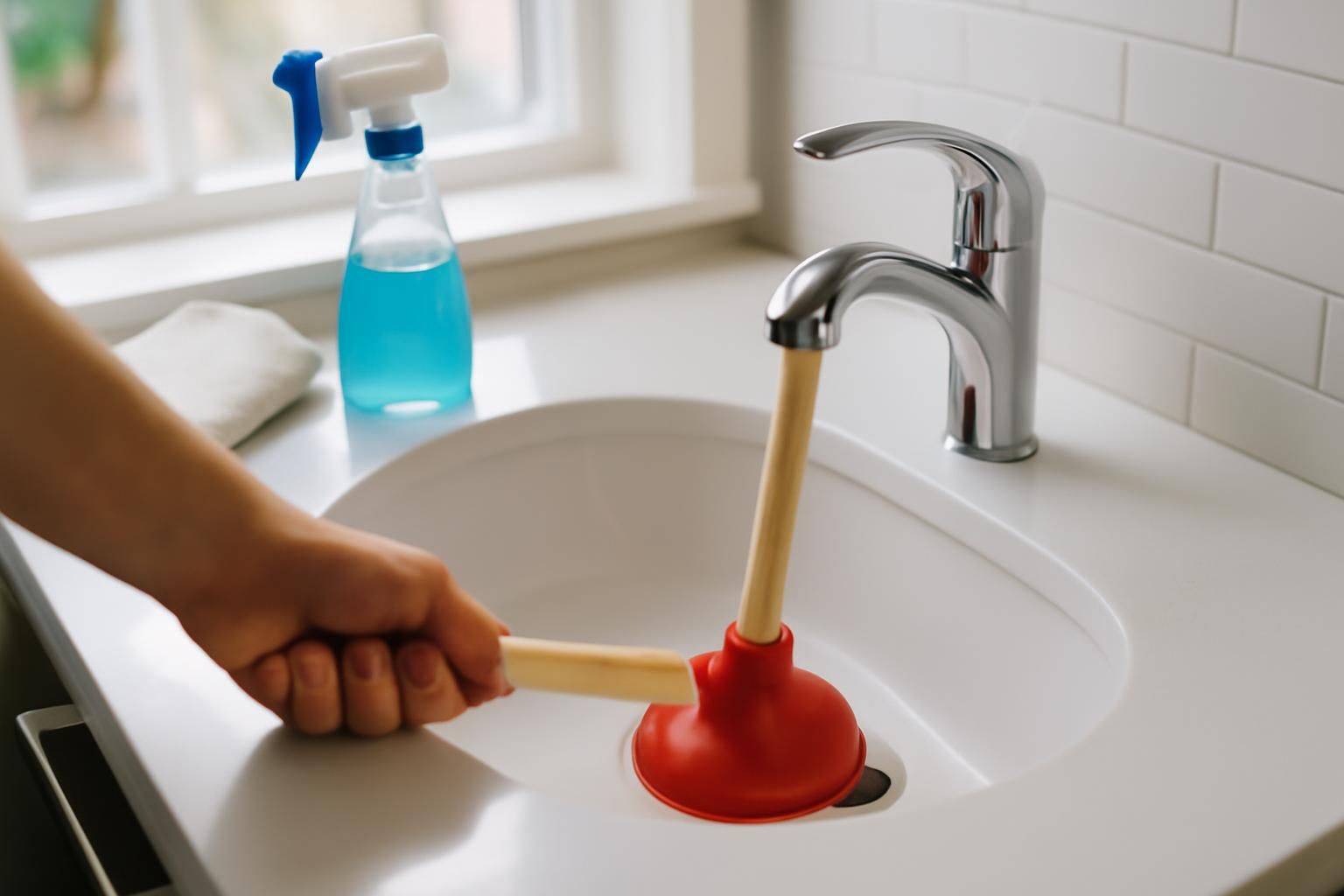
Look for an overflow hole near the top rim of the basin and stuff a wet rag firmly into it. Plunging fails when air escapes through the overflow, so this seal does the heavy lifting. Add a couple of inches of water to the basin, smear dish soap on the plunger rim, seat the cup over the drain, and pump firmly 10 to 15 times. Pull off sharply on the last stroke. Test with hot water.
- 4
Set up to open the P-trap
Still clogged? The blockage is in the trap or just past it. Put a bucket directly under the U-shaped pipe (the P-trap) below the sink. It holds standing water, so the bucket is not optional. Lay a towel down to catch drips.
- 5
Unscrew and clean the P-trap
Loosen the two slip nuts on each end of the U-bend, turning counterclockwise. Most are plastic and come off by hand; use pliers gently if they're stuck. Lower the trap into the bucket and dump it out. Scrub the inside with a bottle brush. Check the horizontal pipe heading into the wall too. Reassemble in reverse, hand-tight plus a slight nudge with pliers. Inspect the washers and replace any that are cracked or hard.
- 6
Reinstall the stopper and test
Re-seat the pop-up stopper. If you removed the pivot rod, push it back through the drain body into the hole on the back of the stopper, then re-clip it. Run hot water for 30 seconds and watch every joint you opened. A slow drip means a slip nut needs another small turn or a fresh washer.
- 7
Snake the branch line if the trap was clear
If the trap came out clean but the sink still backs up, the clog is downstream in the branch line inside the wall. Feed a drain snake into the pipe stub coming out of the wall, crank it until you feel resistance, then push through and pull back. Run water to confirm. If you can't reach it, or water backs up into other fixtures, stop here and call a plumber.
Don't reach for chemical drain cleaner first, and never mix two products or use one after another. They generate heat and toxic fumes, can damage older or plastic pipes, and if they fail to clear the clog you're left with a pipe full of caustic liquid that splashes the moment you open the trap. If a previous attempt already used chemical cleaner, do not open the trap by hand without eye protection and gloves, and clear the standing liquid first. When in doubt, flush with plenty of water and wait, or call a plumber and tell them exactly what was poured in.
Common mistakes
- Not blocking the overflow hole before plunging, so all the pressure escapes and nothing happens.
- Over-tightening plastic slip nuts with pliers and cracking them, which causes a slow leak under the sink.
- Forgetting the bucket and catching a lap full of trap water when the nuts come loose.
- Reaching for chemical drain cleaner first instead of doing the five-minute hair removal that fixes most clogs.
- Losing track of which way the washers and the P-trap face. Note the orientation before you remove anything.
- Yanking the pop-up stopper while it's still pinned by the pivot rod, which bends the linkage.
Frequently asked
Can I just pour boiling water down to clear it?
Hot water loosens soap and grease but rarely clears a hair clog on its own. If you have PVC pipes, use very hot tap water instead of boiling water, since repeated boiling water can soften plastic joints over time. It's a fine maintenance flush, not a real fix for a packed drain.
Does baking soda and vinegar actually work?
It fizzes and can help with light soap-scum buildup and odor, but the reaction is weak and won't break through a solid hair clog. Treat it as a gentle maintenance step, not a substitute for physically pulling the blockage out.
Both my sinks or the tub are backing up. Is this the same fix?
No. When multiple fixtures back up at once, the clog sits in a shared main line, not the individual trap. Cleaning one trap won't touch it. That's a job for a plumber with a proper drain machine.
Water is leaking from under the sink after I reassembled the trap. What now?
It's almost always a slip nut that's slightly loose or a washer that's pinched, cracked, or installed backwards. Hand-tighten the nut a little more first. If it still drips, take the joint apart, check that the washer seats flat and faces the right way, and replace it if it's hardened.
How do I keep it from clogging again?
Drop a mesh or basket strainer over the drain to catch hair, pull the stopper and wipe it clean every few weeks, and run hot water for a bit after shaving or washing hair. Those three habits prevent most repeat clogs.
If you've cleaned the trap and snaked the branch line and the sink still won't drain, or water backs up into other fixtures, the blockage is deeper than DIY tools reach. That's the point to call a plumber instead of forcing the snake, which can damage pipes or pack the clog into a worse spot.