Quick answer
Discharge static immediately by running a wire coat hanger over the fabric or smoothing it with slightly damp hands. Long term, dry synthetics with wool dryer balls and remove them while still slightly damp.
Static cling strikes when you are already dressed and ready to leave. Synthetic fabrics build up an electrical charge because they do not hold moisture, so they stick to your body and each other. You can fix it in seconds, then stop it happening at the next wash.
What you’ll need
- Wire coat hanger
- Water
- Wool or rubber dryer balls
Step by step
- 1
Discharge static from the garment you are wearing
If your dress or shirt is clinging now, run a clean wire coat hanger over the outside of the fabric. The metal conducts the electrical charge away. Alternatively, dampen your hands slightly and smooth them down the fabric from the inside. Both methods discharge static in seconds with no products needed.
- 2
Remove clothes from the dryer early
Static builds in the final few minutes of a hot drying cycle when the load is already bone-dry. Take synthetics out while they are still slightly damp and hang them to air-finish. This single change eliminates nearly all cling.
- 3
Use dryer balls instead of dryer sheets
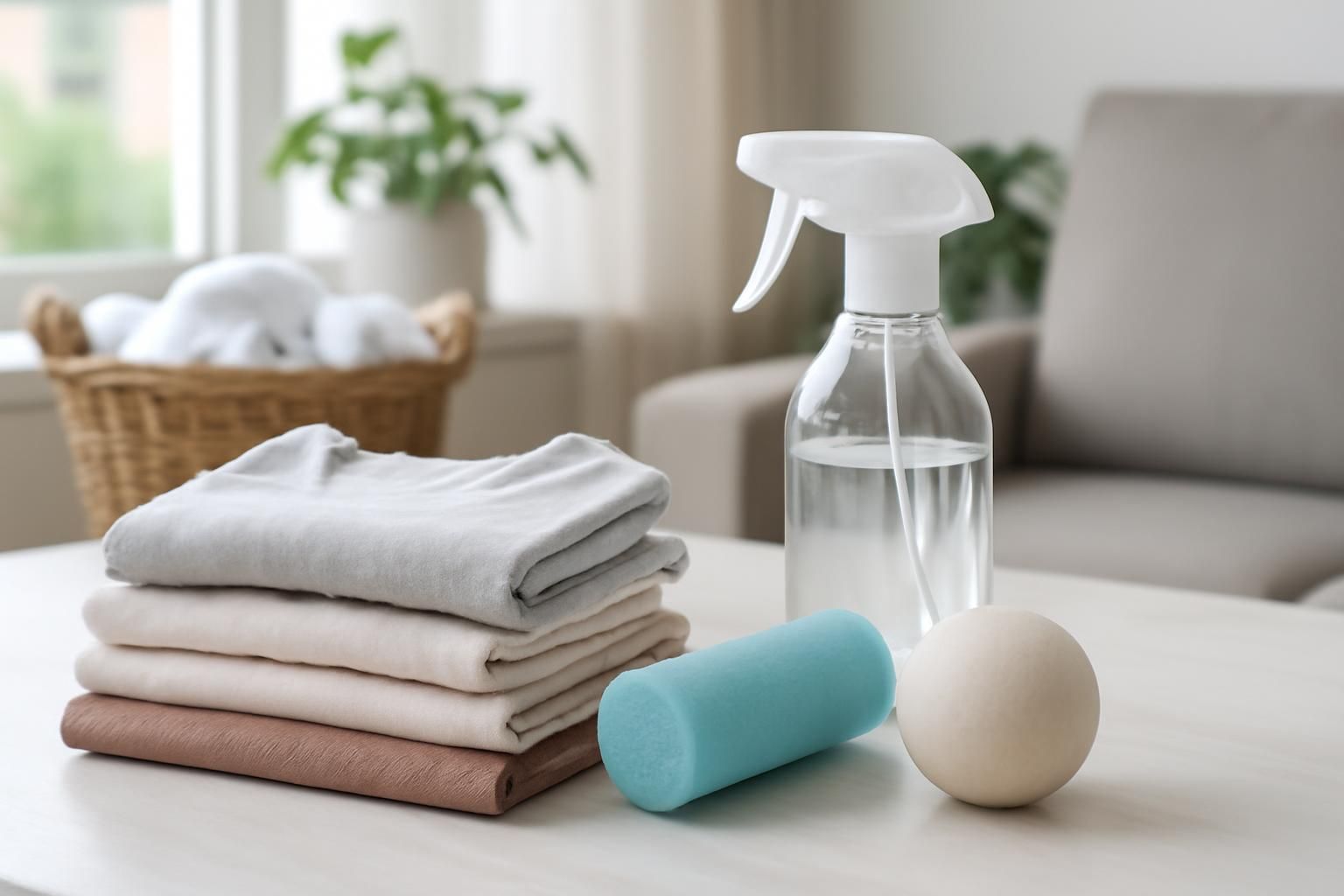
Toss two or three wool or rubber dryer balls into the drum with each synthetic load. They separate the garments, reduce drying time, and stop static building up. Unlike dryer sheets, they leave no chemical coating on the fabric.
- 4
Raise the humidity in the room
Static is worst in winter because central heating dries the air. Place a humidifier in your bedroom, or hang a damp towel over a radiator overnight. Higher humidity lets the fabric retain enough moisture to stop charge building up.
- 5
Choose natural fibres when buying new clothes
Cotton, wool, linen and silk absorb moisture from the air, so they rarely cling badly. Polyester, nylon and acrylic build charge easily. Buying more natural fibres is the simplest long-term fix.
Many commercial anti-static sprays contain flammable propellants. Keep them well away from open flames, sparks, lit cigarettes, and heat sources such as radiators and irons. Do not spray them near a gas cooker or boiler pilot light.
Common mistakes
- Using dryer sheets as a regular fix on sportswear and towels — the silicone coating reduces moisture-wicking on technical fabrics and makes towels less absorbent over time.
- Over-drying laundry on the hottest setting — most static accumulates in the last five to ten minutes of the cycle once the clothes are already dry.
- Storing synthetic garments folded tightly together in a drawer — the friction during folding and retrieval charges the fabric. Hanging synthetics on wooden or padded hangers avoids this.
Frequently asked
Why do some fabrics cling to my body but not stick to other clothes?
Your skin holds more moisture than dry synthetic fabric, so the charge difference is greater between your body and the garment than between two similar synthetics. Natural-fibre layers underneath act as a barrier and reduce the effect.
Does hairspray actually work for static cling, or is that a myth?
It works as a quick fix because the alcohol and polymers conduct electricity and coat the fibres. However, it can leave a stiff residue and may stain delicate fabrics. Use it only in an emergency and wash the garment afterwards.
Can I make my own fabric softener spray at home to fight static?
Yes. Mix one part liquid fabric softener with ten parts water in a spray bottle. Lightly mist the garment from 20 cm away and let it air-dry for a minute. Do not saturate the fabric, and avoid spraying near open flames because softener contains flammable ingredients.