Quick answer
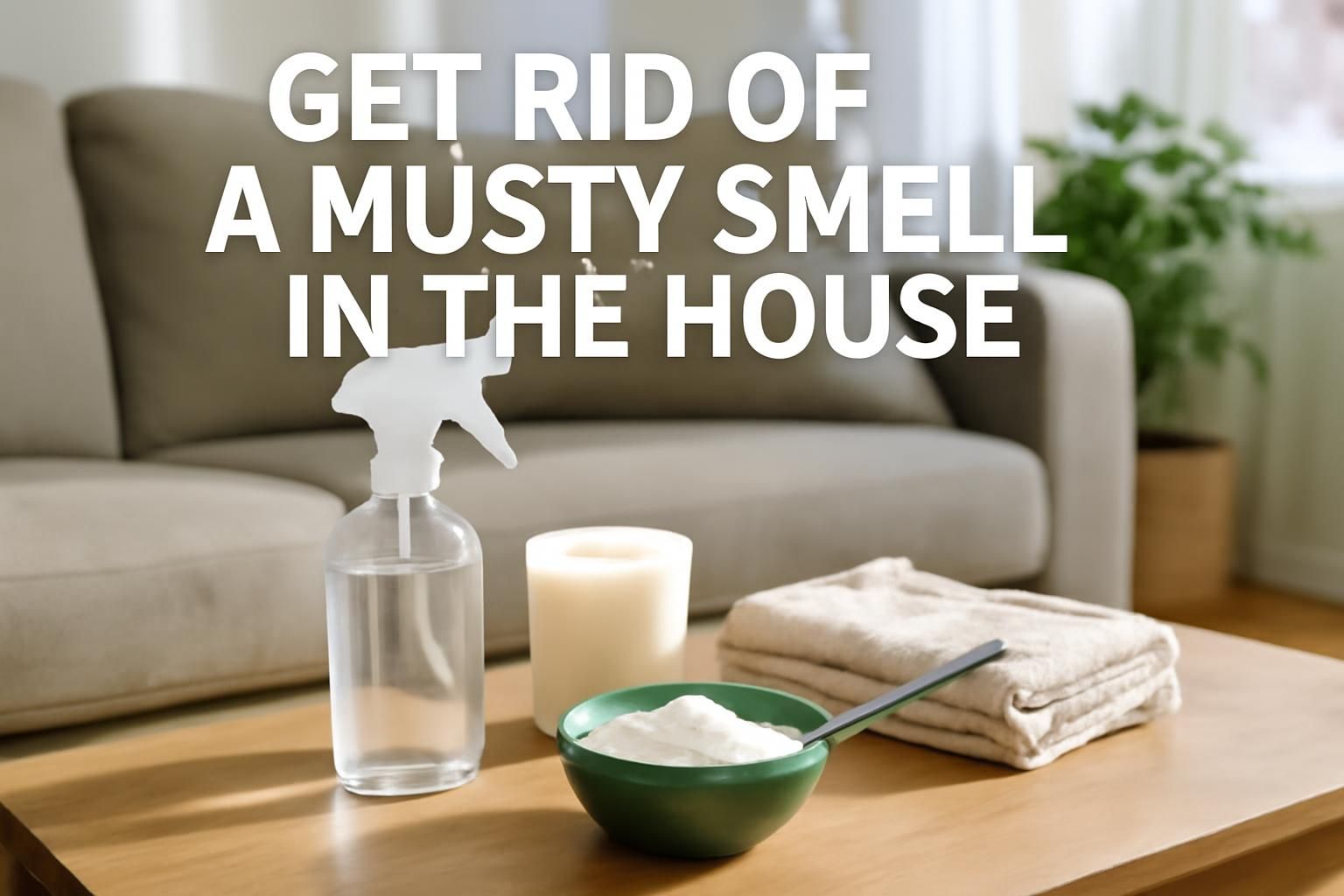
Open windows for cross-ventilation, locate the source of dampness, clean surfaces with diluted white vinegar, and place bowls of sodium bicarbonate or activated charcoal to absorb odours. Wash soft furnishings at 60°C to kill mould spores. If indoor humidity stays above 60%, use a dehumidifier.
A musty smell in the house comes from one of two things: persistent damp and mould, or stale air that has sat too long. Working out which one you have saves you from wasting money on air fresheners that only hide the problem. Start by checking the places most people miss: under-sink cabinets, behind the washing machine, inside wardrobes against external walls, and around window frames.
What you’ll need
- Hygrometer (under £10)
- White vinegar
- Sodium bicarbonate
- Activated charcoal sachets or bowls
- Clean cloths
- Bucket
- Spray bottle
- Washing machine
Step by step
- 1
Track down the source
Open every under-sink cupboard, pull out the washing machine if you can, and check inside wardrobes that sit against external walls. Look for black or green mould, damp patches, or peeling paint. Smell inside each space to narrow down where the odour is strongest.
- 2
Check the humidity
Place a hygrometer in the worst-affected room and leave it for 24 hours. If the reading stays above 60%, damp is the root cause and a dehumidifier will do more than any cleaning product. In bathrooms and kitchens, run the extractor fan during use and for 15 minutes afterwards.
- 3
Clean affected surfaces
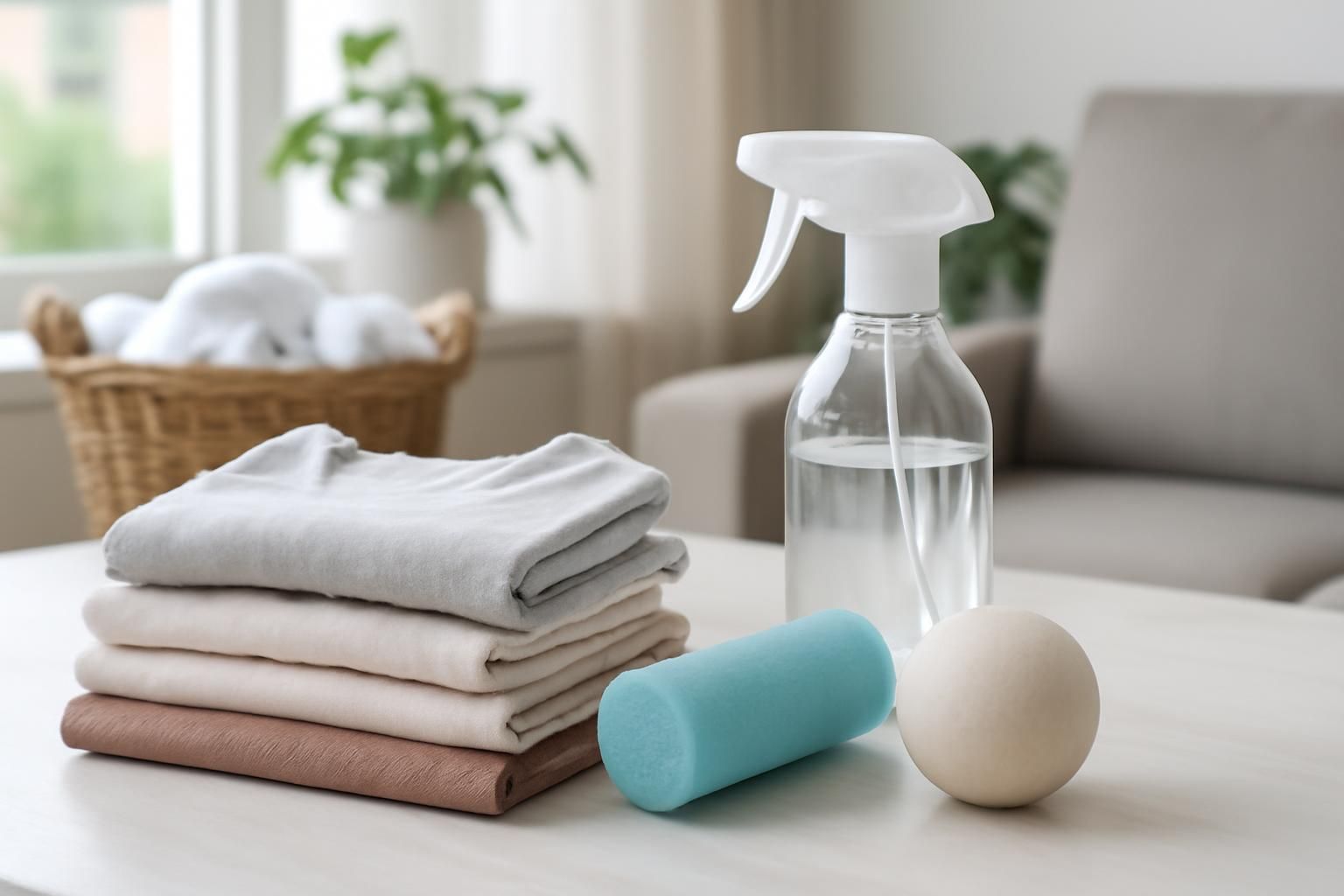
Mix one part white vinegar with one part water in a spray bottle. Lightly mist mouldy or musty hard surfaces, let it sit for 10 minutes, then wipe with a clean cloth and dry thoroughly. White vinegar is mildly acidic and helps neutralise the alkaline by-products of mould.
- 4
Deodorise the air and fabrics
Place shallow bowls of sodium bicarbonate or activated charcoal sachets in the affected room and inside cupboards. Sodium bicarbonate absorbs acidic odour molecules; charcoal adsorbs volatile compounds. Leave them for at least 48 hours before replacing.
- 5
Wash soft furnishings at 60°C
Wash any musty curtains, cushion covers or throws at 60°C minimum. A 30°C wash will clean the fabric but will not kill mould spores. Dry them outdoors or in a tumble dryer immediately afterwards so they do not stay damp.
- 6
Ventilate with cross-breezes
Open windows on opposite sides of the house for 15 minutes every morning and evening. This cross-ventilation flushes stale air far more effectively than leaving a single window open all day or running an extractor fan in a sealed room.
The biggest hazard is hidden mould behind furniture or inside walls, which can trigger respiratory problems and allergic reactions. Do not simply mask the smell with plug-in air fresheners. If you find black mould covering more than one square metre, or the musty smell persists after two weeks of treatment, call a professional mould-remediation specialist.
Common mistakes
- Masking the smell with plug-in air fresheners rather than treating the source — the odour returns within days.
- Washing soft furnishings at 30°C and assuming that kills mould spores — it does not; 60°C minimum is required for musty fabric.
- Placing furniture flush against external walls, blocking air circulation and creating a cold-surface condensation trap behind the unit.
Frequently asked
How long does it take for a musty smell to go away after fixing the source?
If the damp source is removed and the area is ventilated, the smell usually fades within a few days. Charcoal and sodium bicarbonate can speed this up. If the smell remains after two weeks, the source has not been fully fixed.
Is a musty smell dangerous to health, and when should I be concerned?
A mild musty smell is usually harmless, but it signals mould is present. Mould releases spores and volatile compounds that can irritate the eyes, nose and lungs, especially in people with asthma or weakened immune systems. Seek medical advice if you develop persistent coughing, wheezing or skin rashes.
Can I use an ozone machine to get rid of musty smells?
Ozone generators can neutralise odours, but they are not a substitute for removing the source of damp or mould. Ozone is a lung irritant and should never be used when people or pets are in the room. They are generally unnecessary for household mustiness if you follow the cleaning and ventilation steps above.