Quick answer
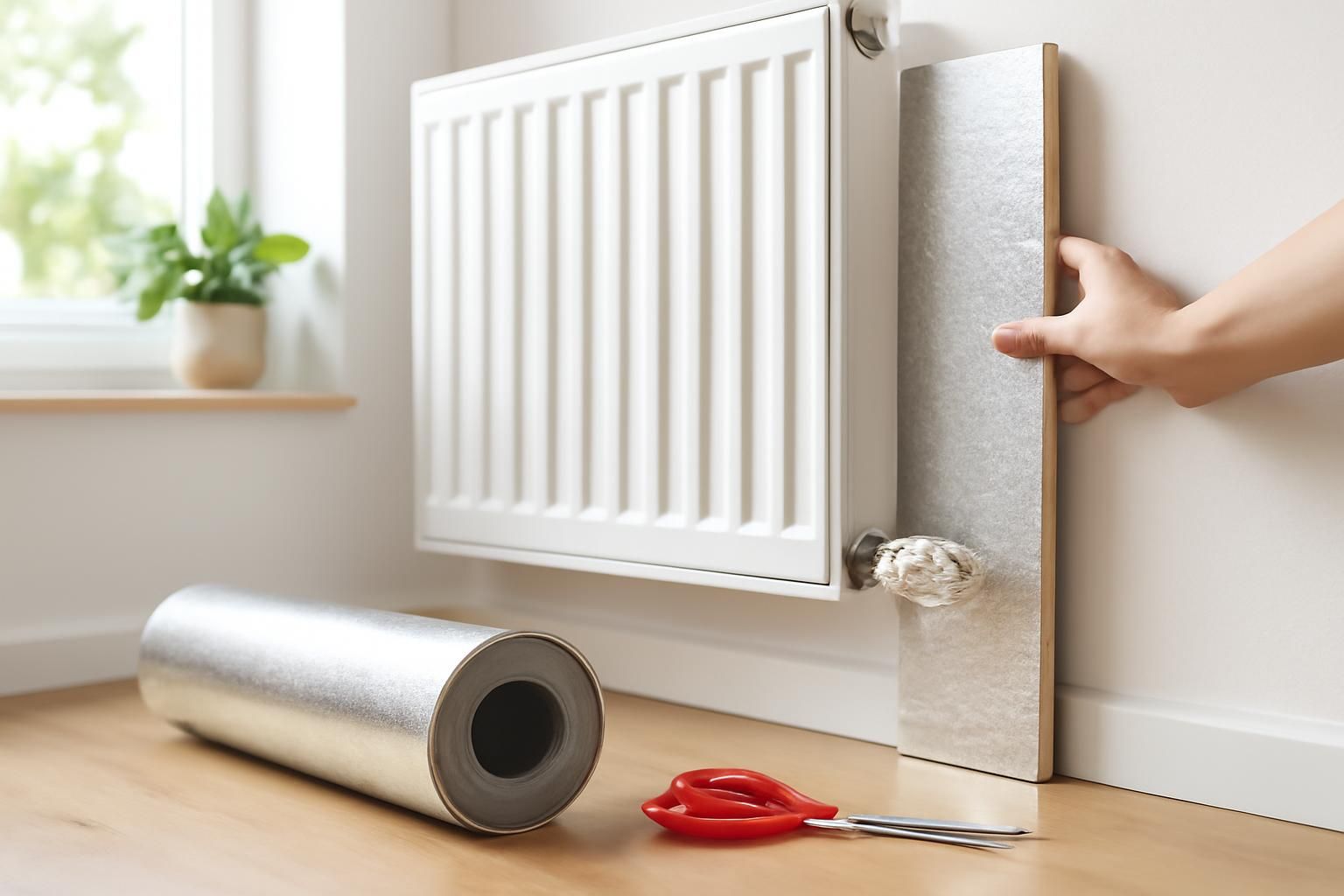
Turn the radiator off and let it cool. Measure the wall space behind it. Cut reflector panels or foil insulation to size. Clean the wall. Stick the panels to the wall with double-sided tape or sticky pads. Replace any furniture.
Radiators lose heat through the wall behind them. Reflective insulation bounces warmth back into the room. The job is quick, cheap and needs no tools beyond scissors and tape.
What you’ll need
- radiator reflector panels or foil insulation
- scissors
- double-sided tape or sticky pads
- dust cloth
- long-handled duster
Step by step
- 1
Turn off the radiator and let it cool
Switch the radiator off at the thermostatic valve. Wait until it is completely cold before you start. This prevents burns and stops the tape adhesive from softening.
- 2
Clean the wall and skirting board
Dust the wall behind the radiator with a long-handled duster. Wipe the surface with a damp cloth to remove grease. The tape will not stick to dusty or greasy walls.
- 3
Measure and cut the panels
Measure the width and height of the wall section behind the radiator. Mark these dimensions on the reflector panels. Cut them to size with sharp scissors. Cut slightly smaller than the measured space to allow for pipes.
- 4
Attach the insulation to the wall
Apply double-sided tape or sticky pads to the back of the panels. Press them firmly against the wall behind the radiator. Smooth out air bubbles. Make sure the reflective side faces out into the room.
- 5
Check the fit and turn the heating back on
Ensure the panels do not touch the radiator pipes or valves. Turn the radiator back on. Feel the front of the radiator after 10 minutes. More heat should be directed forward rather than into the wall.
Radiators can stay hot for a long time after the heating is turned off. Wait until they are cold before fitting panels. Do not place flammable materials against hot radiators. Keep reflective panels at least a few millimetres away from pipes and valves.
Common mistakes
- Measuring the panels too large, which causes buckling against pipes
- Using ordinary kitchen foil, which is too thin and tears easily
- Not cleaning the wall first, so the panels fall down after a few days
- Placing the reflective side against the wall instead of facing the room
Frequently asked
Does insulating behind radiators actually save money?
Yes. It reduces the amount of heat lost through the external wall. The room feels warmer at the same thermostat setting, so you may be able to turn the heating down slightly.
Can I use bubble-wrap foil instead of proper panels?
Yes, as long as it is foil-faced insulation. Standard bubble wrap without foil is not reflective enough to make a noticeable difference.
Should I insulate radiators on internal walls?
The benefit is smaller because the heat lost goes into another room. Focus on radiators on external walls first.