Quick answer
Seal gaps around doors and windows, hang heavy curtains, place bookshelves against shared walls, and lay thick rugs to reduce noise transmission and echo.
Soundproofing on a budget works, but you need to know what problem you are solving. Sound blocking stops noise entering or leaving a room. Sound absorption reduces echo and reverberation inside. Budget DIY can improve both by a few decibels, but it will not silence a shouting neighbour. These methods rank from cheapest to most effective.
What you’ll need
- Screwdriver
- Tape measure
- Scissors
- Heavy-duty adhesive hooks (optional)
Step by step
- 1
Seal the door gap
Fit a door sweep or draught excluder to the bottom of the door. This is the single biggest improvement for the least money and takes about 15 minutes. Sound travels through gaps as if they were open windows.
- 2
Seal gaps around frames and skirting
Run acoustic sealant or silicone around door frames, window frames, and any gaps in skirting boards. Check around pipe entries and sockets. Even a small gap lets sound through.
- 3
Add mass to shared walls
Place a tall, deep bookshelf against the wall you share with the noise source. Pack it tightly with books. Mass blocks sound. The bookcase must touch the wall with minimal gaps.
- 4
Hang heavy curtains or blankets
Replace thin curtains with heavy, lined ones. For a home studio, hang moving blankets or acoustic curtain liners on the wall. These absorb internal echo but do not block sound passing through the wall.
- 5
Lay thick rugs on hard floors
Hard floors reflect sound. A thick rug with a dense underlay absorbs footfall noise and reduces echo. This helps inside the room more than it blocks sound from below.
- 6
Treat windows
Windows are a major weak point. Apply secondary glazing film as a cheap interim fix. For persistent noise, a professional acoustic secondary glazing panel is the only real solution.
Mounting heavy bookshelves or wall panels on plasterboard without locating studs risks the fixing pulling out and the unit toppling. Use a stud finder or masonry fixings rated for the loaded weight. Never fix heavy items only into hollow plasterboard.
Common mistakes
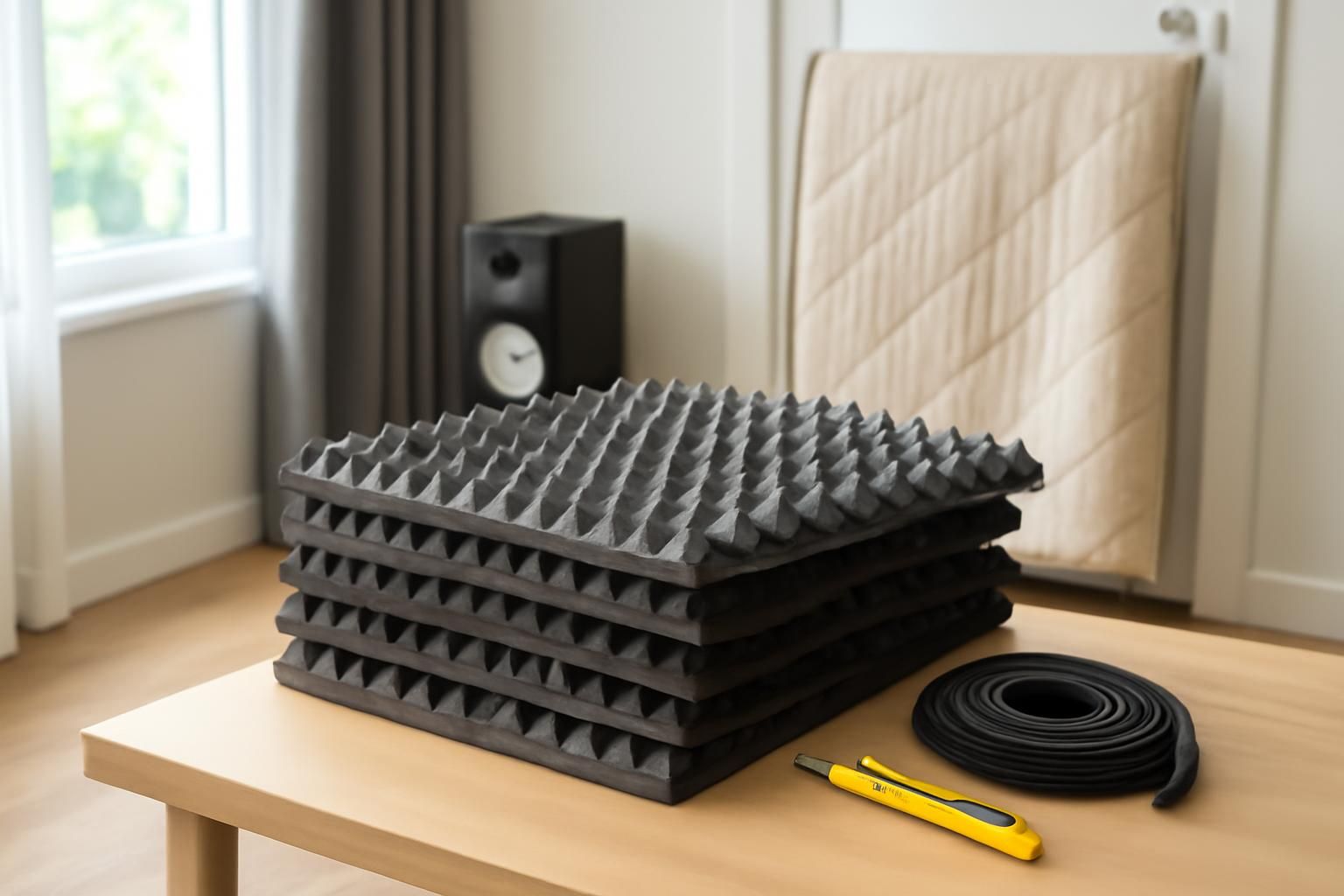
- Buying acoustic foam tiles and expecting them to block sound through walls — they only absorb internal echo.
- Leaving air gaps around pipes, sockets, or skirting boards unsealed — sound travels through any gap.
- Mounting heavy wall treatments without checking stud positions first, risking them pulling off plasterboard.
Frequently asked
Will egg boxes on the wall actually soundproof a room?
No. Egg boxes may diffuse a tiny amount of high-frequency sound, but they provide almost no mass or absorption. They are a myth. Use heavy curtains, rugs, or proper acoustic panels instead.
What's the cheapest way to reduce noise from a loud neighbour?
Seal the gap under your door with a door sweep and draught-proof windows and skirting. These cost very little and reduce the most obvious sound paths. Beyond that, mass such as a packed bookshelf against the shared wall helps.
Can I soundproof a rented flat without drilling?
Yes. Use adhesive door sweeps, heavy freestanding furniture against walls, thick rugs, and heavy curtains on tension rods. Avoid anything that damages the walls or requires permanent fixings.