Quick answer
Clean and dry the frame surfaces. Fit a brush strip or draught excluder to the bottom of the door. Install a brush-lined flap on the letterbox and a cover on the keyhole. Apply self-adhesive foam, rubber or silicone seal around the sides and top of the frame. For sash windows, use pile weather strip in the channel. Always leave trickle vents unobstructed.
A draughty door or window lets warm air out and cold air in, adding tens of pounds a year to a typical UK heating bill. The materials to fix it cost under £15, making this one of the cheapest energy-saving jobs you can do. The trick is to treat each entry point separately and to choose a seal that lasts.
What you’ll need
- Self-adhesive foam, rubber P-profile or silicone seal
- Door-bottom brush strip or fabric draught excluder
- Brush-lined letterbox flap
- Keyhole cover
- Clean cloth
- Scissors
- Screwdriver
Step by step
- 1
Find every gap
Close the door and move a lit candle or your hand slowly around the frame, the bottom edge, the letterbox and the keyhole. Feel for cold air on your wrist or watch the flame flicker. Note every leak so you fit the right product in the right place.
- 2
Clean and prep the surfaces
Wipe down every surface where adhesive strip will sit. Remove dust, grease and old foam residue. The surface must be completely dry or the strip will peel off within weeks. Let it air-dry for 10 minutes before fitting.
- 3
Seal the bottom of the door
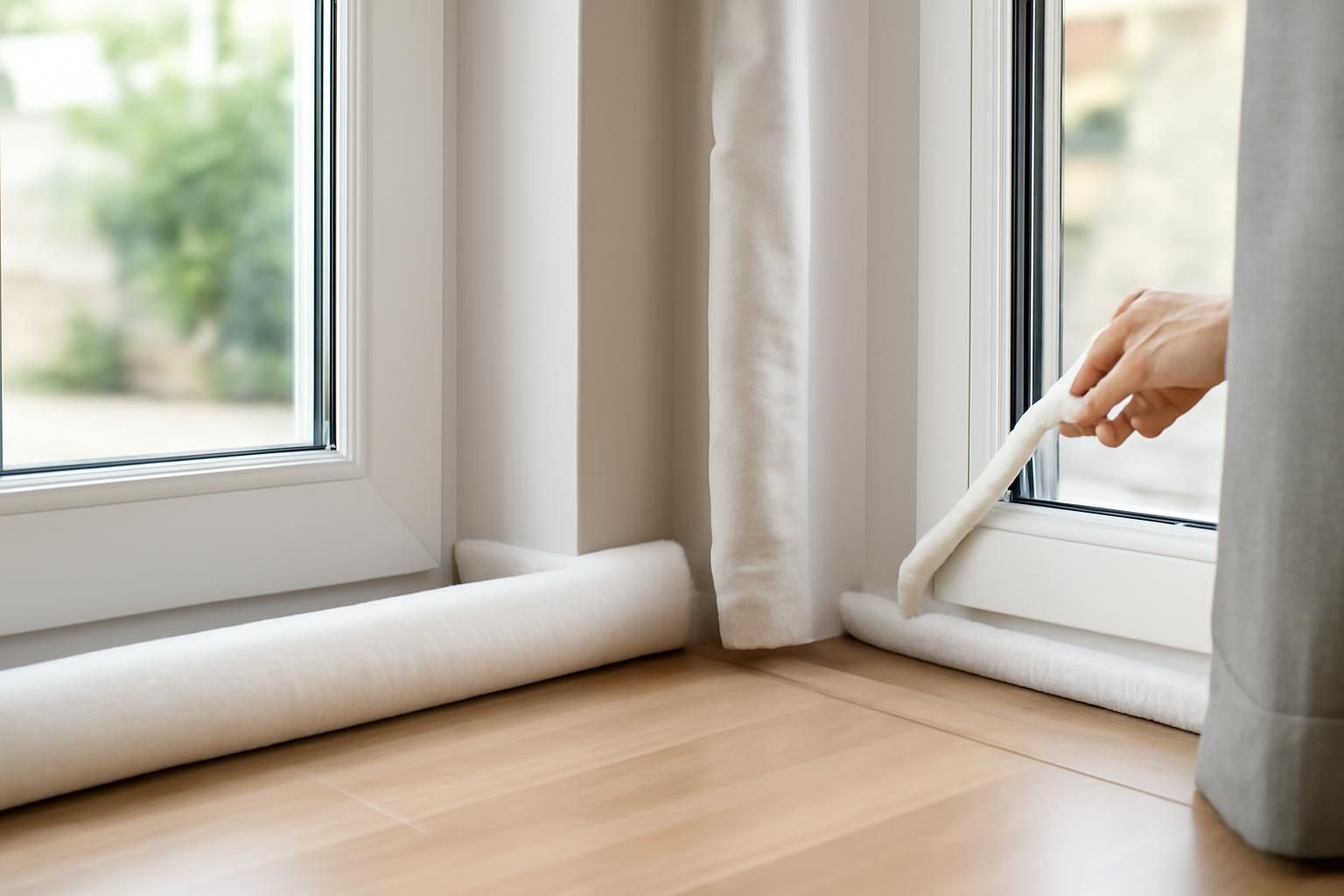
Screw a brush strip to the bottom of the door so the bristles just touch the floor or threshold without dragging heavily. For a temporary fix in a rented flat, use a fabric draught excluder that slides under the door.
- 4
Fit the letterbox and keyhole
Screw a brush-lined flap over the inside of the letterbox so mail can pass through but air cannot. Fit a simple metal or plastic cover over the keyhole on the inside face of the door. These two fixes alone stop a surprising amount of cold air.
- 5
Apply seal to the frame
Cut self-adhesive seal to length and press it firmly around the sides and top of the door frame or window rebate. Self-adhesive foam is cheapest but compresses flat within one or two winters. Rubber or silicone P-profile lasts five to ten years and springs back better. Do not fit strip so thick that the door sticks.
- 6
Treat windows and keep vents clear
For sash windows, insert pile weather strip into the channels where the sashes slide. For casement windows, run P-profile seal around the rebate where the frame meets the casement. Never seal over trickle vents built into modern windows — controlled ventilation prevents condensation.
The biggest hazard is sealing a room so tightly that condensation and mould build up, or reducing ventilation below safe levels where gas appliances are used. If you have a boiler or gas fire in the room, never block permanent vents or air bricks. If you notice increased condensation on windows, persistent damp patches or a yellowing pilot-light flame after draught-proofing, stop and call a Gas Safe registered engineer immediately.
Common mistakes
- Applying self-adhesive foam to a damp or dusty surface — it peels off within weeks; the surface must be clean and dry before application.
- Over-compressing the seal by fitting it too thick, which causes the door to stick closed and damages the strip within one season.
- Sealing a door that already has visible mould or condensation in the room without addressing ventilation first — this worsens the damp problem.
Frequently asked
How do I stop a draught under a door without a permanent fitting (e.g., for a rented property)?
Use a fabric draught excluder shaped like a long stuffed snake that slides underneath the door. It requires no screws and leaves no marks. You can also use a removable brush strip that clips over the bottom edge, though it is slightly less effective.
My front door still feels cold after draught-proofing — why?
Draught-proofing stops air movement, but it does not insulate the door itself. A thin wooden or composite door will still feel cold to the touch because heat conducts through the material. Adding a thick curtain across the door in winter is the quickest way to reduce that radiative cold.
Can draught-proofing help with noise as well as heat loss?
Yes, to a limited extent. Sealing gaps around a door or window reduces airborne noise because it closes the path sound travels through. It will not block impact noise through the wall itself, but you should notice less street noise and fewer drafts.