Quick answer
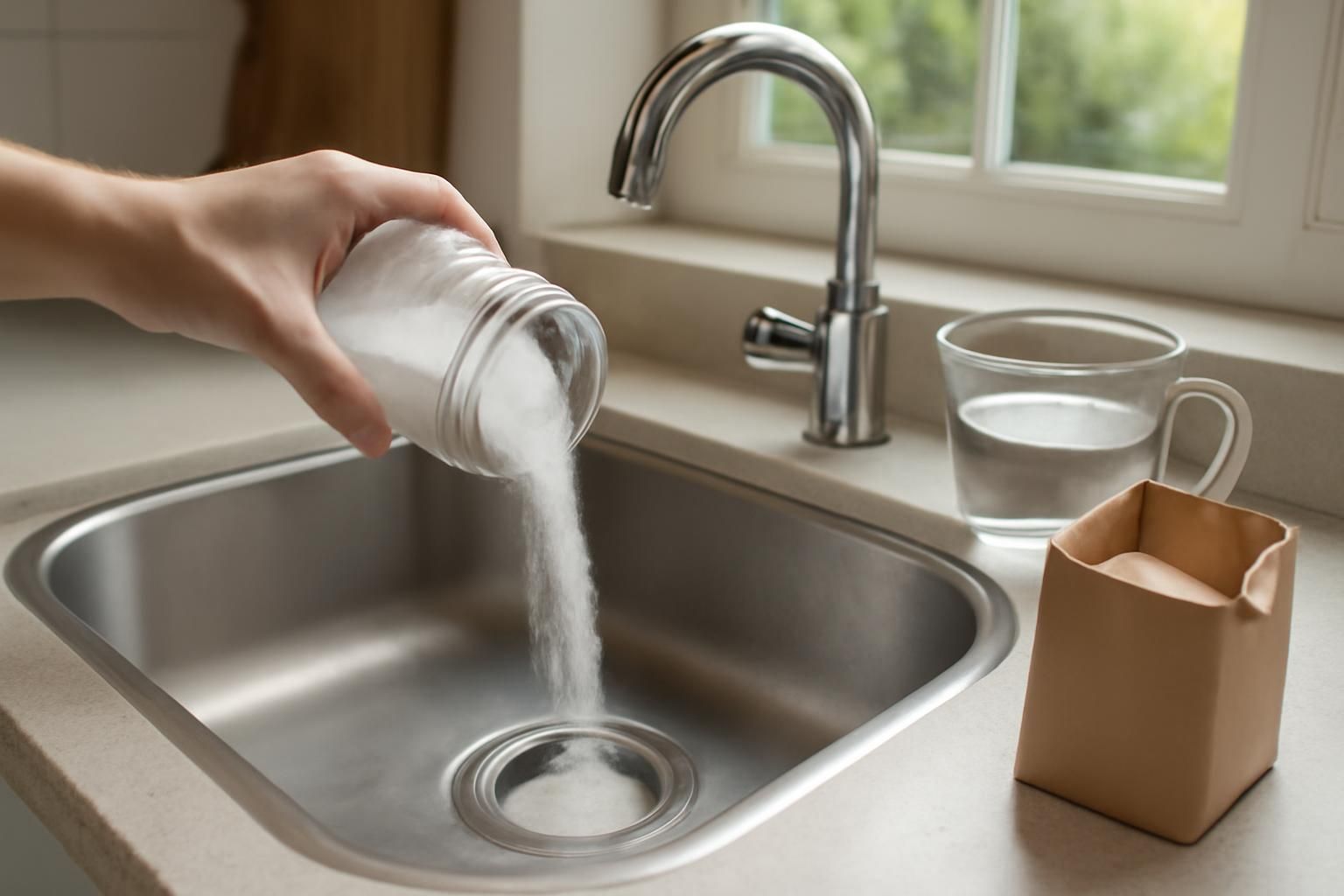
Remove standing water from the sink. Pour half a mug of bicarbonate of soda down the plughole. Follow with half a mug of white vinegar. Wait 15 minutes. Flush with a kettle of boiling water. Repeat if needed.
Bicarbonate of soda and vinegar create a fizzing reaction that breaks down grease and soap scum. This method is safe for most pipes and avoids harsh chemicals.
What you’ll need
- bicarbonate of soda
- white vinegar
- boiling water
- plunger (optional)
- bucket
- old towel
Step by step
- 1
Clear standing water and protect the area
Bail out any standing water with a bucket. Lay an old towel around the base of the sink to catch splashes.
- 2
Pour bicarbonate of soda into the drain
Spoon half a mug of dry bicarbonate of soda directly into the plughole. Try to get it as far down as possible. Shake it through with your fingers if the hole is narrow.
- 3
Add white vinegar
Pour half a mug of white vinegar into the same plughole. The mixture will fizz and foam. This is normal. Place a damp cloth over the hole to force the reaction downwards.
- 4
Wait and flush with boiling water
Leave the mixture to work for 15 minutes. Boil a full kettle. Pour the boiling water slowly but steadily down the drain. The heat melts grease and washes away loosened debris.
- 5
Use a plunger if the blockage remains
If the water still drains slowly, place a plunger over the plughole. Add enough water to cover the rubber cup. Pump the handle up and down sharply for 20 seconds. Check the flow.
Boiling water can scald. Pour slowly and keep your face and hands clear of steam. Do not use this method if you have already poured commercial drain cleaner down the sink. Mixing chemicals is dangerous. Do not use boiling water on porcelain sinks if they are cracked, as thermal shock may worsen the damage.
Common mistakes
- Using baking powder instead of bicarbonate of soda. Baking powder contains other ingredients and is less effective
- Pouring boiling water immediately without letting the reaction sit for 15 minutes
- Mixing vinegar with bleach or drain cleaner, which releases toxic fumes
- Giving up after one attempt. Grease blockages often need two or three treatments
Frequently asked
Is this method safe for septic tanks?
Yes. Bicarbonate of soda and vinegar are safe for septic systems. They do not kill the bacteria that break down waste.
Can I use this on a completely blocked sink?
Yes, but you must remove the standing water first so the mixture reaches the blockage. If the sink is full, bail it out with a bucket.
What if the sink is still blocked after three tries?
The blockage may be solid or located further down the pipe. Use a drain snake or call a plumber. Do not continue pouring chemicals down the drain.