Quick answer
Wipe out the scent trail with soapy water, then put down a slow-acting sugar bait (a borax-and-sugar mix works) so workers carry it back and poison the colony. Squashing the ants on the counter does nothing to the nest.
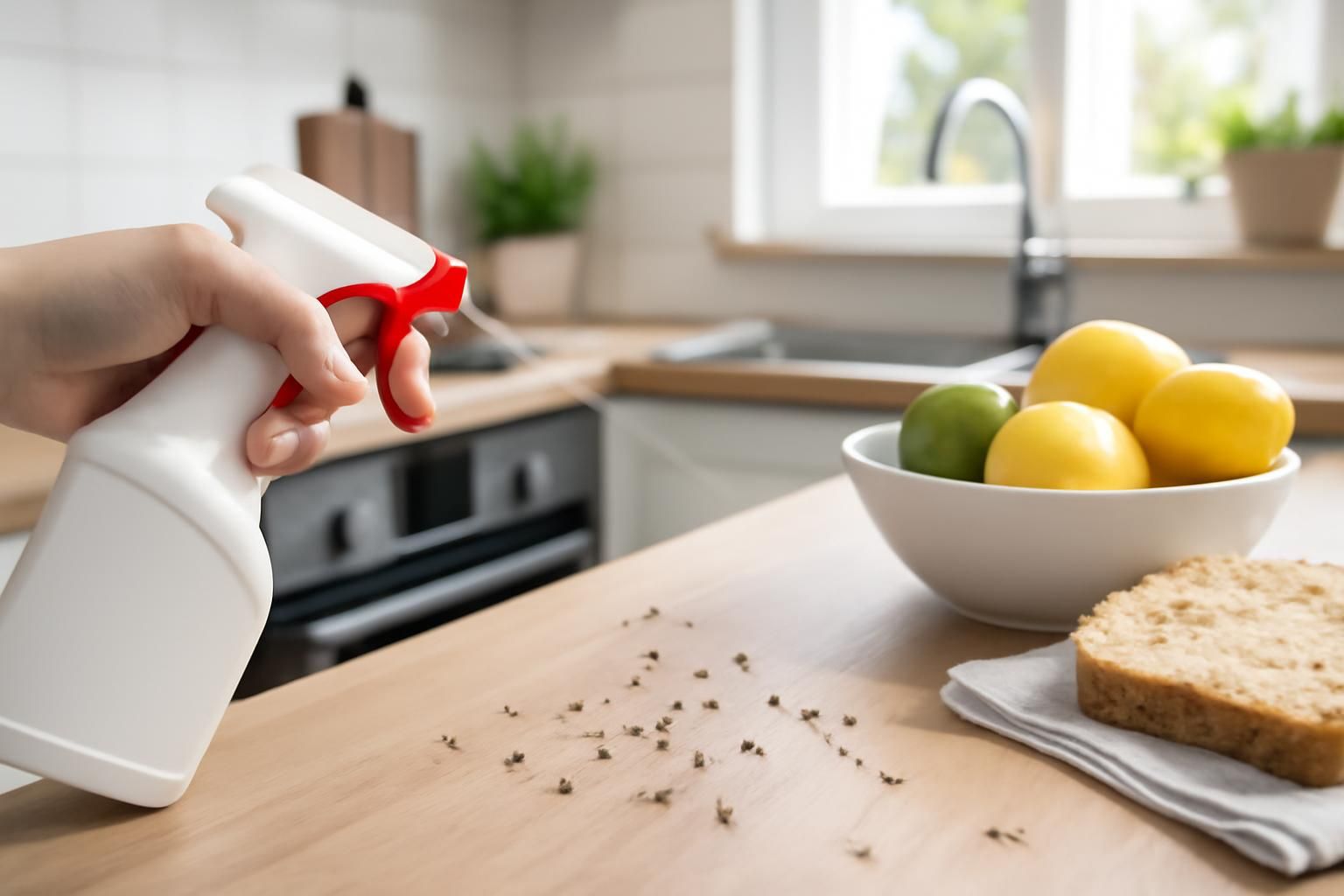
The ants crossing your counter are scouts and foragers following an invisible pheromone trail to food. Squashing them or hitting them with contact spray clears the ants you can see and leaves the colony untouched, so they're back in hours. What actually works has two parts: wipe out the trail and lock up the food, then let the ants carry poisoned bait into their own nest. Most kitchen ant problems clear in one to two weeks this way, no exterminator required.
What you’ll need
- Spray bottle
- Microfiber cloths or paper towels
- Caulk gun (for sealing gaps)
- Flashlight
- Cotton swabs or a small dish for placing bait
Materials
- Dish soap
- White vinegar (optional, for wiping trails)
- Borax or boric acid powder
- Sugar or honey (the bait carrier)
- Pre-made ant bait gel or bait stations (instead of DIY)
- Silicone or acrylic caulk
- Airtight food storage containers
Step by step
- 1
Find the trail and entry point
Watch where the ants walk. They run in a near-straight line between food and a gap, usually a crack at the base of a wall, the spot where a pipe enters under the sink, a window frame, or a door threshold. Follow the line to where it vanishes into the structure and mark that spot.
- 2
Wipe out the scent trail
Put a few drops of dish soap in a spray bottle of warm water, or use a 50/50 vinegar-water mix. Spray the whole trail plus the entry point, then wipe it clean. That erases the pheromone trail so new scouts lose the route. Re-wipe counters daily while you're treating.
- 3
Remove the food source
Move sugar, honey, cereal, pet food, and ripe fruit into airtight containers. Wipe sticky jar lids and the insides of cabinets. Empty the trash, rinse the recycling, and clean under the toaster and behind the bin where crumbs pile up. Ants won't stick around a kitchen with nothing to eat.
- 4
Set bait near the trail
Mix a small amount of borax into sugar water, around a teaspoon of borax to a cup of sugar syrup, just enough to make it slightly toxic. A weak mix matters: too much borax kills workers before they make it home. Or skip the math and use a ready-made gel. Dab it on bits of cardboard or in a shallow lid, right on the active trail near the entry point, not on the spot you just wiped clean. The slow poison lets workers haul it back to feed the colony before it kills them.
- 5
Leave the bait alone and let them feed
Don't kill the ants swarming the bait. That swarm is the whole point. For the first few days you'll likely see more ants, not fewer. Don't spray or wipe near the bait, and top it up if it dries out. Colony numbers drop once the bait reaches the queen and the brood.
- 6
Seal the entry points
Once the traffic stops, usually after one to two weeks, run a bead of caulk into the cracks and gaps you marked. Seal around the pipe under the sink and any gaps at door thresholds. That blocks the next colony from using the same highway.
- 7
Keep it from coming back
Wipe counters and sweep crumbs at night, fix any drips under the sink (ants are after water too), and keep food sealed. Check the old entry points every few weeks for fresh scouts.
Borax and boric acid are toxic if swallowed and must stay away from children and pets. Use closed bait stations or tuck bait where animals and kids can't reach it, label any homemade bait, and never put it on a bare food-prep surface. Don't mix vinegar with bleach or other cleaners. If you've got a large indoor colony, carpenter ants (they tunnel into wood), or an infestation that keeps coming back despite treatment, call a licensed pest professional.
Common mistakes
- Spraying contact insecticide on the trail. It kills foragers on the spot so they never carry bait home, and it scatters the colony into new trails.
- Mixing the bait too strong. Heavy on the borax and workers die before they reach the nest, so the queen survives. A weak mix travels further.
- Cleaning up the bait too soon, or wiping near it because the ants look 'worse'. The swarm at the bait is the treatment working.
- Baiting without clearing competing food. Ants ignore bait when easier crumbs and spills are nearby.
- Sealing the entry point before the colony is dead. You trap foragers inside and they just find another way out.
Frequently asked
Why are there suddenly MORE ants after I put out bait?
Normal, and a good sign. Slow bait pulls in the whole foraging crew to carry it home, so traffic spikes for a few days before the colony collapses. Leave it alone.
How long until they're gone?
Most kitchen colonies clear within one to two weeks of steady baiting. No decline after two weeks usually means the wrong bait (try a protein-based one instead of sugar) or more than one colony.
Do natural repellents like cinnamon, vinegar, or lemon work?
They break up the scent trail and discourage ants from crossing a treated line, which helps in the short term, but they don't kill the colony. Use them alongside bait, not instead of it.
Should I find and destroy the nest directly?
If you can find an outdoor nest, you can treat it directly. But indoor nests are usually hidden inside walls or under floors. Baiting is more reliable because the ants find the nest for you and deliver the poison.
When do I need a professional?
Call one if you suspect carpenter ants (sawdust-like shavings, large ants near wood), if you see winged 'swarmer' ants indoors, or if the problem keeps returning despite proper baiting and sealing.
Match the bait to what the ants want right now. Many species prefer sweet baits in spring and switch to greasy or protein baits later in the season. If a sugar bait gets ignored, try a dab of peanut butter mixed with a little borax.