How to Get Rid of Fruit Flies
Fruit flies breed in fermenting, moist organic matter, and a new generation can mature in about a week, which is why they seem to multiply overnight. Swatting the adults you see does almost nothing on its own. The fix is to find and destroy every breeding site at once (overripe produce, spills, gunk
Quick answer
Find what they're breeding in (overripe produce, spills, gunky drains, damp sponges and mop heads) and remove it all. Set an apple cider vinegar trap with a couple drops of dish soap to catch the adults, and scrub any moist organic film off drains and surfaces. Keep it up for one to two weeks. The population dies off as the existing adults age out and no new ones hatch.
Fruit flies don't come from nowhere. They lay eggs on or near fermenting, moist organic matter, and a single batch can grow into breeding adults in about a week. That's why they seem to explode overnight, and why killing the flies you can see barely dents the problem. The only thing that works is removing every breeding site at once so no new generation hatches, then trapping the leftover adults until they age out. This guide covers all three: locate the source, kill the larvae, trap the adults. It's written for kitchens, but the same approach works in bars, break rooms, and anywhere produce or sugary residue collects.
What you’ll need
- Small bowls or jars for vinegar traps
- A sheet of paper for a funnel trap (optional)
- Stiff drain brush or an old toothbrush
- Flashlight
- Plastic wrap and a rubber band
Materials
- Apple cider vinegar (red wine or a piece of overripe fruit also works)
- Dish soap
- Boiling water
- Baking soda and white vinegar for drains
- Trash bags
- Paper towels and all-purpose cleaner
Step by step
- 1
Find the breeding source
Before you trap anything, hunt for what they're laying eggs in. Start with the obvious: a bowl of ripe fruit, a forgotten potato or onion in the pantry, an open wine or juice bottle. Then check the spots you've stopped looking at: under and behind the trash can, the recycling bin with its juice and beer residue, the bottom of the fruit bowl, the garbage disposal, and the gap behind appliances. Pull the bin out and look at the floor underneath. The source is almost always something fermenting that you walk past every day.
- 2
Remove and seal the food sources
Throw out overripe or damaged produce. Take the trash and recycling outside now, not later. Move the fruit you're keeping into the fridge or sealed containers. Wipe down any surface that held produce, including the bottom of the fruit bowl where juice pools. If you keep a compost bin indoors, empty it and rinse it out.
- 3
Test and clean your drains
Kitchen drains and garbage disposals are the most common hidden breeding site, because a film of organic gunk builds up on the pipe walls just below the opening. To check a drain, tape a clear plastic bag loosely over it overnight. If flies are breeding there, you'll find some trapped in the bag by morning. To clean it, pour a kettle of boiling water down, scrub the inside walls with a stiff brush, then add half a cup of baking soda followed by a cup of white vinegar. Let it foam for about 10 minutes and flush with more hot water. Run the disposal with cold water and a little dish soap.
- 4
Set apple cider vinegar traps
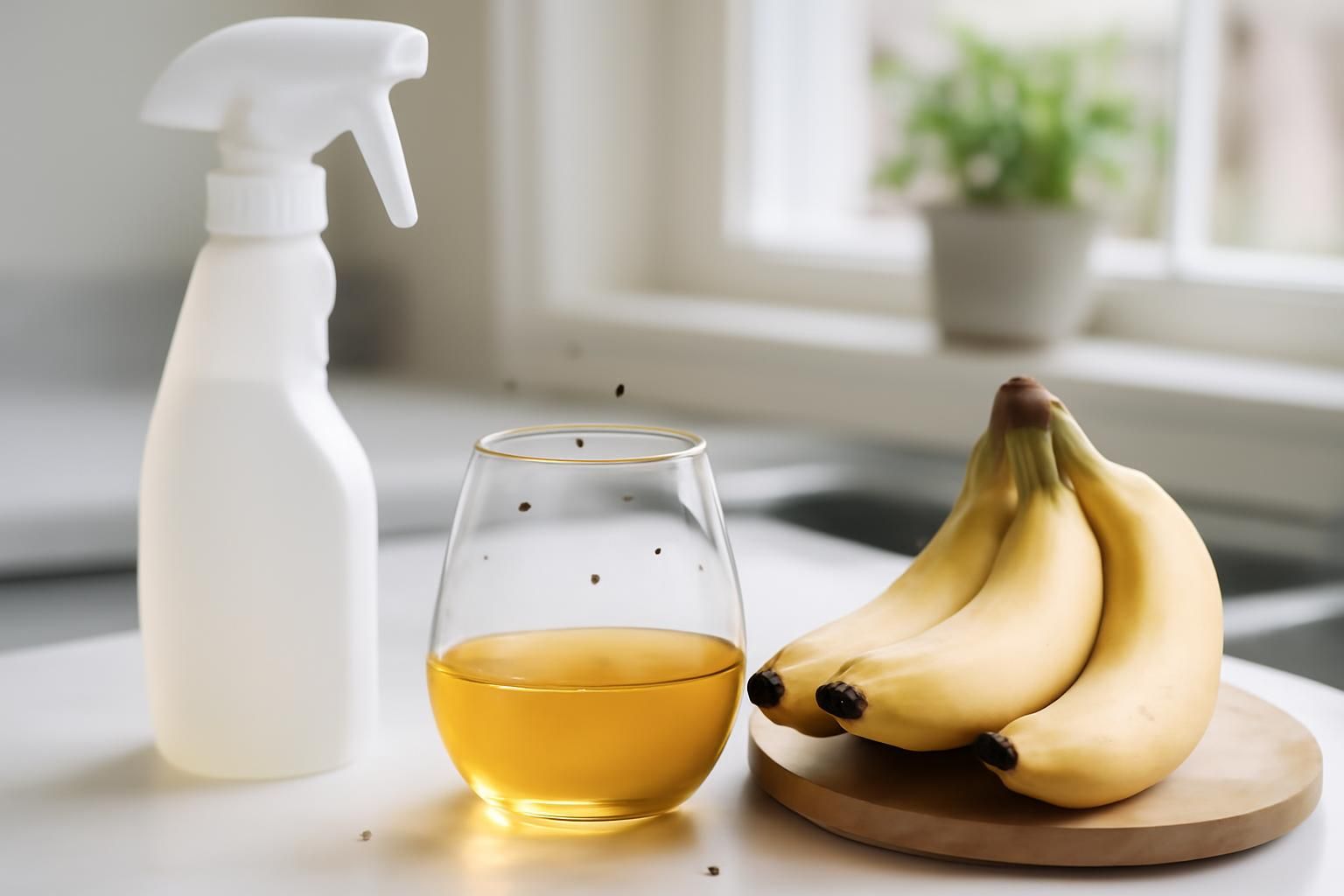
Pour about an inch of apple cider vinegar into a bowl or jar and add 2 to 3 drops of dish soap. Swirl gently. The soap breaks the surface tension, so flies that land sink instead of skating off the top. Put the traps where you've seen the most activity, usually near the bin or the fruit bowl. For a stronger version, cover the jar with plastic wrap, hold it down with a rubber band, and poke a few small holes. Flies get in but struggle to find their way back out.
- 5
Add a paper-funnel trap for stubborn spots
If a plain bowl isn't catching much, roll a sheet of paper into a cone with a small hole at the tip and set it point-down into a jar baited with vinegar or a chunk of overripe banana. The funnel guides flies in, and they rarely find the small opening again on the way out. Leave it overnight at the activity hotspot.
- 6
Deep-clean the surrounding area
Wipe down counters, the area around the sink, and the lid and outside of the trash can with all-purpose cleaner. Hit the sticky spills behind the toaster and under small appliances, and don't skip damp sponges and mop heads, which breed flies on their own. Wring out or replace anything that stays wet. Empty and wipe the drip trays under the fridge and dish rack.
- 7
Keep traps running until the cycle breaks
Refresh the vinegar traps every 2 to 3 days. Once they fill with dead flies and lose their smell, they stop pulling. Keep them out for at least one to two full weeks. Even with every source gone, eggs already laid will keep hatching for several days, so don't quit early. When you go 2 to 3 days with an empty trap and no flies in sight, the infestation is over.
Never pour bleach down a drain and then follow it with vinegar or any other cleaner. Mixing bleach with an acid like vinegar, or with ammonia, releases toxic gas. Stick to boiling water plus baking soda and vinegar, and don't combine cleaning products. Pour boiling water straight down the drain to avoid splashing and scalding yourself. Repeated boiling water can soften and damage some PVC pipes and the seals or traps under a sink, so use it as part of a one-time cleanup, not a daily habit.
Common mistakes
- Swatting or spraying only the adults you can see while ignoring the breeding source. The next generation hatches and you're back to square one.
- Quitting after a day or two because the fruit bowl looks better. Eggs already laid take several days to hatch, so you have to outlast the full cycle.
- Overlooking the drain and garbage disposal. They're the single most common hidden source, and a clean-looking sink can still have a gunky pipe wall.
- Leaving the kitchen trash and recycling indoors. Sugary residue in the recycling bin breeds flies just as well as fresh fruit.
- Forgetting damp sponges, mop heads, and the bottom of the fruit bowl, all of which breed flies on their own.
- Using vinegar with no dish soap. Without soap to break the surface tension, flies land, drink, and leave unharmed.
Frequently asked
How long does it take to get rid of fruit flies?
If you remove every breeding source at once and keep traps running, most infestations clear in one to two weeks. The lag is because eggs already laid keep hatching for several days. If flies are still around after two weeks, you've missed a source, usually a drain or a hidden piece of produce.
Are these fruit flies or something else?
Fruit flies are tan to brownish, very small, and hover around fruit and bins, often with red eyes. If the flies are darker, rest on drains and walls, and fly in short jerky bursts, they're probably drain flies, which breed only in drain gunk. Tiny dark flies around houseplant soil are usually fungus gnats. The fixes differ, so identify before you treat: drain flies need the drain cleaned, fungus gnats need you to let the soil dry out and treat the potting mix.
Does apple cider vinegar really work better than other baits?
Vinegar works because it smells like fermenting fruit, which is exactly what fruit flies are hunting for. Red wine and a chunk of overripe banana work just as well. The bait isn't really the point. What matters is adding dish soap so the flies sink, and putting the trap right where they're active.
Should I use a chemical insect spray?
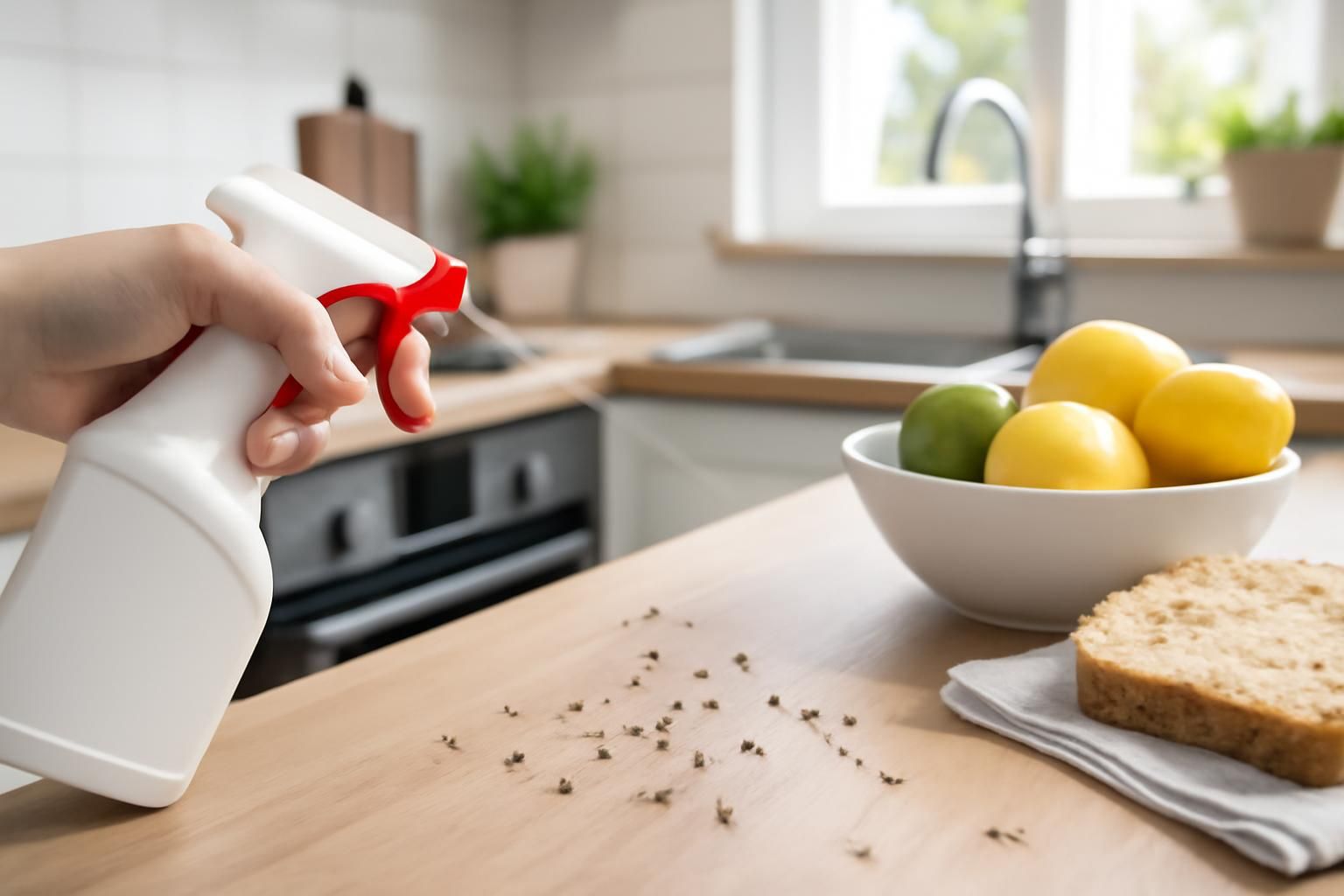
Usually no. Sprays kill adults on contact and do nothing to the breeding source, so they don't solve the problem and they add chemicals around food-prep surfaces. Source removal plus traps works better and is safer in a kitchen. Keep spray as a last resort, and never spray it on food, dishes, or counters you eat off.
How do I keep them from coming back?
Store ripe fruit in the fridge, take out trash and recycling regularly, rinse cans and bottles before they go in the bin, run and clean your disposal weekly, and don't leave damp sponges or spills sitting out. Fruit flies also hitchhike in on produce from the store, so a few showing up isn't a hygiene failure. It's just an open door you want to close fast.
Questions about this guide
No questions yet — be the first to ask one and we’ll help you out.
Comments
No comments yet. Start the conversation.
Did this guide help?
Did you try this?
Help others by sharing how it went.
Show your result
Tried this guide? Share a photo of how it turned out.