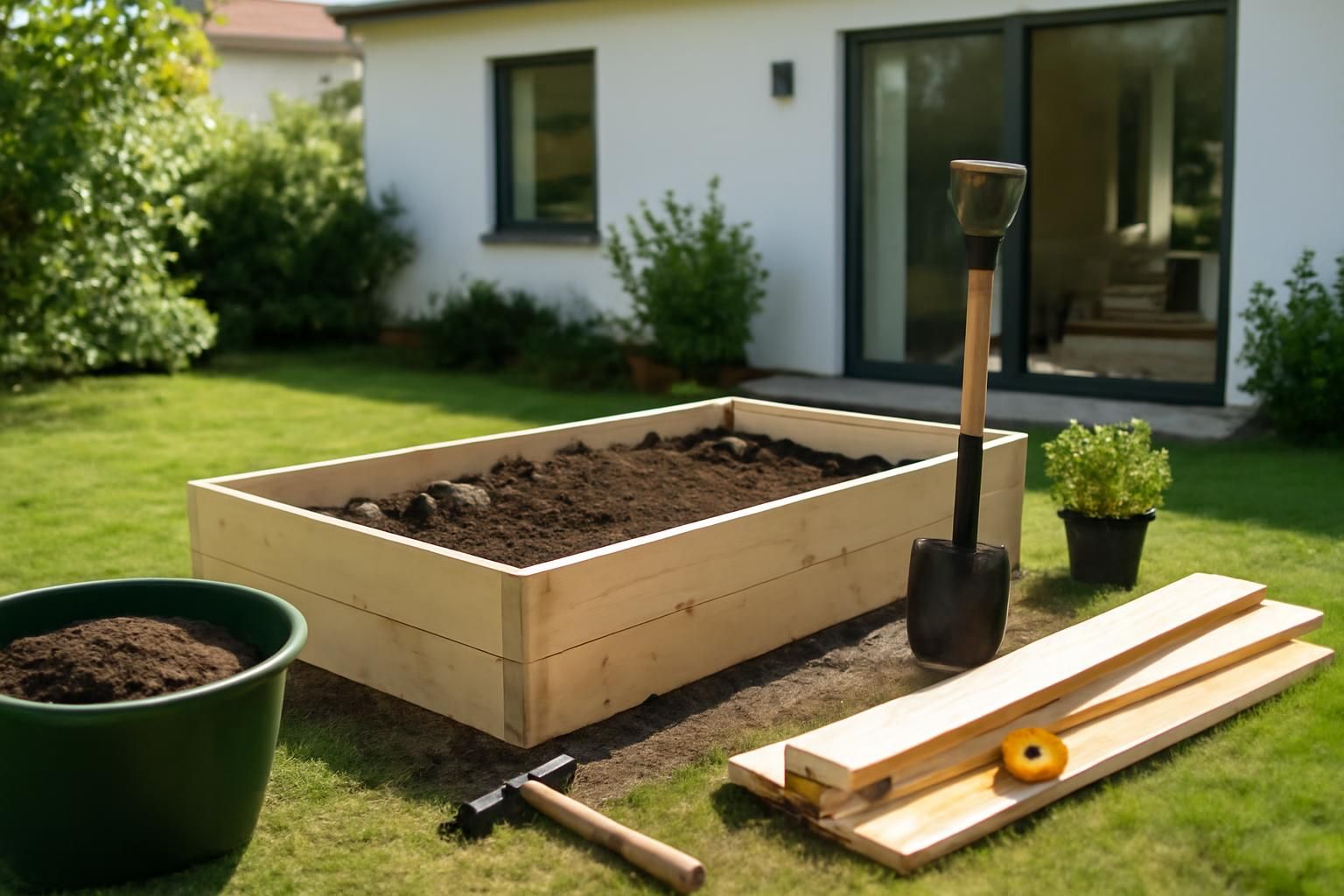
Quick answer
Cut four lengths of untreated timber to make a 1.2 m × 2.4 m rectangle. Screw the corners together with 50 mm exterior screws. Place the frame on level ground in a sunny spot, checking with a spirit level. On hard surfaces, drill a few drainage holes in the base boards. Line the bottom with cardboard, then fill with alternating layers of compost and topsoil.
A raised bed warms up faster in spring, drains better than compacted ground, and lets you control the soil. A standard 1.2 m × 2.4 m bed is wide enough to grow plenty of vegetables but narrow enough that you can reach the centre from either side. Untreated larch or Douglas fir outlasts cheap treated timber for food growing, because the preservatives in standard treated wood are not rated for food contact and the wood often warps within a few seasons.
What you’ll need
- untreated timber (larch or Douglas fir), 25 mm × 150 mm
- 50 mm exterior screws
- cordless drill
- spirit level
- tape measure
- saw
- cardboard sheets
- compost
- topsoil
- preservative stain (optional)
Step by step
- 1
Choose and prepare the site
Pick a spot that gets at least six hours of sun a day and is clear of overhanging tree roots. If the ground slopes, dig out the high side or pack soil under the low side so the frame sits level. Grass underneath will die off naturally once you cover it.
- 2
Cut and assemble the frame
Cut two lengths to 2.4 m and two to 1.2 m from 25 mm × 150 mm untreated timber. Lay them out as a rectangle. Pre-drill pilot holes at the corners, then drive two 50 mm exterior screws through each end to form the box. Check that the corners are square with a tape measure diagonally.
- 3
Position and level the bed
Carry the frame to the site and set it down. Lay a spirit level across the top in several directions. Pack soil or small stones under the low corners until it is level. A tilted bed washes nutrients to one side and looks untidy.
- 4
Add drainage if needed
If the bed sits directly on concrete or patio slabs, lay a 5 cm layer of coarse gravel or broken rubble in the bottom, or drill 12 mm drainage holes through the base boards. On soil, no extra drainage is needed; the ground below absorbs excess water.
- 5
Fill with lasagne layers
Line the bottom with flattened cardboard to suppress weeds. Add a 10 cm layer of rough compost or partially rotted organic matter. Cover with 15–20 cm of topsoil mixed with compost. The layers settle over a season, so mound the surface slightly above the rim. You can add leaf mould to bulk up the fill for free.
The biggest hazard is using pressure-treated timber containing preservatives not rated for food contact; chemicals can leach into the soil you grow vegetables in. Use untreated larch, Douglas fir or food-safe sleepers instead. When lifting bags of compost or timber, bend at the knees and keep your back straight.
Common mistakes
- Making the bed too wide — readers can't reach the centre; 1.2 m maximum width is the practical rule.
- Filling with pure topsoil or pure compost rather than a blended mix, leading to compaction or nutrient-poor drainage.
- Forgetting to treat or seal cut ends of timber, which is where rot begins.
Frequently asked
What wood should I use for a raised bed that will hold vegetables?
Use untreated larch or Douglas fir. Both contain natural resins that resist rot without chemical preservatives. Cheap treated timber may contain chemicals not rated for food-growing beds. Untreated softwood usually lasts many years; sealing the cut ends extends this further.
How deep does a raised bed need to be for growing carrots or potatoes?
Carrots need at least 20–25 cm of loose soil so the roots can grow straight. Potatoes need 30–40 cm so you can earth them up as they grow. A 25 cm deep bed works for most salad crops and herbs. If you want deep-rooted vegetables, build the sides higher or mound the soil.
Can I place a raised bed directly on a patio or concrete?
Yes, but you must provide drainage. Drill holes through the base boards, or leave gaps between the boards. Add a 5 cm layer of gravel or rubble at the bottom so water does not pool. The soil depth should still be at least 25 cm for most vegetables.