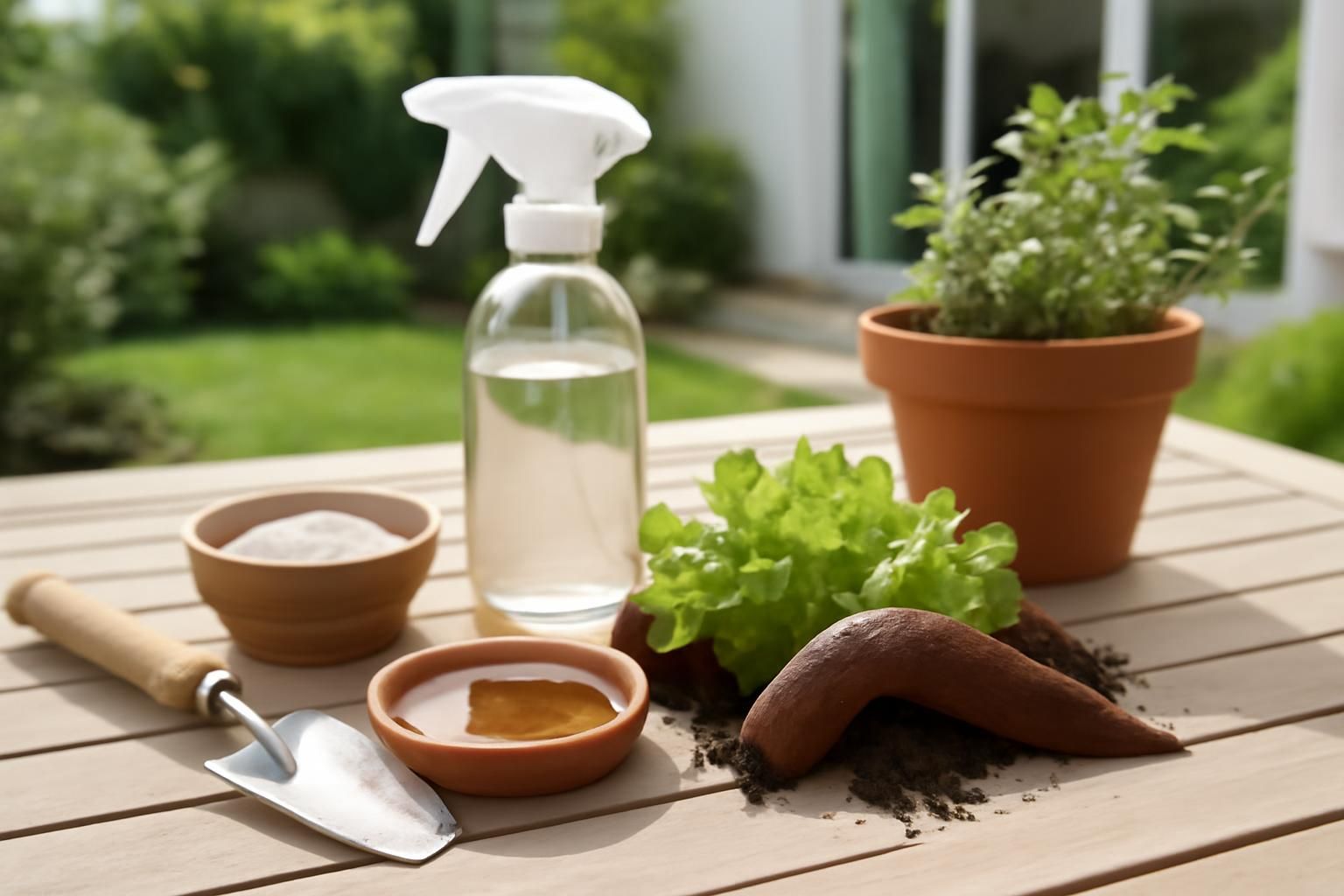
Quick answer
Pick slugs off by hand after dark with a flashlight, sink a few shallow beer traps near your most-chewed plants, and ring seedlings with something scratchy like crushed eggshells or sharp grit. No single trick clears them, but run two or three together for a week or two and you'll break the back of the population.
Slugs feed at night and in damp weather, shredding tender leaves and seedlings and leaving ragged holes and silvery slime trails behind them. You won't wipe them out with one clever trick, but stack a few simple tactics and you'll knock the numbers way down and keep them there. The plan is straightforward: make your beds less comfortable for them, catch the ones you can, and put a wall around the plants you care about most.
What you’ll need
- Flashlight or headlamp
- Bucket with a lid (or a jar of soapy water)
- Garden gloves
- Hand trowel
- Shallow containers for traps (yogurt tubs, jar lids, saucers)
Materials
- Cheap beer (any lager does; it's the yeast that pulls them in)
- Crushed eggshells, sharp horticultural grit, or coarse sand
- Copper tape (for pots and raised-bed edges)
- Wool pellets or used coffee grounds (optional barrier material)
- A few wooden boards or scooped-out grapefruit or orange halves (for daytime trapping)
Step by step
- 1
Hunt at night and pick them off
Head out an hour or two after dark, ideally on a damp or rainy evening when slugs are out feeding. Run your flashlight over the leaves, the soil, and the undersides of foliage. Drop every slug you find into a bucket of soapy water; a squirt of dish soap stops them crawling back out. Do this several nights running, at least four or five, to actually dent the population. One night barely registers.
- 2
Set beer traps near the plants you're protecting
Sink a shallow container into the soil so the rim sits about 1 cm (half an inch) above ground level, then fill it two-thirds with beer. That raised rim matters: it stops ground beetles, which eat slugs, from tumbling in and drowning. Put the traps within a couple of feet of vulnerable plants. Empty and refill them every day or two, and again after rain. Traps catch maybe a third of the slugs around them, so treat them as one piece of the plan, not the whole thing.
- 3
Use daytime hiding traps
Lay wooden boards, flat stones, or scooped-out citrus halves cut-side down on the soil overnight. Slugs crawl under cool, damp cover to wait out the day. Flip the traps each morning and scrape whatever's hiding into your bucket. It runs around the clock alongside the beer traps.
- 4
Ring vulnerable plants with a barrier
Slugs hate dragging themselves over dry, scratchy, moisture-sapping surfaces. Lay a continuous band a few centimeters wide of crushed eggshells, sharp grit, coarse sand, or wool pellets around the base of seedlings and prized plants. Keep the ring unbroken; one gap and they walk straight through. Top it up after heavy rain, which dampens and flattens most of these barriers and takes the edge off them.
- 5
Wrap pots and bed edges in copper
Run copper tape around the rim of pots, the top edge of raised beds, or stakes set as a perimeter. Wipe the surface clean first so it sticks, and lay one unbroken loop. Slugs get a small jolt off copper and tend to back away, so a clean, gap-free band works as a no-cross line for containers and small beds. It's not foolproof in the open garden, and a determined or dried-out slug will sometimes push across, so lean on it for pots rather than as your only defense.
- 6
Take away their shelter and dry things out
Clear the cool, moist hiding spots they depend on: old leaf piles, spare boards you're not using as traps, low weeds, debris jammed against bed edges. Water in the morning instead of the evening so the soil surface dries off by nightfall. Keep mulch thin around seedlings, since thick damp mulch is prime slug real estate.
- 7
Bring in natural predators and protect them
Ground beetles, frogs, toads, hedgehogs, and plenty of birds all eat slugs. Leave a few wild corners, set out a ground-level water dish or dig a tiny pond, and skip the broad-spectrum pesticides that kill the predators along with everything else. A shallow dish of water and a bit of log cover near the garden edge gives frogs and beetles a reason to move in and patrol for you season after season.
If you do reach for slug pellets, steer clear of the older metaldehyde kind, which is toxic to pets, wildlife, and children; use iron-phosphate pellets instead and follow the label. Take care handling slugs and slug-chewed produce too: slugs can carry parasites, including rat lungworm in some regions, so wear gloves, wash your hands after, and rinse leafy vegetables well before eating them.
Common mistakes
- Leaning on one method alone. Slugs bounce back fast, so you need two or three tactics running together.
- Setting beer traps flush with the soil, which drowns the ground beetles that would otherwise eat slugs for you. Keep the rim slightly raised.
- Leaving gaps in barrier rings. Slugs find the one opening and stroll through it.
- Watering in the evening, which keeps the surface damp all night, exactly when slugs are feeding.
- Quitting after a night or two of hand-picking. Consistency over a week is what actually breaks the cycle.
Frequently asked
Do coffee grounds and eggshells really stop slugs?
They help a little, but they're no magic wall, and they lose most of their bite once wet. Use them as one layer in a combined approach, not a standalone fix, and refresh them after rain.
Does salt kill slugs?
Yes, salt kills slugs on contact by pulling the moisture out of them, but don't sprinkle it on soil or plants. Salt wrecks soil structure and burns roots. Stick to traps, barriers, and hand-picking in the garden itself.
When are slugs most active?
At night, and during or after rain and heavy dew. Cool, damp, overcast weather brings them out even by day. Time your hunting and trap-emptying around those windows.
Are nematodes a good natural option?
They're one of the better ones. Slug-parasitic nematodes are microscopic creatures you water into moist soil, where they infect and kill slugs below ground, and they're harmless to pets, people, and wildlife. They work best in warm, damp soil and need reapplying through the season.
Which plants are most at risk?
Tender seedlings, lettuce, hostas, beans, and soft new growth in general. Aim your traps and barriers at these, and consider starting seedlings in pots up off the ground until they're big enough to shrug off a bit of damage.
Hit slugs hardest in early spring, before they breed. Knock out that first generation and you'll have far fewer to deal with all season.