Quick answer
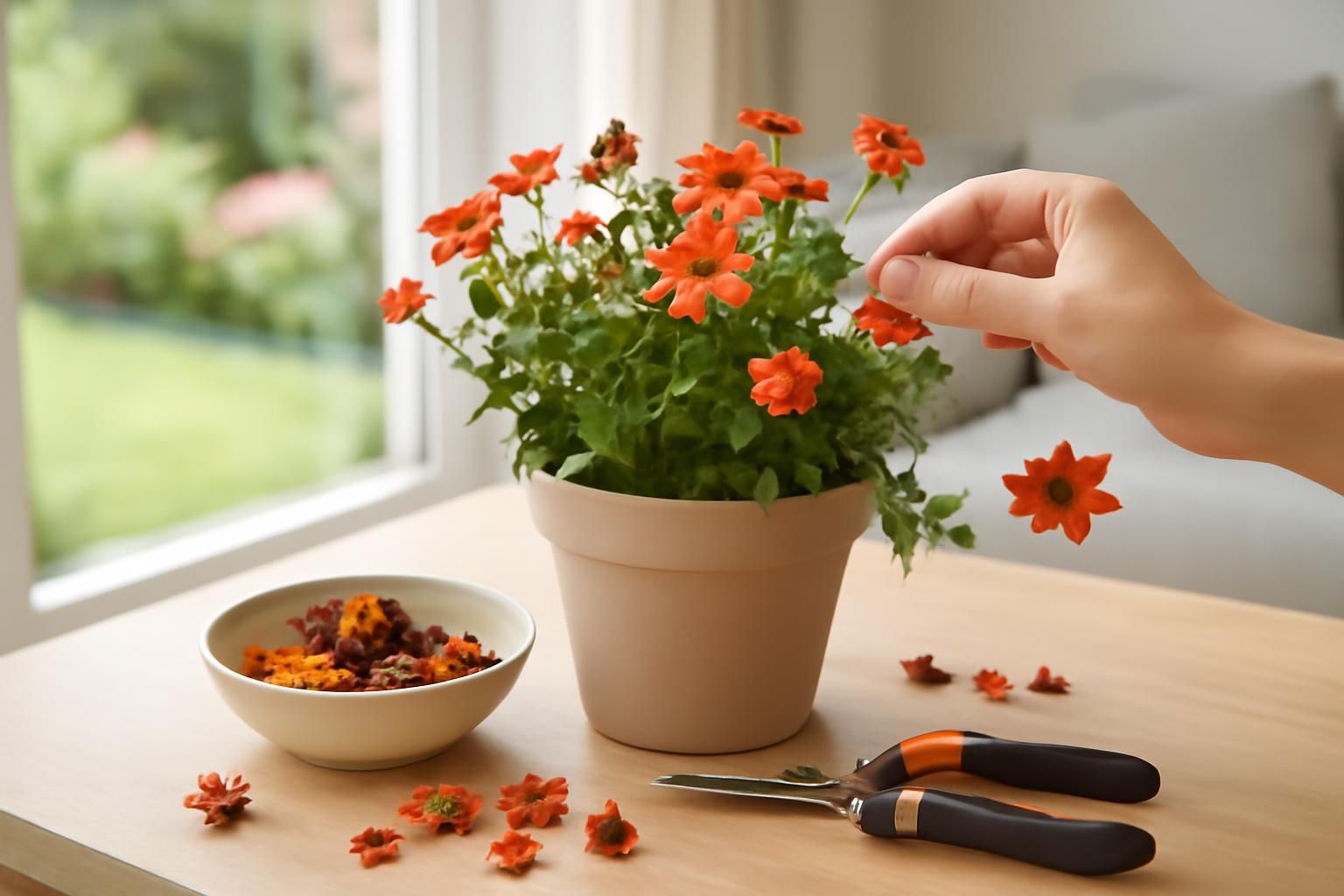
Pinch off soft-stemmed annuals like cosmos and marigolds between your thumb and forefinger. For woody-stemmed plants like roses and dahlias, cut just above an outward-facing leaf node or bud. Remove the whole stem, not just the flower head, and check plants every 5–7 days in peak summer.
A plant that is allowed to set seed stops producing new flowers. Deadheading redirects that energy back into flowering. The technique varies by plant type, but the principle is the same: remove the spent bloom before a seed pod forms.
What you’ll need
- Sharp secateurs or scissors
- Gardening gloves
- Optional: disinfectant wipe for blades
Step by step
- 1
Pinch soft-stemmed annuals
For plants like cosmos, marigolds, and sweet peas, grip the spent flower stem between your thumb and forefinger and pinch it off at the base. Do not leave a long bare stalk.
- 2
Cut woody-stemmed plants to a leaf node
For roses, dahlias, and similar woody plants, use sharp secateurs. Cut just above an outward-facing leaf node or bud. This directs new growth away from the centre of the plant and improves air circulation.
- 3
Snap geraniums at the base
Hold the flower stalk of a pelargonium or geranium near its base and snap it sideways. It should break cleanly. Remove any yellowing leaves at the same time.
- 4
Pick sweet peas before seed pods form
Sweet peas must be picked or deadheaded every few days. Once a seed pod forms, the plant dramatically reduces flowering. Check these plants at least twice a week in summer.
- 5
Leave seed heads on self-seeders
If you want foxgloves, aquilegia, alliums, or poppies to self-seed, leave a few spent heads intact. Collect the seed or let it fall naturally.
Wear gardening gloves when deadheading roses and spiky plants to avoid thorn pricks. Clean secateur blades with a disinfectant wipe between plants to prevent spreading disease. Be careful not to deadhead plants that flower on old wood, such as hydrangeas and certain clematis, mid-season — you may accidentally remove next year's buds.
Common mistakes
- Cutting only the flower head but leaving a long bare stem — this looks untidy and the plant rarely re-buds from that stem.
- Deadheading plants that flower on last year's wood, such as hydrangeas and certain clematis, mid-season and accidentally removing next year's buds.
- Neglecting sweet peas for even a few days — once a seed pod forms, the plant's urgency to flower drops sharply.
Frequently asked
Do all flowers benefit from deadheading, or are some best left alone?
Most annuals and repeat-flowering perennials benefit. Leave plants grown for decorative seed heads, such as alliums and honesty, alone. Single-flowering shrubs like lilac and camellia do not rebloom after deadheading.
When should I stop deadheading in autumn and let the plant go to seed?
Stop deadheading about six weeks before your first expected frost. This gives the plant time to set seed and allows stems to harden off before winter. Leaving seed heads also provides food for birds.
Can I deadhead roses with my fingers or do I always need secateurs?
You can snap off the soft new growth of some roses with your fingers, but secateurs give a cleaner cut and reduce damage to the stem. Always use secateurs for thick or woody stems.