Quick answer
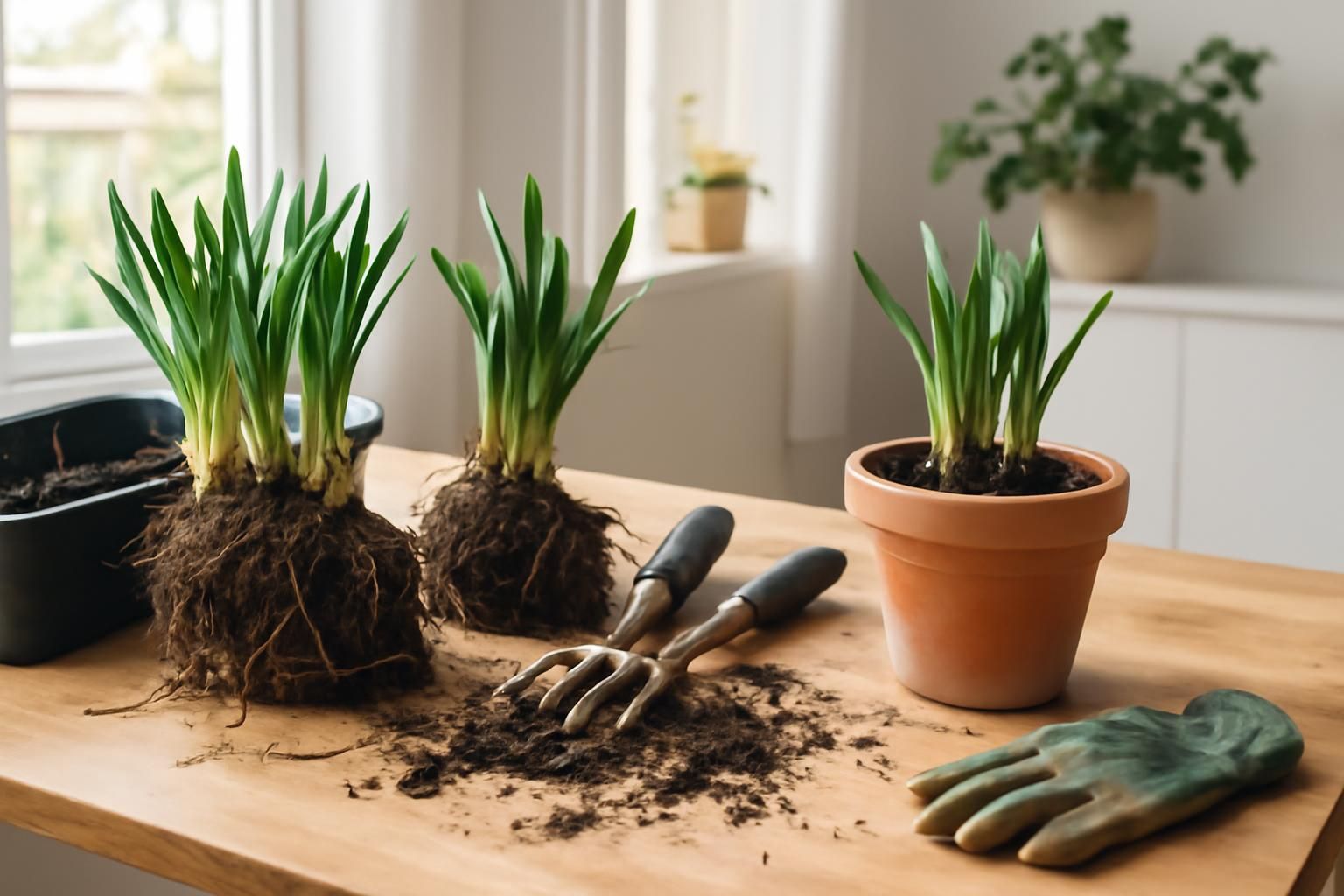
Lift the whole plant with a fork, split the root ball into smaller sections with a sharp knife or saw, then replant each piece at the same depth it was growing before. Water well and label each new plant.
Perennials gradually lose vigour as their roots become crowded. Dividing them every three to five years restores flowering strength and gives you extra plants to fill gaps or swap with neighbours. Do it in spring just as growth starts, or in autumn after flowering ends. Avoid dividing when the ground is frozen or waterlogged.
What you’ll need
- garden fork or spade
- sharp knife or old saw
- compost
- watering can
- plant labels
Step by step
- 1
Water the plant the day before
Moist soil holds the root ball together and reduces stress on the plant. Give it a thorough soak the evening before you plan to divide.
- 2
Lift the whole clump
Push a garden fork into the soil a handspan beyond the outer leaves. Rock the fork back and forth to loosen the roots, then lift the entire plant out of the ground. Shake off loose soil so you can see the root structure clearly.
- 3
Split into sections
Place the clump on the ground. Pull apart fibrous-rooted plants such as daylilies and hostas with your hands. For woody or dense roots, use a sharp knife or old saw to cut straight through the crown. Aim for sections with at least three to five healthy shoots and a good root mass each.
- 4
Trim damaged roots and foliage
Cut away any dead, soft, or broken roots with secateurs. Remove about half of the top growth on each section to reduce water loss while new roots establish.
- 5
Replant straight away
Dig a hole in improved soil, mix in a handful of compost, and set the division at the same depth it was previously growing. Firm the soil gently around the roots and water thoroughly.
- 6
Label and aftercare
Write the plant name and date on a label and push it in beside the new division. Keep the soil damp for the first few weeks. Do not let the root ball dry out.
Sharp tools can slip when cutting through dense roots. Wear sturdy gloves and keep fingers clear of the blade. Work on firm, level ground so the clump does not roll.
Common mistakes
- Dividing during flowering or in hot weather, which shocks the plant and causes wilting.
- Replanting too deep, which rots the crown; the top of the root ball must sit level with the soil surface.
- Keeping divisions out of the ground for hours so the roots dry out and die.
- Making pieces too small with little root or foliage, which struggle to re-establish.
Frequently asked
Which perennials should not be divided?
Avoid dividing tap-rooted plants such as lupins, oriental poppies, and eryngiums. Their long central root does not tolerate disturbance and the plant may fail to re-establish.
Can I divide perennials in summer?
You can, but only if you keep them very well watered. It is safer to wait until spring or autumn when temperatures are cooler and rainfall is more reliable.