Quick answer
Apply a moss treatment, scarify out the dead moss, aerate compacted soil, improve light and drainage, feed the lawn, raise the mowing height, and overseed bare patches.
Treat moss as a symptom of weak grass, kill the existing growth, rake it out, then fix shade, compaction, and drainage so the lawn recovers thick and green.
What you’ll need
- Tool: Spring-tine rake or electric scarifier
- Tool: Garden fork or hollow-tine aerator
- Tool: Garden sprayer or watering can with rose
- Tool: Broom or stiff brush
Materials
- Material: Moss killer or iron sulphate lawn treatment
- Material: Lawn fertiliser
- Material: Grass seed matched to your lawn
- Material: Topsoil or compost (for patching)
Step by step
- 1
Diagnose why moss is winning
Walk the lawn and note heavy shade from trees or buildings, compacted soil where drainage is poor, scalped patches from mowing too short, and low fertility where grass is thin. Moss is a symptom of these weaknesses, not the root problem. Fixing only the moss guarantees it returns.
- 2
Apply a moss treatment
Choose a lawn moss killer or iron sulphate product and apply it evenly on a dry, calm day in autumn or spring. Follow the label dose exactly. The moss will blacken and die over one to two weeks. Avoid applying before heavy rain, which washes the product away.
- 3
Scarify or rake out the dead moss
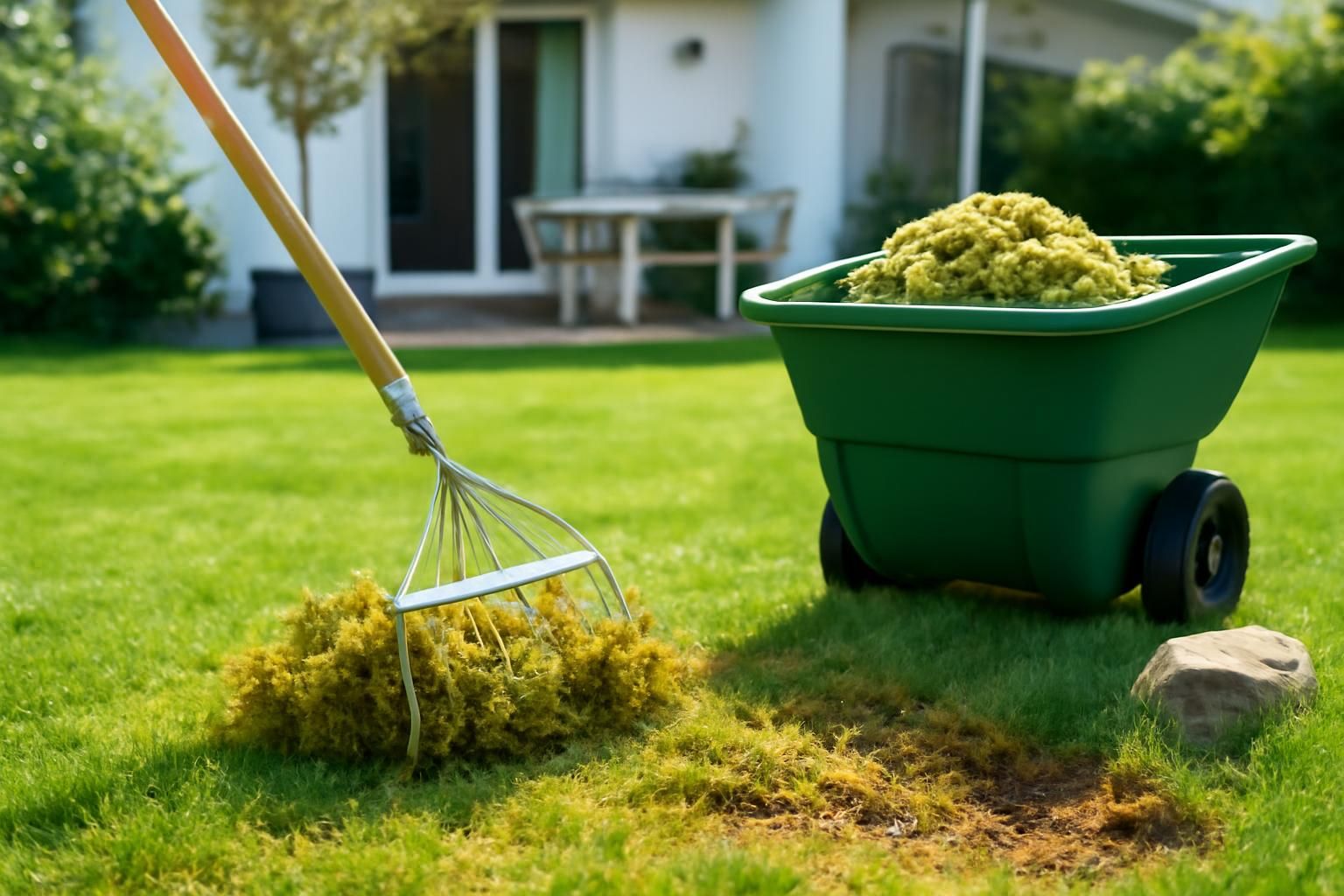
Once the moss has blackened, rake firmly with a spring-tine rake or use an electric scarifier on a shallow setting. Remove the debris into a wheelbarrow or bags. Do not dig into the soil; you are lifting dead moss and thatch, not tearing up healthy grass roots.
- 4
Aerate compacted areas
Push a garden fork ten centimetres into the soil across compacted patches, rocking it slightly to open holes. For large lawns, hire a hollow-tine aerator that removes small soil cores. Aeration lets air, water, and fertiliser reach the roots, helping grass outcompete moss.
- 5
Improve light and drainage where possible
Trim overhanging branches to increase sunlight and air movement. Brush sharp sand into aeration holes on heavy clay soil to improve surface drainage. If an area is permanently shaded and damp, consider whether paving or shade-tolerant ground cover is a better long-term choice than fighting moss.
- 6
Feed the lawn and raise the mowing height
Spread an autumn or spring lawn fertiliser according to the pack instructions. Then raise your mower blades so grass is left at least three to four centimetres tall. Scalped grass is stressed and thin; taller blades shade out moss seedlings and develop deeper roots.
- 7
Overseed bare patches
Scatter grass seed thinly over thin or bare areas, lightly rake in, and cover with a thin layer of topsoil or compost. Water gently if rain is not forecast. Overseeding fills the gaps where moss would otherwise re-establish, giving you a denser lawn next season.
Iron sulphate and ferrous lawn treatments stain paving, clothing and skin permanently and can harm pets if eaten before it's watered in — keep children and animals off the treated lawn until it has been watered and dried per the product label, and never exceed the stated dose. Follow the product label exactly.
Common mistakes
- Killing the moss but never fixing the cause, so it returns within months.
- Scarifying too hard or at the wrong time and damaging healthy grass.
- Mowing too short, which weakens grass and invites moss back.
Frequently asked
Will moss come back after I treat it?
Yes, unless you fix the underlying problems such as shade, compaction, poor drainage, or mowing too short. Killing moss without improving grass health is a temporary fix.
Should I get rid of moss in spring or autumn?
Autumn is ideal because cool, damp conditions suit moss but grass is still growing enough to recover. Spring is the second-best window. Avoid midsummer heat and midwinter frosts.
Does iron sulphate stain paving and is it pet-safe once dry?
Iron sulphate leaves permanent rust-coloured stains on paving, clothing, and skin. It can harm pets if they eat granules before watering in. Keep animals off the lawn until the product has been watered and the surface is dry.
What height should I mow to discourage moss?
Leave grass at three to four centimetres minimum. Taller blades shade the soil surface, which moss needs to germinate, and the grass develops stronger roots to compete.
My lawn is mostly moss — should I treat it or re-turf?
If more than half the lawn is moss, scarifying and reseeding may leave large bare areas. In that case, stripping and re-turfing or reseeding the whole lawn is often more practical than repeated moss treatments.