Quick answer
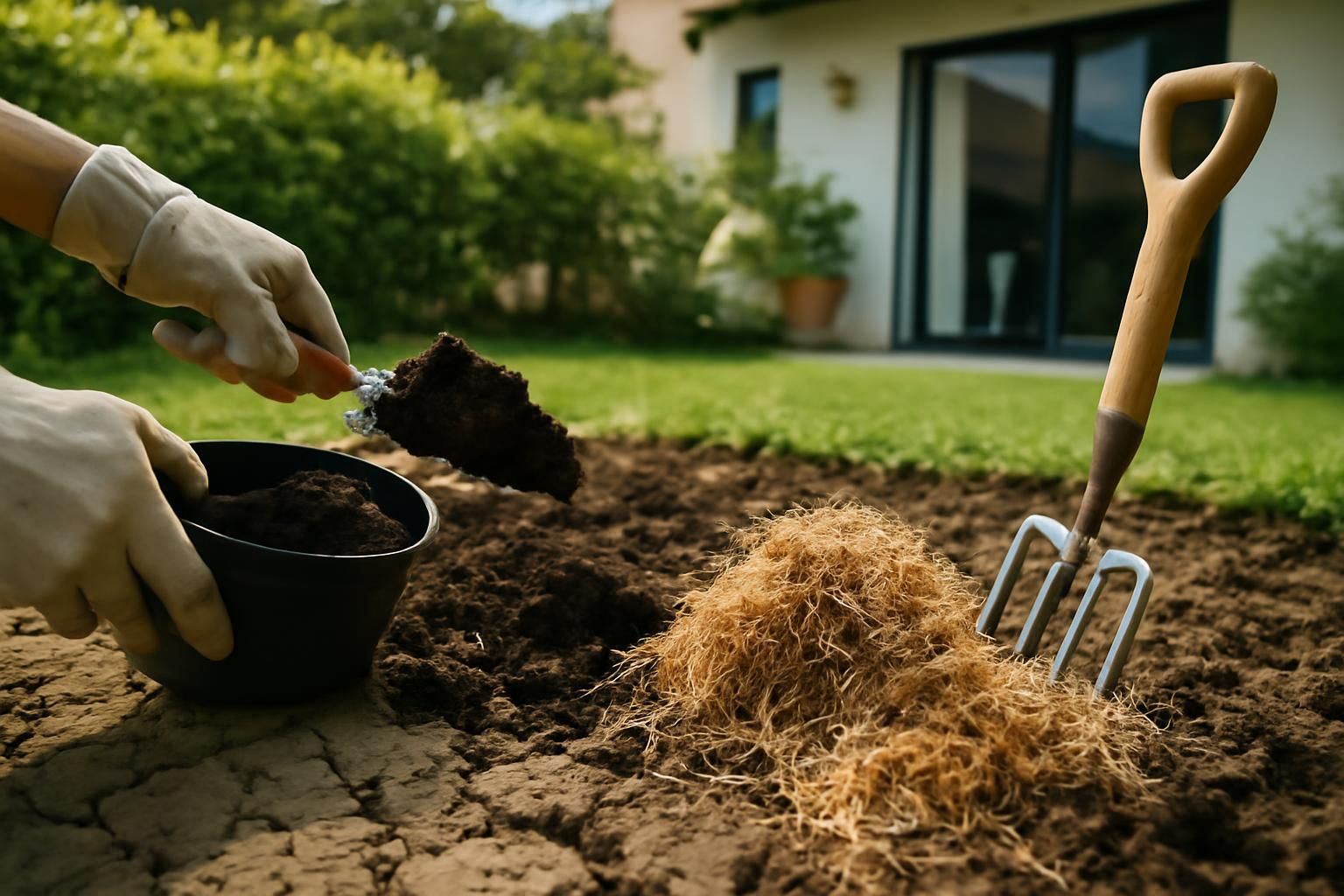
Spread a thick layer of well-rotted compost or soil conditioner over the clay surface each autumn and spring. Let worms and weather work it in, or dig it through only when the soil is dry. Repeat for at least a year.
You cannot fix clay soil in one season, but you can make it far more workable within a year by adding organic matter repeatedly. Set realistic expectations and stick with the process.
What you’ll need
- garden fork or spade
- well-rotted compost or soil conditioner
- sharp sand or horticultural grit
- soil pH test kit
- wheelbarrow
- mulch
Step by step
- 1
Test your soil pH
Use a soil pH test kit before adding lime or mushroom compost. Clay is often neutral to alkaline; adding lime to already alkaline soil harms acid-loving plants.
- 2
Spread organic matter over the surface
Pile on a 5–10 cm layer of well-rotted garden compost, composted bark, or soil conditioner. A barrowload per square metre is a useful guide. Mushroom compost is good but raises pH, so avoid it around rhododendrons or blueberries.
- 3
Dig or fork it in when the soil is dry
Turn the organic matter into the top 15–20 cm of soil with a fork or spade. Only do this when the ground is dry enough to crumble in your hand. Digging wet clay compacts it into a hard pan.
- 4
Add sharp sand or grit if drainage is poor
Sharp sand or horticultural grit improves drainage, but only in large quantities — at least one full barrowload per square metre. Small amounts of sand or pea gravel make clay harder and more concrete-like.
- 5
Mulch annually to maintain structure
Top up with a fresh mulch layer each year. A no-dig approach — leaving compost on the surface for worms to pull down — also works well and avoids disturbing the soil structure.
- 6
Choose plants that tolerate clay
Many roses, asters, dogwoods, and willowherbs thrive in clay. Grow these while you improve the soil rather than forcing Mediterranean herbs into conditions they dislike.
Working clay soil when it is wet compacts it into a hard, impermeable pan that worsens drainage for years. Wait until the ground is dry enough to crumble in your hand. If you need to improve an area urgently, use a no-dig approach with thick surface mulch instead.
Common mistakes
- Adding lime without testing pH first — it raises pH and harms acid-loving plants.
- Digging when the soil is waterlogged — compacts lower layers and destroys structure.
- Expecting one-season results — clay improvement is a multi-year cycle.
Frequently asked
How do I tell if I have clay soil rather than just heavy loam?
Take a handful of damp soil and squeeze it. Clay forms a firm, shiny ribbon that holds its shape; loam crumbles more easily.
Does adding sand to clay soil really work or make it worse?
Small amounts of sand or pea gravel make concrete-like soil. Only sharp sand or horticultural grit in large quantities — a full barrowload per square metre — improves drainage.
Can I grow vegetables in clay soil or do I need to build raised beds?
You can grow vegetables in improved clay. Root crops such as carrots struggle until the soil is looser, but potatoes, brassicas, and beans cope well. Raised beds are an alternative, not a necessity.