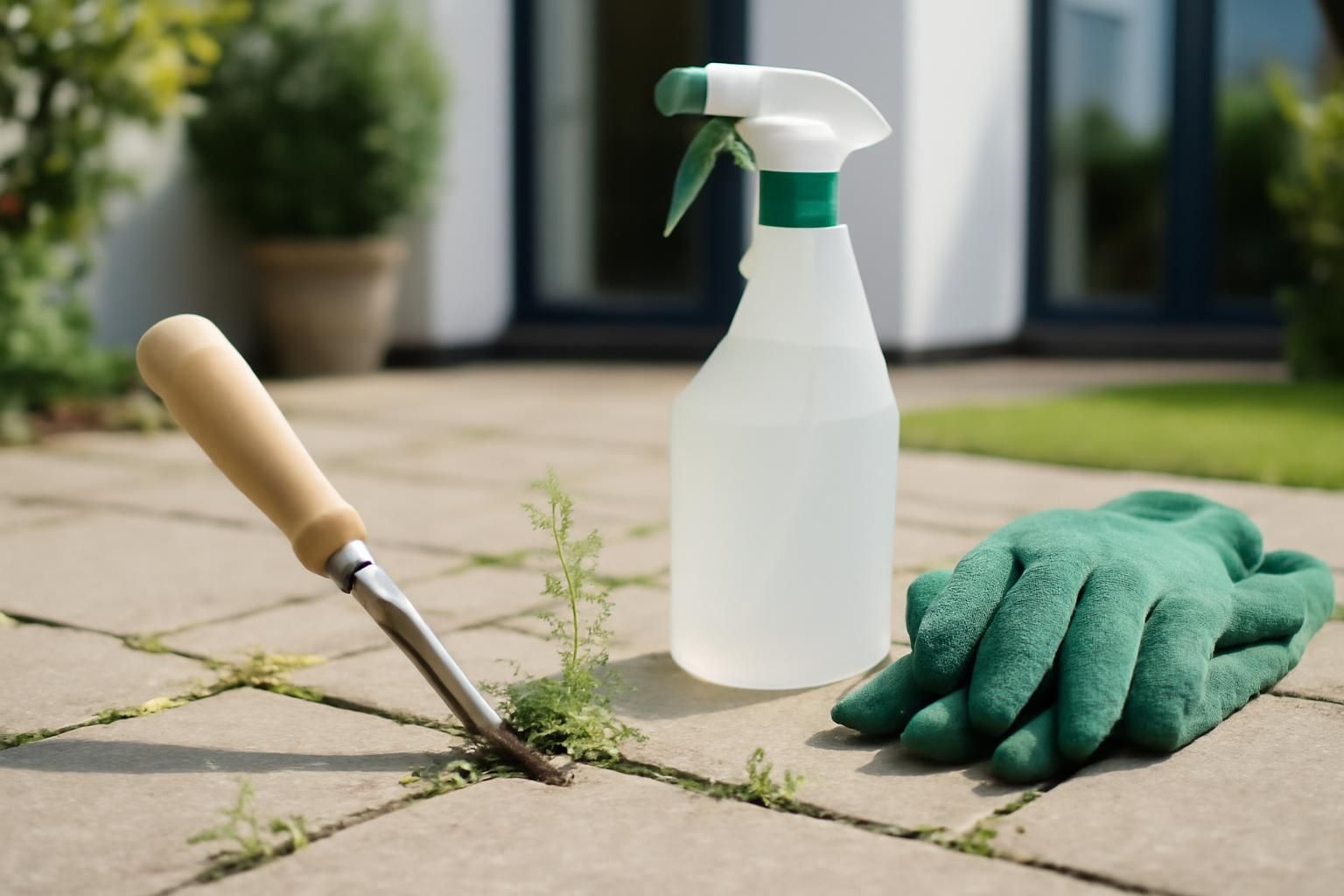
Quick answer
Pour boiling water directly onto the weeds, or spray white vinegar on a dry day. For deep-rooted perennials, repeat after one week. Once clear, brush dry jointing sand or mortar into the gaps to seal them.
Weeds between paving slabs look untidy and loosen joints over time. You can clear them with simple household methods, then seal the gaps to stop regrowth.
What you’ll need
- kettle
- white vinegar or citric acid
- salt (optional)
- stiff brush
- pointing trowel
- jointing sand or mortar mix
- spray bottle or watering can
- gloves
Step by step
- 1
Identify the weeds and choose your method
Small annual weeds respond well to boiling water. Established perennials such as dandelion or dock need vinegar or repeated treatments. Salt works but only where runoff will not reach soil or planting.
- 2
Apply the treatment
For boiling water, pour slowly from a kettle directly onto each weed, keeping the stream away from lawn edges and border plants. For vinegar, spray on a dry, sunny day so rain does not dilute it. Wait 24–48 hours.
- 3
Brush away dead weeds
Once the foliage has browned and wilted, use a stiff brush to sweep out the dead weeds and loose debris from the joints.
- 4
Repeat for deep-rooted weeds
Perennials with taproots often resprout. Check the joints after a week and re-treat any new growth before it strengthens.
- 5
Re-point the joints
Brush dry jointing sand or apply fresh mortar into the gaps with a pointing trowel. Solid pointing starves weeds of soil to root in and keeps slabs stable.
Boiling water causes serious scalds. Pour slowly from a kettle, never a watering can, and keep it off nearby lawns, borders, and plastic or resin-bonded surfaces. Weed killers containing glyphosate require careful label-reading and protective equipment, and must not be used near watercourses. If the patio is large and infested with deep-rooted weeds such as bamboo or horsetail, call a professional contractor with a pressure lance or specialist herbicide licence.
Common mistakes
- Using salt near flower borders or lawn edges — sodium accumulates in soil and kills grass and border plants for seasons.
- Assuming one treatment clears dandelions or dock — taproots need 2–3 applications spaced a week apart.
- Pouring boiling water near plastic edging or rubber membranes — heat damage is irreversible.
Frequently asked
Is white vinegar as effective as shop-bought weedkiller for patio weeds?
White vinegar works on young, small weeds but struggles with established perennials. Shop-bought glyphosate travels to the root; vinegar only scorches foliage. For light infestations, vinegar is enough.
Will boiling water permanently kill weeds or do they come back?
Boiling water kills top growth but may not reach deep taproots. Annual weeds usually die; perennials such as dandelion often resprout and need repeat treatment.
How do I stop weeds returning after I have cleared the patio?
Brush dry jointing sand or mortar into the gaps. Solid pointing starves weeds of soil to root in. Check joints each spring and top up any gaps.