Quick answer
Scarify or rake out dead thatch, loosen the top 10 mm of soil, sow seed thinly, and water lightly twice daily for two weeks. Wait until new grass is 7 cm tall before mowing to 4 cm. The best times are late August to mid-September or mid-April.
Bare or thin patches in a lawn are best repaired by overseeding, but timing and preparation matter more than the seed itself. Sow in late summer or mid-spring when the soil is warm and rain is likely. Summer and winter sowing almost always fail because of drought or cold.
What you’ll need
- Grass seed matched to your lawn type
- Spring-tine rake or scarifier
- Garden fork or hoe
- Hose with fine spray or watering can with rose
- String and stakes to mark off areas (optional)
Step by step
- 1
Choose the right time
Sow between late August and mid-September, or in mid-April. Soil temperature and reliable moisture are the keys to quick, even germination.
- 2
Scarify or rake
Remove dead thatch and moss so the seed reaches bare soil. Use a spring-tine rake for small areas or a scarifier for larger lawns. If the soil is compacted, break the surface to a depth of about 10 mm with a fork or hoe.
- 3
Sow the seed
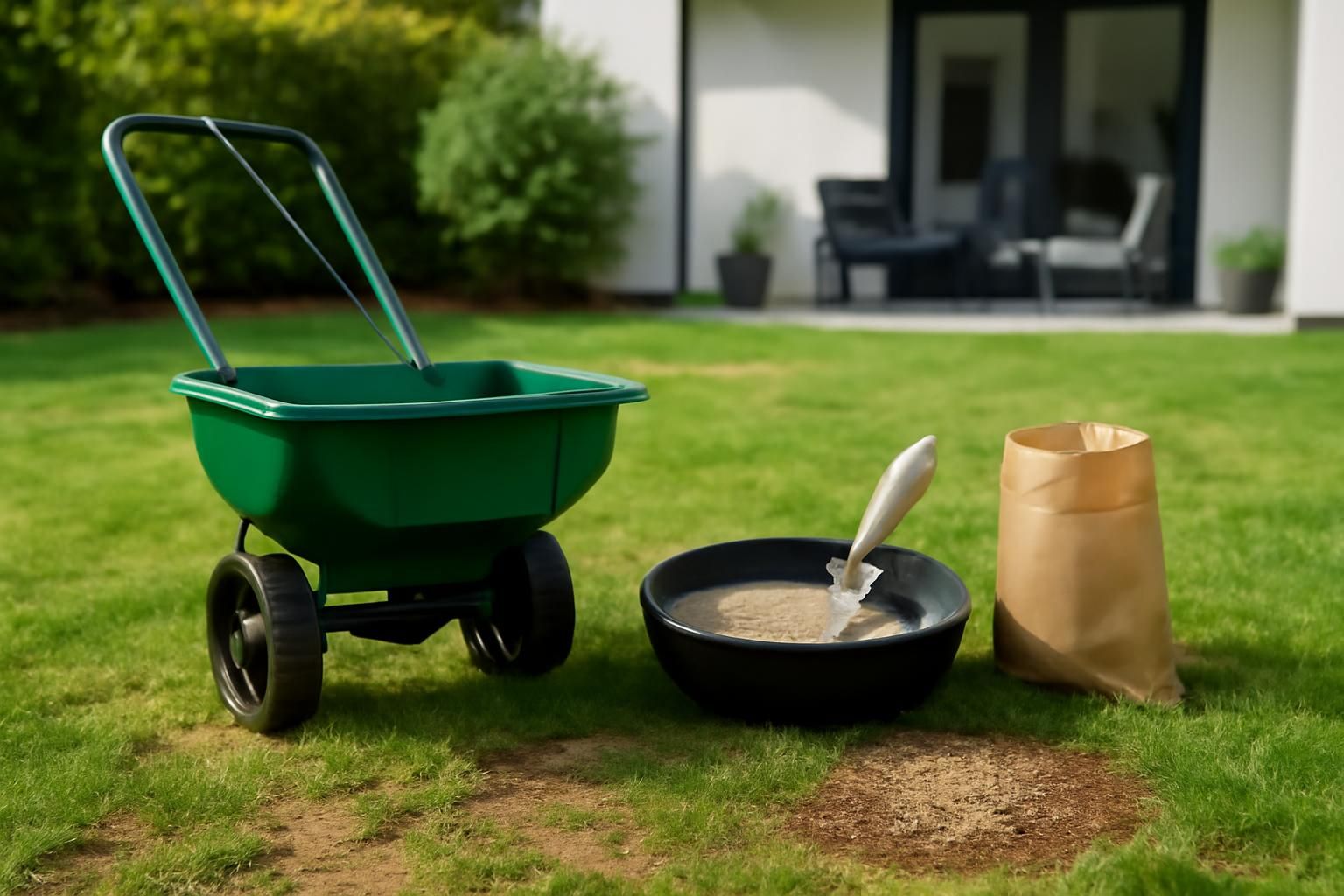
Match the seed type to your existing lawn: fine fescue for shady ornamental lawns, ryegrass mixes for family or high-traffic areas. Broadcast by hand or spreader at the rate on the packet. Sow thinly; over-application causes weak, competing seedlings.
- 4
Water and protect
Water lightly twice daily for the first two weeks so the surface never dries out. Cover seeded patches with netting if birds are a problem, but remove it once seedlings appear.
- 5
First mow
Wait until the new grass is at least 7 cm tall, then cut to no lower than 4 cm. Mowing earlier or shorter tears out fragile roots.
Do not use weedkiller or lawn feed for at least six weeks before or after overseeding; most products will kill germinating grass. Keep children and pets off freshly seeded areas until the grass is established and the soil is firm underfoot.
Common mistakes
- Sowing seed onto thatch without scarifying first, so it rots or is eaten before reaching soil.
- Over-applying seed in the hope of faster cover, which produces thin, weedy growth instead of a dense sward.
- Mowing new seedlings too early or when the lawn is wet, which tears them out by the roots.
Frequently asked
How long does overseeded grass take to germinate?
In ideal conditions, ryegrass germinates in 5–10 days and fescue in 10–14 days. Cool or dry weather delays this.
Can I overseed without a scarifier — just raking by hand?
Yes. A spring-tine rake is fine for small lawns. The key is to remove enough dead material and loosen the top layer so seed contacts soil.
Why are birds eating all my grass seed, and how do I stop them?
Birds are attracted to exposed seed. Lightly rake seed into the soil and cover patches with horticultural fleece or netting until germination begins.