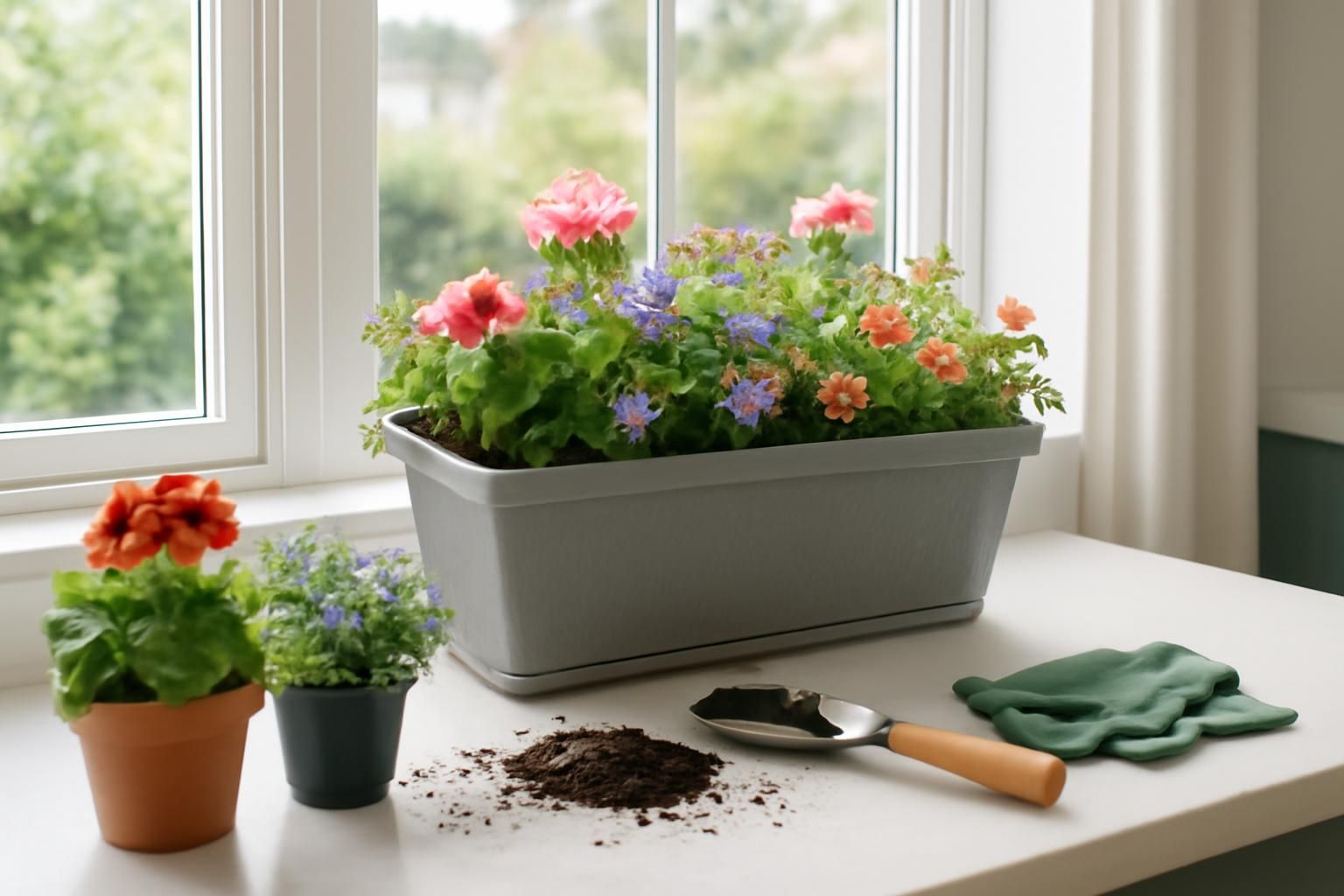
Quick answer
Check your window box has drainage holes. Add a layer of crocks or gravel. Fill with potting compost. Arrange plants while still in their pots. Firm them in, water well, and place the box securely on its bracket.
A window box brings planting to eye level. Whether you want herbs for the kitchen or flowers for colour, a well-planted box thrives with minimal upkeep.
What you’ll need
- window box with drainage
- potting compost
- trowel
- water
- plants (herbs/flowers)
- crock or gravel
Step by step
- 1
Prepare the box
Check drainage holes are clear. If not, drill several. Cover holes with broken crock or gravel to stop compost washing out.
- 2
Add compost
Fill the box two-thirds full with multi-purpose potting compost. Break up any clumps with your hands.
- 3
Arrange your plants
Place plants still in their pots on the compost. Set tall or trailing types at the edges. Fill gaps with compact herbs or flowers. Move them until the layout looks balanced.
- 4
Plant and firm in
Remove each plant from its pot. Tease out any circling roots. Set into a hole at the same depth. Press compost around the rootball firmly but gently.
- 5
Water and position
Water until it drains from the bottom. Add more compost if levels drop. Place the box on a secure bracket or sill. Check it is stable and level.
Window boxes can be heavy. Always check brackets and fixings are secure before mounting. Work with a helper if the box is large or the window is high. Keep your balance and do not lean out.
Common mistakes
- Forgetting drainage holes. Waterlogged compost rots roots quickly.
- Packing plants too tightly. They need air circulation and room to spread.
- Using garden soil instead of potting compost. It is too heavy and may contain pests.
- Placing the box in full south-facing sun without checking plants suit the exposure. Match plants to the light levels.
Frequently asked
How often should I water a window box?
In warm weather, check daily. Small containers dry out fast. Water until liquid runs from the base.
What plants work best in shade?
Try ivy, ferns, impatiens, or mint. Avoid sun-lovers like lavender or pelargoniums in north-facing spots.