Quick answer
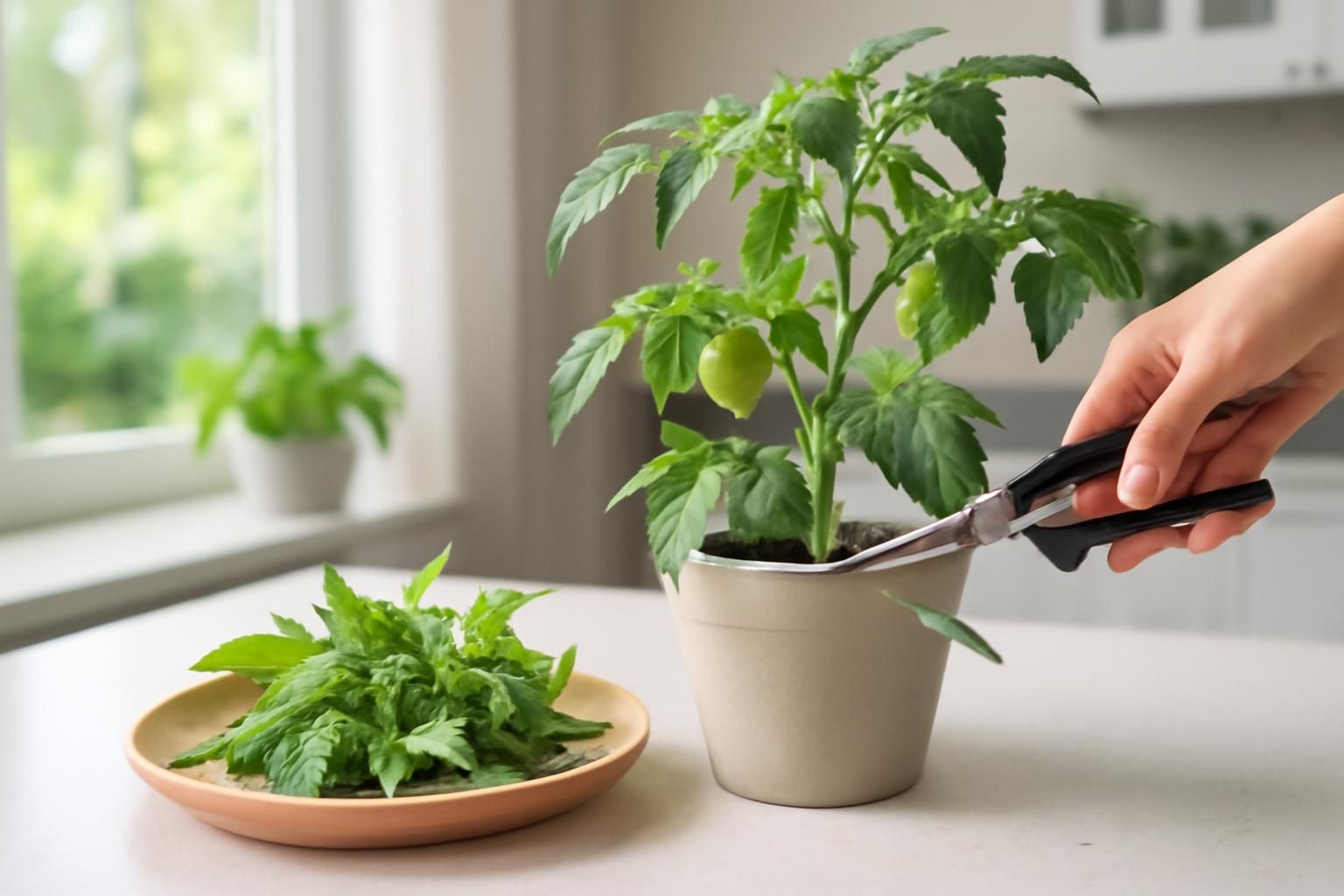
Prune indeterminate (vining) tomatoes; leave determinate (bush) varieties mostly alone. Pinch out the suckers that sprout in the crotch between the main stem and each leaf branch, strip the lowest leaves once the plant is established, and top the plant about a month before your first frost. Work on a dry morning with clean hands or sanitized snips.
Pruning a tomato isn't about neatness. It's about controlling where the plant spends its energy. Left to its own devices, an indeterminate tomato turns into a dense, sprawling thicket that throws out leaves and side stems at the expense of fruit while trapping the humidity that fungal diseases love. Cut the right growth at the right time and you get bigger fruit, better airflow, faster ripening, and fewer disease problems. Get your variety type right first. Prune the wrong kind of tomato and you'll shrink the harvest instead of growing it.
What you’ll need
- Clean bypass pruners or sharp scissors, for stems too thick to pinch
- Rubbing alcohol or a diluted bleach solution to sanitize blades between plants
- A clean rag or paper towels
- Soft plant ties, garden twine, or tomato clips for the leaders you keep
Step by step
- 1
Identify your variety type first
Check the seed packet or plant tag. Indeterminate types (also called vining or cordon) grow and fruit continuously all season and respond well to pruning. Determinate types (bush) grow to a set size, set most of their fruit in a short window, and should be left nearly unpruned. Prune a determinate hard and you remove the very stems that carry the crop. Can't tell? Watch the growth habit: if it keeps climbing with no clear stopping point, treat it as indeterminate.
- 2
Wait until the plant is established
Skip pruning at transplant time. Let the plant settle in and reach roughly knee height, with several sets of true leaves and ideally its first flower cluster forming. Pruning a young, stressed transplant only sets it back. Once it's growing strongly, it shrugs off pruning.
- 3
Find and pinch out the suckers
A sucker is the shoot that emerges from the angled crotch where a leaf branch meets the main stem. Leave it and it becomes a whole second stem with its own leaves and fruit, crowding the plant. While a sucker is small (under about 7 to 10 cm, or 3 to 4 inches), pinch it off between finger and thumb. It snaps away cleanly and the small wound heals fast. Make a pass up the plant roughly once a week during active growth.
- 4
Decide how many main stems to keep
For the biggest individual fruit and the easiest disease control, train to a single stem and remove every sucker. For a bushier plant with more total fruit (slightly smaller), let one or two low suckers grow into extra leaders and remove the rest. Pick one approach per plant and stick with it. Tie each leader you keep to its stake or support as it grows.
- 5
Strip the lowest leaves
Once the plant is established, remove the leaves within about 30 cm (12 inches) of the soil. Water and rain splash soil onto those bottom leaves, and that splash is a main route for fungal disease to climb the plant. The lowest leaves contribute little anyway. Take a few at a time rather than the whole lower third at once, pinching or snipping flush to the stem.
- 6
Remove diseased or yellowing foliage
All season, cut off leaves that are yellowing, spotted, or curling with disease. Carry them well away from the garden and bin them. Don't compost diseased material. Sanitize your snips before moving to the next plant so you aren't carrying infection down the row.
- 7
Top the plant about a month before first frost
Roughly four weeks before your average first frost date, cut off the growing tip of each main stem just above the highest fruit cluster you want to ripen. This 'topping' halts new growth and pushes the plant's remaining energy into ripening the fruit it already has, rather than starting fruit it can't finish in time.
- 8
Prune in dry conditions and clean up
Prune on a dry morning so the cuts can seal before evening and you're not spreading pathogens across wet foliage. Clear the removed growth off the soil instead of leaving it under the plant. Hold off on heavy watering for a day.
Tomato foliage, stems, and the sap that gets on your hands and blades are mildly toxic if eaten and can irritate skin and eyes, leaving a sticky green residue and the occasional rash on sensitive skin. Wear gloves if your skin reacts, and wash your hands before touching your face. Don't prune wet plants, and don't move between plants without sanitizing your blades. A single cut through a diseased stem can carry bacterial or viral infection to every plant you touch next.
Common mistakes
- Pruning determinate (bush) varieties. You cut off the stems that carry the crop and end up with less fruit.
- Over-pruning leaves. Tomatoes need foliage to photosynthesize and to shade the fruit. Strip too much and exposed fruit gets sunscald: pale, leathery patches.
- Letting suckers get large before removing them, which leaves a big slow-healing wound and an entry point for disease. Pinch them young.
- Pruning when the plant is wet, which spreads fungal and bacterial disease through fresh cuts.
- Skipping sanitizing between plants, which turns your pruners into a disease-delivery tool down the whole row.
- Topping too early and cutting off productive growth you still had time to ripen.
Frequently asked
How do I tell a sucker from a real fruiting branch?
A sucker grows out of the angle where a leaf branch meets the main stem. Flower clusters emerge directly from the main stem on their own, not from that crotch. If a shoot is coming out of the V between two existing stems, it's a sucker.
Will pruning actually give me more tomatoes?
On indeterminate types you usually get fewer but larger fruit that ripen faster, plus a healthier plant with less disease. If you're chasing maximum total weight, leave a couple of extra stems. If you want big, clean, early fruit, prune to one stem. On determinate types, pruning reduces your harvest, so don't.
It's mid-season and I never pruned. Is it too late?
No. Remove the lower leaves, take out the worst of the interior suckers to open up airflow, and clear out any diseased foliage. Don't strip everything at once. Spread it over a couple of sessions a few days apart so you don't shock the plant.
Do I need pruners, or are my fingers enough?
For small suckers and tender leaves, clean fingers are best: the wound is smaller and heals faster. Use snips only for stems too thick to pinch cleanly, and sanitize the blades between plants.
How often should I prune during the season?
Check in about once a week during active growth. Suckers keep appearing, so a quick weekly pass to pinch the new ones while they're small beats a big cleanup once they've turned into full stems.
If you do only one thing: learn to spot and pinch suckers while they're small, and never prune a determinate bush variety. Those two habits account for most of the harvest difference.