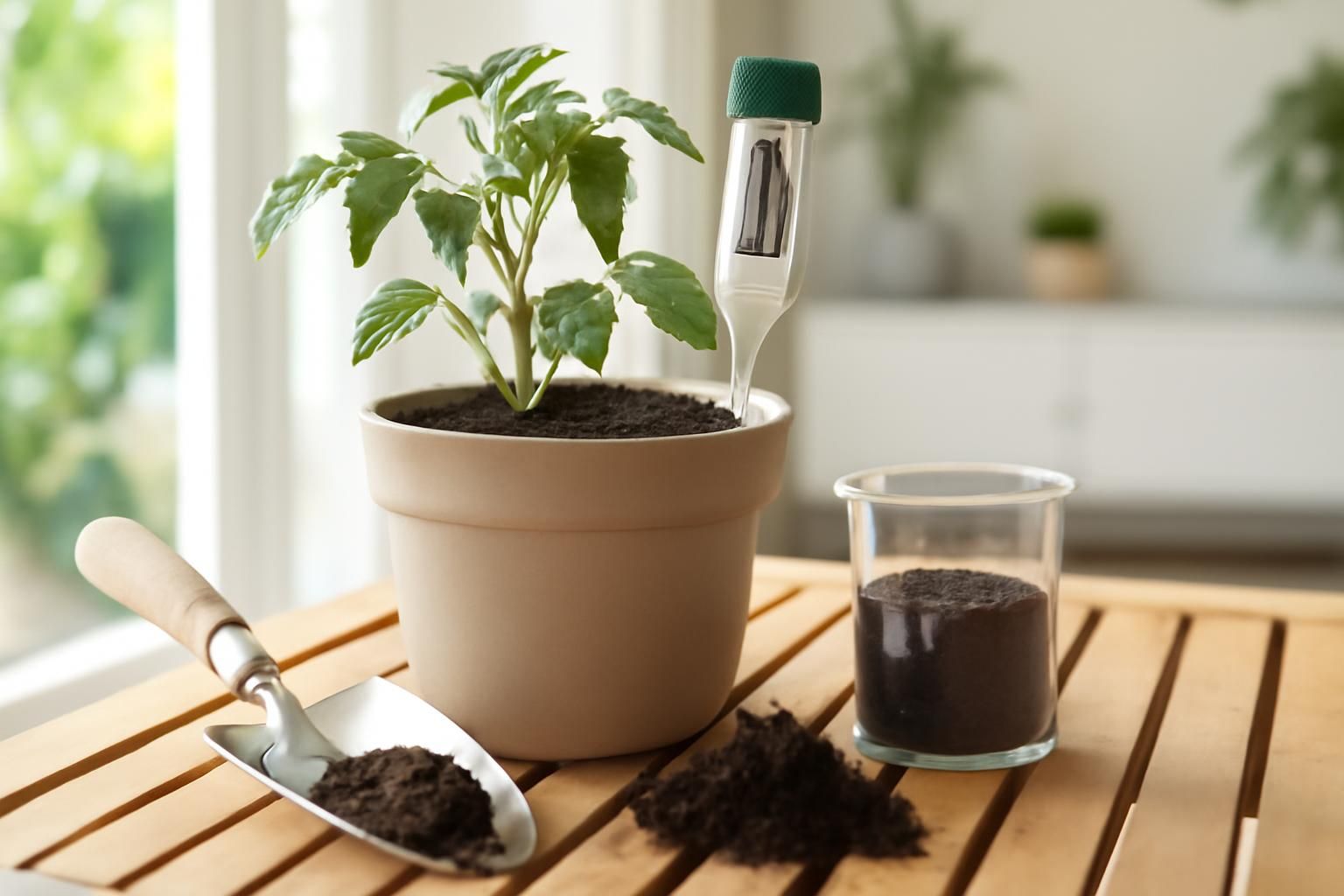
Quick answer
Dig 10–15 cm deep in several spots. Mix the soil. Follow your kit or meter instructions. Record the pH. Adjust with lime for acidity or sulphur for alkalinity if needed.
Testing soil pH shows whether your ground is acidic, neutral or alkaline. Most vegetables grow best in slightly acidic to neutral soil. The test takes minutes and helps you choose the right plants or amendments.
What you’ll need
- soil pH test kit or digital meter
- trowel
- distilled water (if required)
- clean jar
- notebook
Step by step
- 1
Collect soil samples
Dig 10–15 cm down with a trowel. Take samples from several spots in the bed. Mix them in a clean jar.
- 2
Prepare the sample
Remove stones, roots and debris. Break up clumps. If the kit asks for it, add distilled water and stir.
- 3
Test the pH
Dip a test strip or digital probe into the slurry. Wait the time stated on the kit. Record the reading.
- 4
Read the result
pH below 6.5 is acidic. 6.5–7.5 is neutral. Above 7.5 is alkaline. Note the reading in a notebook with the date and location.
- 5
Repeat seasonally
Test again in spring and autumn. Soil pH changes slowly, but regular checks track progress after liming or adding sulphur.
Follow the product label rates when applying lime or sulphur — over-application can scorch plants and shift the soil pH severely, which can take months to reverse.
Common mistakes
- Testing only the topsoil
- Using tap water instead of distilled with chemical kits
- Testing immediately after adding lime or fertiliser
- Ignoring multiple spots in the garden
Frequently asked
How often should I test soil pH?
Once or twice a year is enough for most gardeners.
Can I test pH with vinegar and bicarbonate?
That home method gives a rough guide only. A proper kit or meter is more accurate.