Quick answer
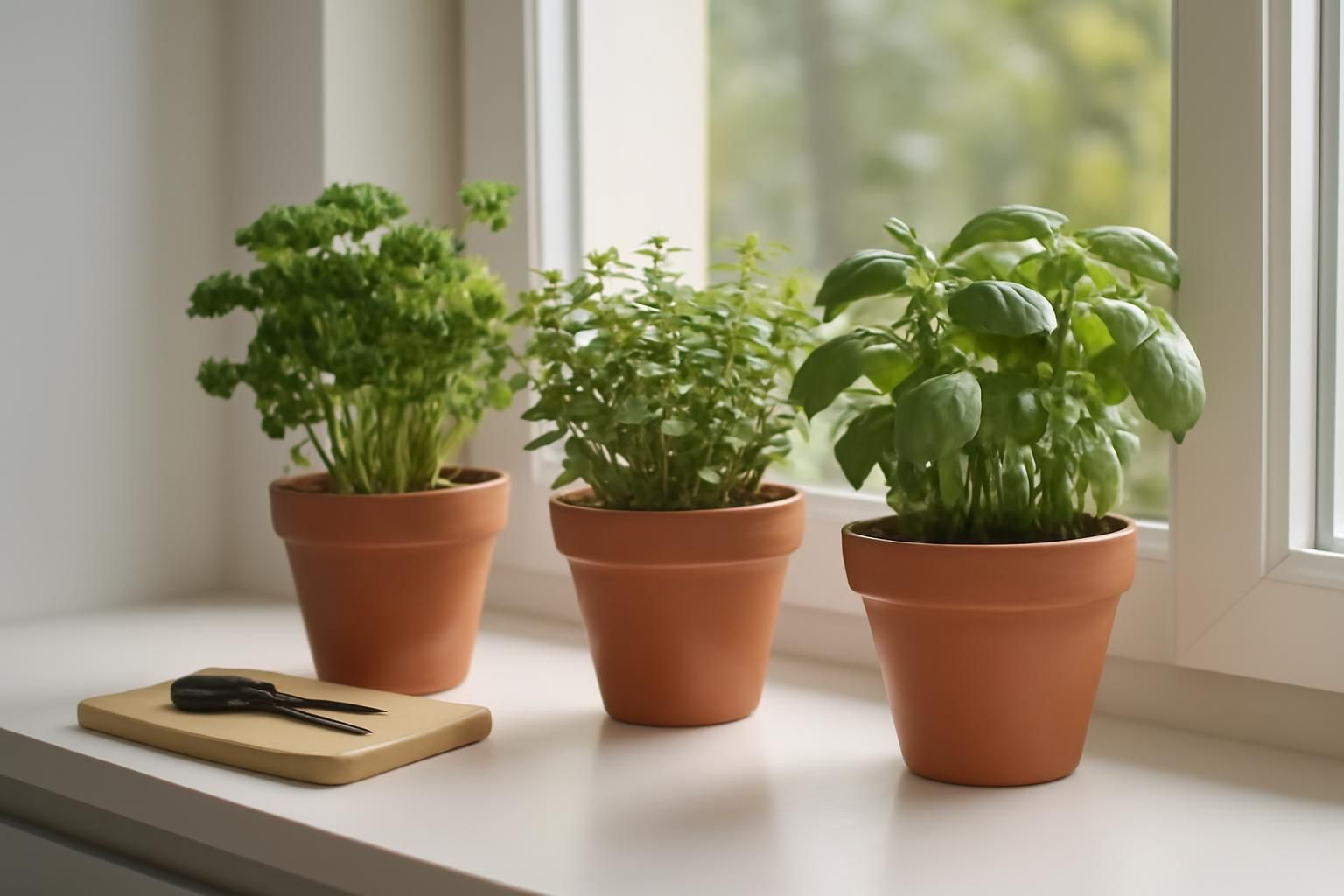
Choose a south- or west-facing windowsill. Use individual 10–12 cm pots with drainage holes and peat-free compost. Water only when the top 2 cm of compost feels dry. Feed every two weeks in spring and summer. Harvest lightly, never removing more than a third of the plant at once.
Fresh herbs on a windowsill put flavour within arm's reach. Success depends on light, drainage, and a gentle watering hand. Most failures come from overwatering or shady spots, not neglect.
What you’ll need
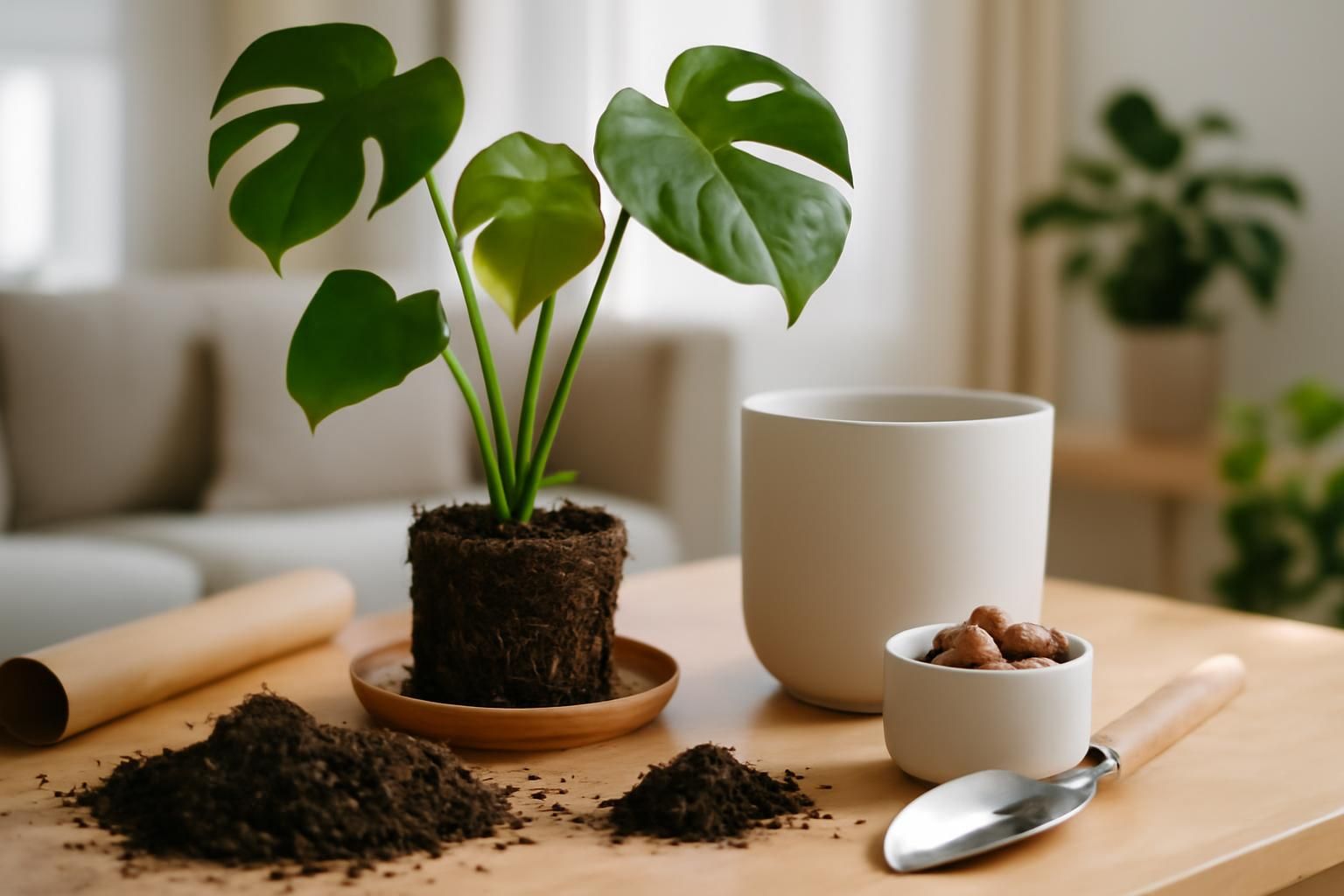
- 10–12 cm pots with drainage holes and saucers
- peat-free multi-purpose compost
- trowel
- liquid houseplant feed
- watering can
Step by step
- 1
Test your window light
On a sunny day, hold your hand 30 cm above the windowsill. A sharp, dark shadow means strong light — good for basil, parsley, and mint. A faint or blurry shadow means weak light; north-facing windows rarely provide enough for anything except perhaps chives in summer.
- 2
Choose the right herbs
Basil, chives, parsley, mint, and coriander are the easiest indoors. Rosemary and thyme need more sun and airflow, so treat them as advanced options. Buy young plants or split a supermarket herb pot.
- 3
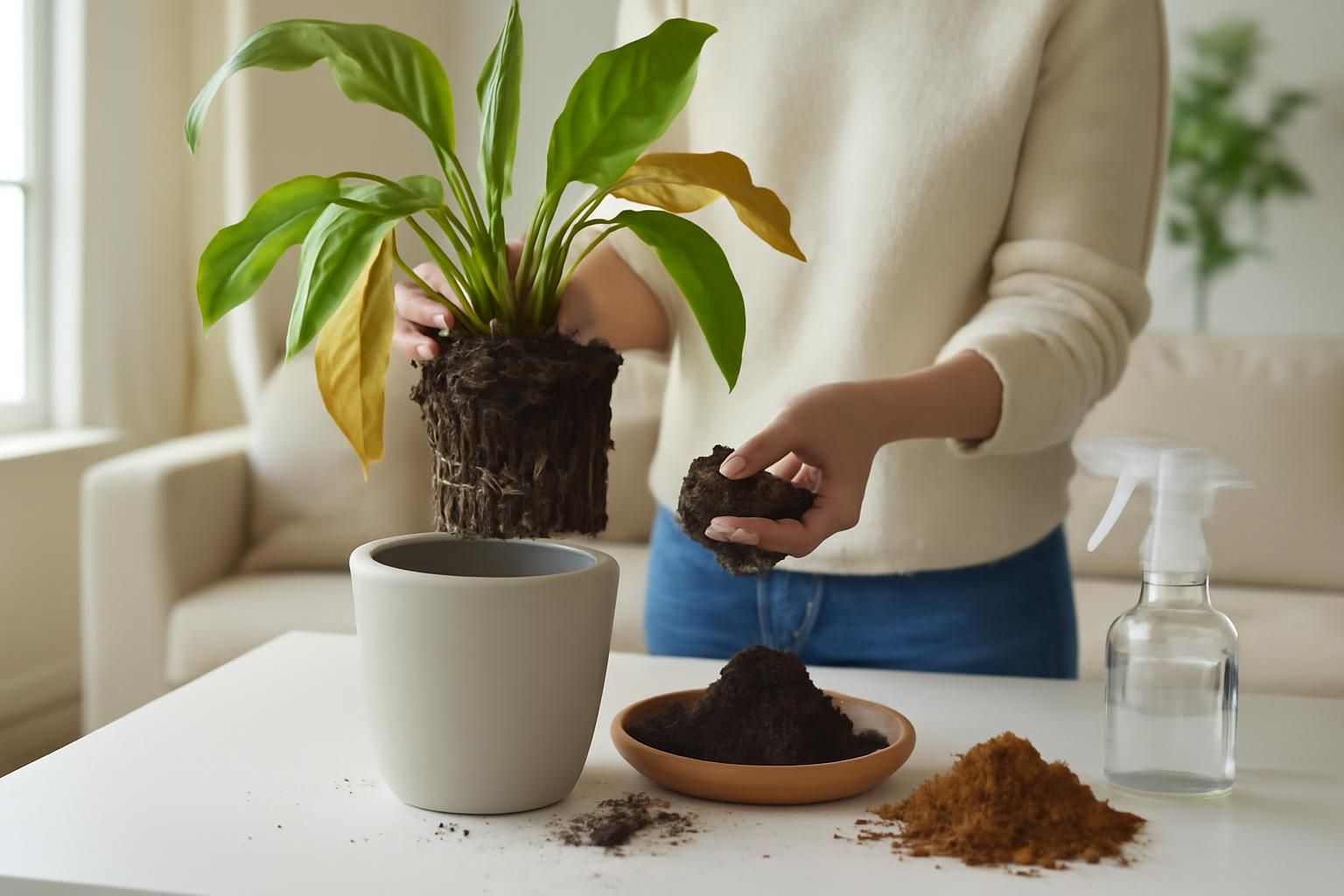
Repot supermarket herbs properly
Supermarket herb pots contain many seedlings crammed together. Gently tease the root ball apart into four to six clumps. Plant each in its own 10–12 cm pot filled with compost. This instantly doubles their lifespan.
- 4
Water only when dry
Push your finger 2 cm into the compost. Water only when it feels dry at that depth. Pour until water runs from the drainage holes, then empty the saucer. Never leave pots standing in water.
- 5
Feed and harvest regularly
From spring to early autumn, add a half-strength liquid feed every two weeks. Harvest little and often, rotating around the plant. Never remove more than a third of the growth at once; this keeps the plant bushy and productive.
Overwatering is the single biggest killer of windowsill herbs. Soggy compost rots roots and causes stems to blacken. Always check dryness 2 cm down before watering. If you see yellowing leaves and black stems, let the compost dry out almost completely and reduce watering frequency.
Common mistakes
- Overwatering on a fixed daily schedule instead of checking compost dryness first.
- Placing herbs directly above a radiator; rising dry heat scorches leaves and desiccates roots within days.
- Harvesting repeatedly from the same stems rather than rotating around the plant, which creates bare woody patches and stunts recovery.
Frequently asked
Can I grow herbs on a windowsill all year round, or only in summer?
You can grow them year round if the window provides enough light. Growth slows in winter, so water and feed less frequently. In very dark winters, a small LED grow light for 10–12 hours a day will keep basil and parsley alive.
My basil keeps wilting even though I water it — what am I doing wrong?
Wilting with wet compost usually means root rot from overwatering. Let the compost dry out almost completely, then water less often. If the stems are black at the base, the plant is beyond saving. Wilting with dry compost means underwatering — soak the pot in a bowl of water for 10 minutes, then drain.
Is it better to grow herbs from seed or buy young plants?
Young plants give instant results and are easier for beginners. Seeds are cheaper but need warmth, light, and 2–4 weeks to germinate. For a quick windowsill crop, buy a single healthy plant and take cuttings once it grows.