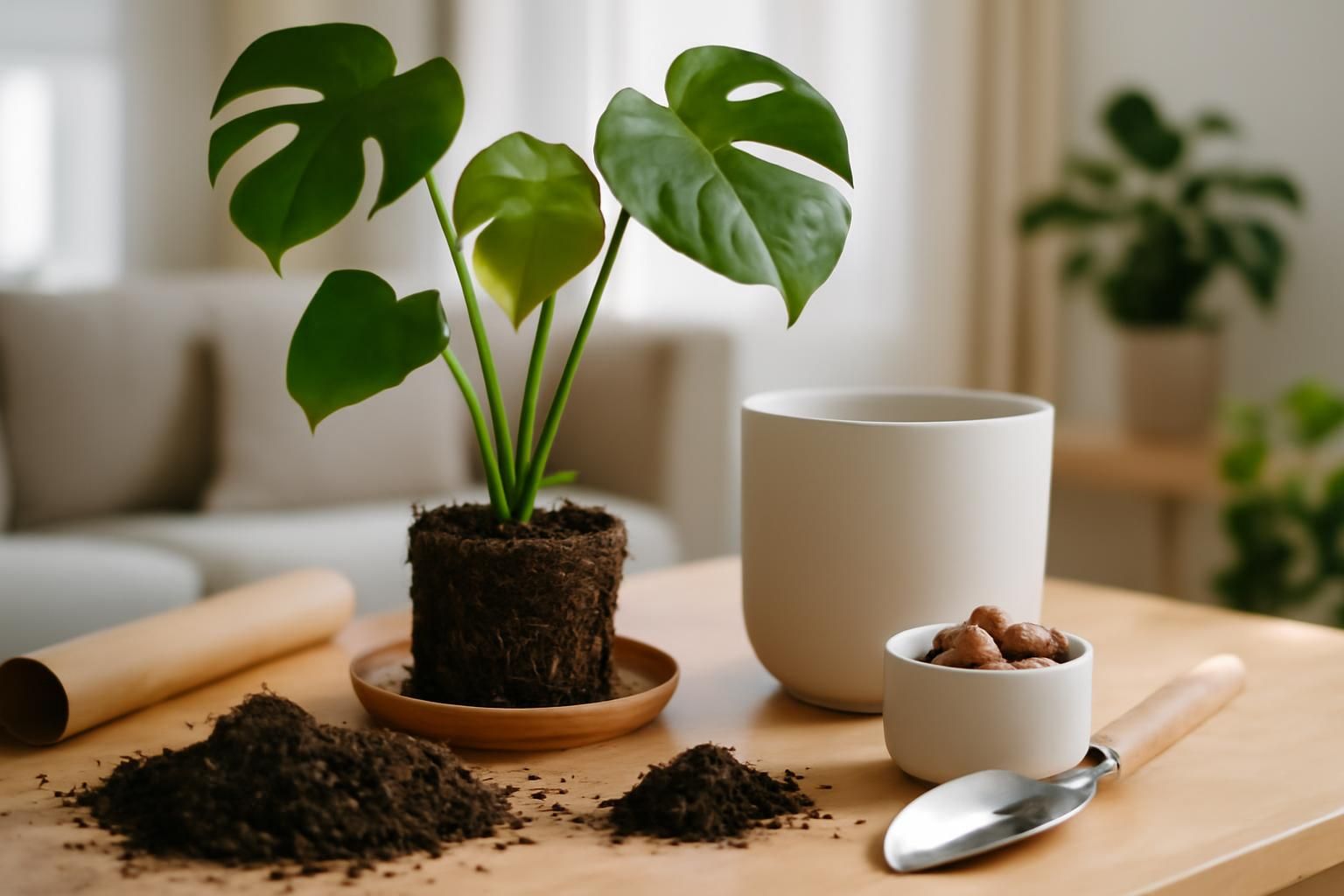
Quick answer
Water the plant the day before. Choose a pot 2–5 cm wider with drainage holes. Add fresh compost, gently loosen the root ball, place at the same depth, fill around with compost, and water moderately. Do not feed for 4–6 weeks.
Houseplants outgrow their pots. Roots push through drainage holes, circle the surface, or the compost dries out within a day of watering. Spring is the right time to repot, because the plant is entering active growth and will recover quickly.
What you’ll need
- New pot, 2–5 cm wider than the current one, with drainage holes
- Fresh compost: multipurpose for most plants; gritty mix for succulents; ericaceous for acid-lovers
- Trowel or small hand fork
- Watering can
- Crocks or gravel (optional, for heavy pots)
Step by step
- 1
Water the plant a day ahead
Water thoroughly 24 hours before repotting. This helps the root ball hold together and reduces transplant shock.
- 2
Prepare the new pot
Cover the drainage hole with a broken pot shard or mesh to stop compost washing out. Add a thin layer of compost to the base. The plant should sit at the same depth as before, so judge the level by holding the root ball inside the new pot.
- 3
Remove the plant
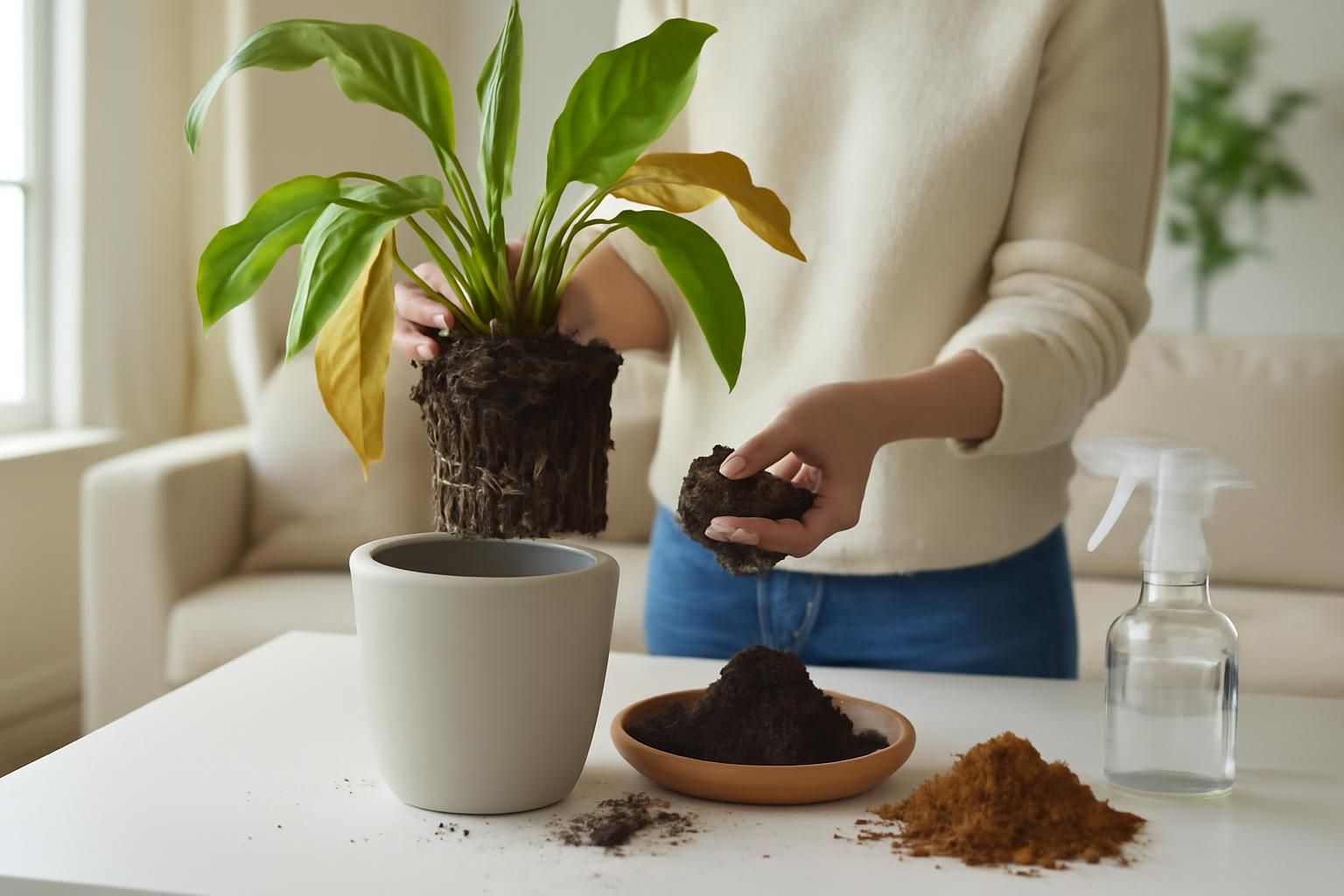
Turn the old pot on its side and gently squeeze or tap it to release the root ball. Support the stem with your fingers and slide the plant out. Do not yank by the stem.
- 4
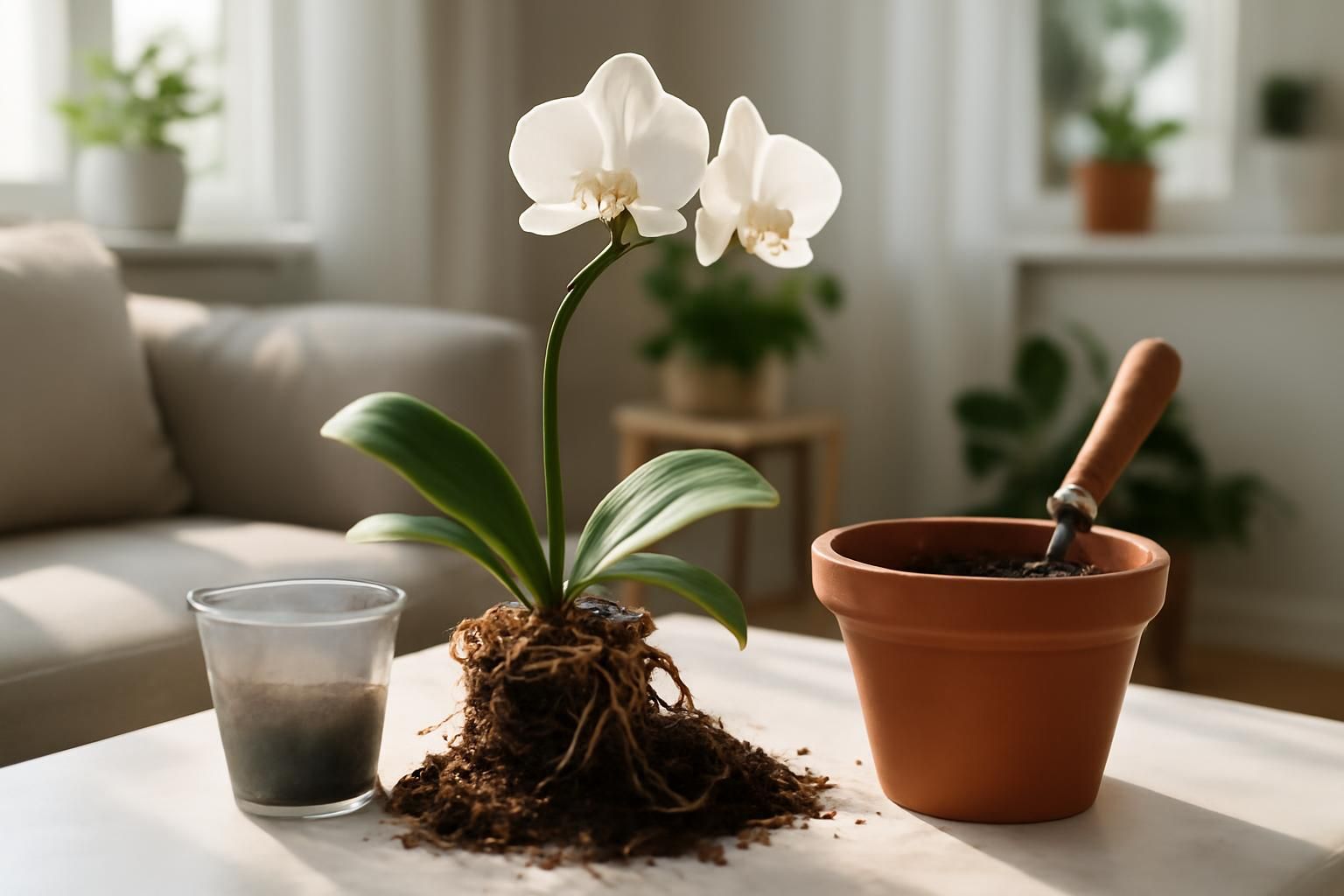
Loosen the roots
Tease apart any roots circling the bottom or sides with your fingers. If the root ball is densely packed, make a few shallow vertical cuts with clean scissors to encourage outward growth. For succulents, disturb the roots as little as possible.
- 5
Pot at the same depth
Place the plant in the new pot so the top of the root ball sits at the same level as it did before. Burying the stem deeper rots it at soil level. Fill around the sides with fresh compost, firming gently with your fingers to remove large air pockets.
- 6
Water and rest
Water moderately until it drains from the bottom. Let the pot sit in a bright spot out of direct sun for a week. Do not feed for 4–6 weeks; fresh compost already contains nutrients.
The biggest hazard is root rot from an oversized pot or overwatering after repotting. A pot that is too large holds stagnant water around roots, especially in winter when growth slows. Only increase pot size by one step. Keep the plant out of direct sun for a week to reduce stress.
Common mistakes
- Choosing a pot that is far too large. Excess compost holds water the roots cannot absorb, causing root rot within weeks.
- Repotting a plant that is already stressed, wilting, or infested with pests. Wait until it is healthy and actively growing.
- Burying the plant deeper than it was growing before. This rots the stem at soil level and can kill the plant.
Frequently asked
How often should I repot a houseplant?
Most young houseplants need repotting every 12–18 months. Mature, slow-growing plants such as cacti or large fiddle-leaf figs can stay in the same pot for several years. Repot only when you see roots at the surface or water running straight through the pot.
My plant looks worse after repotting — what went wrong?
Transplant shock is common. Leaves may droop or yellow for a week or two. Make sure you are not overwatering, that the plant is not in direct sun, and that you buried it at the same depth. If it continues to decline, check for root rot by smelling the compost — a sour smell means trouble.
Do I need to water immediately after repotting?
Yes, water lightly to settle the compost around the roots. Do not saturate the pot. Let the top few centimetres dry out before watering again.