Quick answer
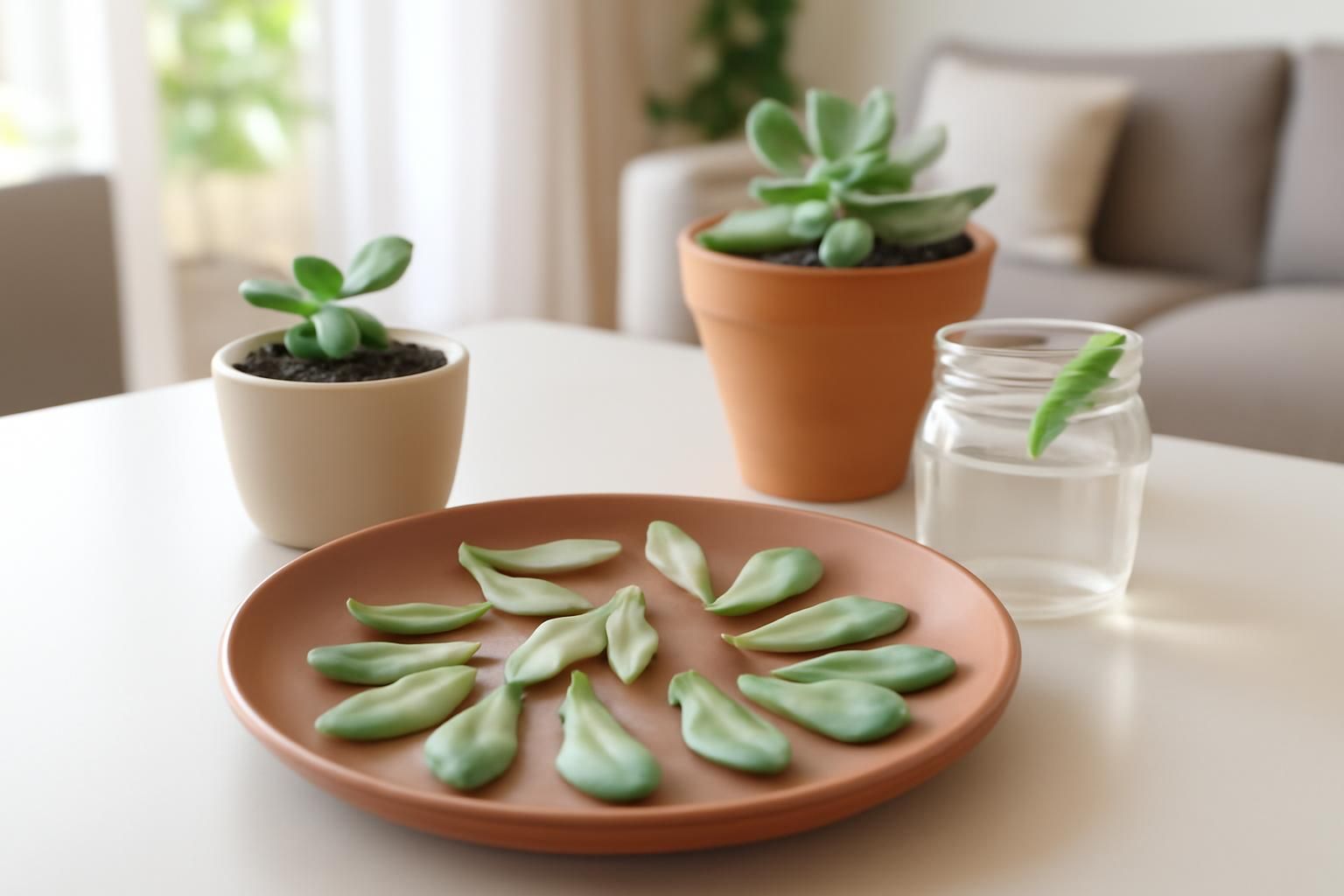
Pull a healthy leaf cleanly from an Echeveria or Sedum so the entire base comes away. Lay it on gritty compost in bright, indirect light and mist the surface every few days. Roots appear in 2–4 weeks and a rosette in 6–8 weeks. For Haworthia or Aloe, remove offsets from the base instead. Leggy plants root faster from stem cuttings.
Succulents give you free plants if you propagate correctly. The three methods are leaf propagation, offset division and stem cuttings. Echeveria, Sedum and Graptopetalum grow well from leaves. Haworthia, Aloe and most cacti do not. Choose the method that matches what your plant actually produces.
What you’ll need
- shallow tray or pot
- gritty, well-draining compost or cactus mix
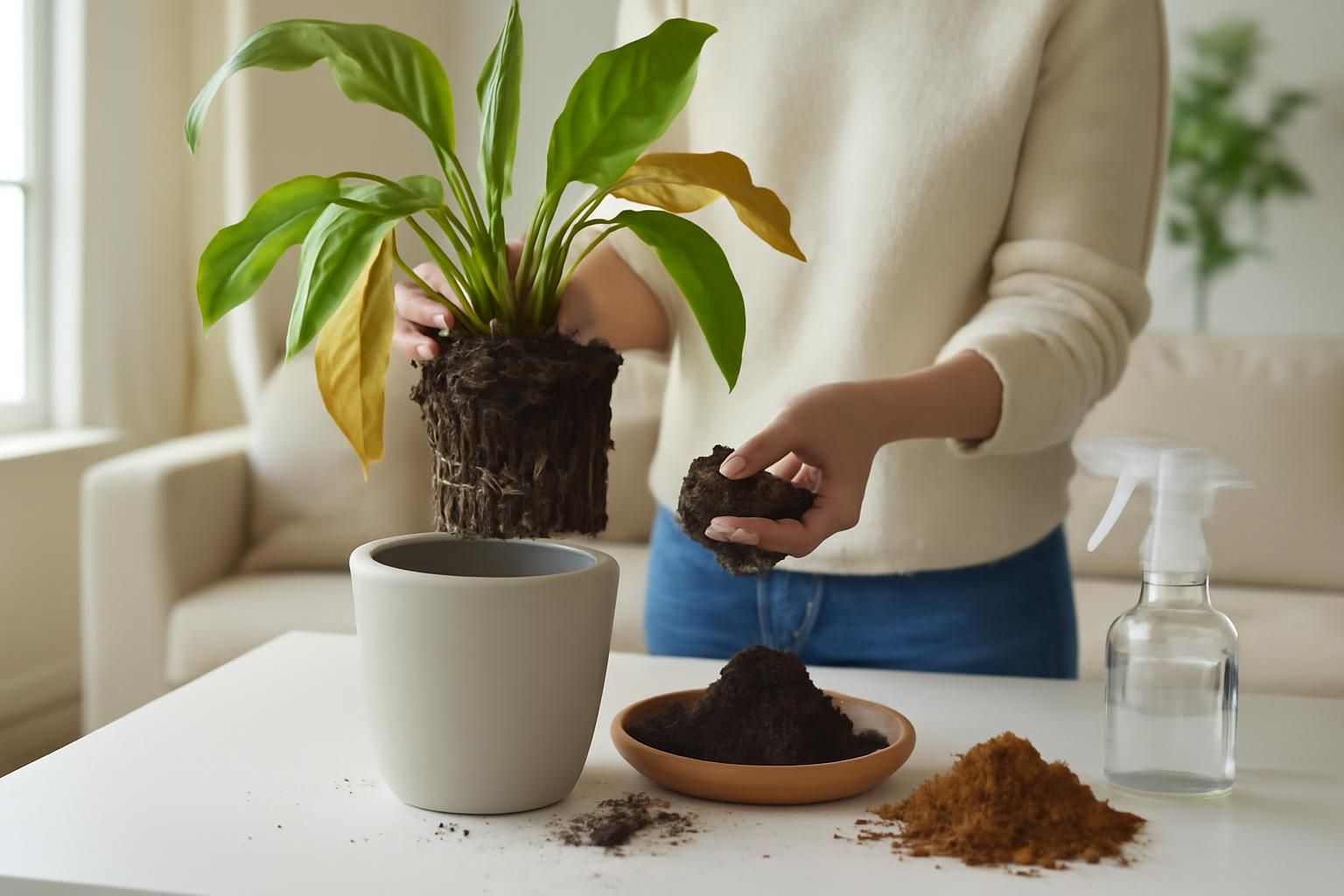
- spray bottle filled with water
- mother plant with healthy leaves
- small pot for transplanting
Step by step
- 1
Choose the right propagation method
Leaf propagation works for Echeveria, Sedum and Graptopetalum. Offset division works for Haworthia, Aloe and plants that grow pups at the base. Stem cuttings work best for leggy plants where the stem has stretched. Picking the wrong method wastes weeks.
- 2
Remove a leaf cleanly
For leaf propagation, hold the leaf at the base and twist gently until it detaches. The entire base must come away; if the base tears and stays on the stem, the leaf has nothing to root from. Choose plump, healthy leaves from the bottom of the rosette.
- 3
Let the cutting callus over
Lay the leaf or cutting on a dry surface out of direct sun for 2–3 days. The cut end must dry and form a hard skin. A wet, uncallused cut will rot as soon as it touches damp soil.
- 4
Lay on soil and mist
Fill a shallow tray with gritty compost. Lay the callused leaves on top without burying them. Place the tray in bright, indirect light. Mist the surface lightly every few days. Do not pour water onto the soil; soggy compost rots unrooted leaves.
- 5
Pot up once rooted
Roots usually appear in 2–4 weeks, followed by a tiny rosette in 6–8 weeks. Once the mother leaf has shrivelled and the new rosette is roughly 2 cm across, pot it into its own small container of cactus compost. Water sparingly.
The biggest hazard is overwatering, which rots the leaf and can spread mould to nearby plants. Mist only until roots are established, and remove any leaf that turns black or mushy immediately. If you are propagating Euphorbia species, wear gloves: their sap is a skin irritant.
Common mistakes
- Placing propagating leaves in direct harsh sunlight — they need bright indirect light; direct sun scorches them before roots form.
- Watering the soil rather than misting — soggy soil rots unrooted leaves before the callus has a chance to form.
- Detaching leaves that leave the base on the mother plant — the pulled leaf has nothing to callus from and will simply shrivel.
Frequently asked
How long does it take to propagate a succulent from a leaf?
The cut end calluses in 2–3 days. Roots usually appear in 2–4 weeks. A visible rosette takes 6–8 weeks. Some species are slower. Do not discard a leaf just because it looks unchanged after two weeks; roots often form underneath where you cannot see them.
Why are my succulent leaves shrivelling instead of sprouting?
If the base tore and stayed on the mother plant, the leaf has no growth tissue and will simply dry up. Overwatering can also cause rot that makes the leaf collapse. Healthy callused leaves should stay firm while they root.
Can I propagate succulents in water?
Some people root stem cuttings in water, but leaves and offsets rot easily in standing water. Gritty compost with occasional misting is safer and gives stronger roots. Water propagation is not recommended for leaf propagation.