Quick answer
Stop watering. Slide the plant out of its pot, shake off the soggy soil, and cut away any brown, mushy roots with clean scissors. Repot into fresh, dry, fast-draining mix in a pot with drainage holes, set it in bright indirect light, and leave it alone until the top inch or two of soil feels dry. If the roots aren't fully rotted, most plants bounce back in two to four weeks.
Overwatering kills more houseplants than anything else, and it fools people because it mimics thirst: yellow leaves, drooping, soft brown spots, wilting even though the soil is soaking wet. What's actually happening is that waterlogged soil chokes the roots. Roots need air as much as water, and once the soil stays saturated they can't breathe and start to rot. Catch it before the rot runs through the whole root system and you can usually save the plant. Here's how to confirm the diagnosis, dry things out, cut away the dead roots, and reset your watering so you don't end up here again.
What you’ll need
- Clean, sharp scissors or pruning snips
- A pot with drainage holes (same size, or one size up if you're repotting)
- Old newspaper or a tarp to work over
- A bucket or sink for the old soil
- Disposable gloves (optional, for handling rotted roots)
Materials
- Fresh, dry, fast-draining potting mix for your plant (a chunky mix with perlite, bark, or coarse sand for most foliage plants; cactus or succulent mix for those)
- Rubbing alcohol or hot soapy water to sterilize your scissors
- Paper towels
Step by step
- 1
Confirm it's overwatering, not thirst
Push your finger two inches into the soil. Wet soil plus a wilting, yellowing plant or soft brown leaf spots means overwatering. Other tells: a sour or musty smell from the soil, mold or a white crust on the surface, fungus gnats hovering, and mushy stem bases. If the soil is bone dry, stop here, you've got a different problem.
- 2
Cut off the water supply and dump any standing water
Empty the saucer or cachepot right away. No plant should sit in collected water. Move it out of direct sun for now too, since a root-damaged plant can't keep up with the demand strong light puts on it. Bright indirect light is what you want.
- 3
Slide the plant out and look at the roots
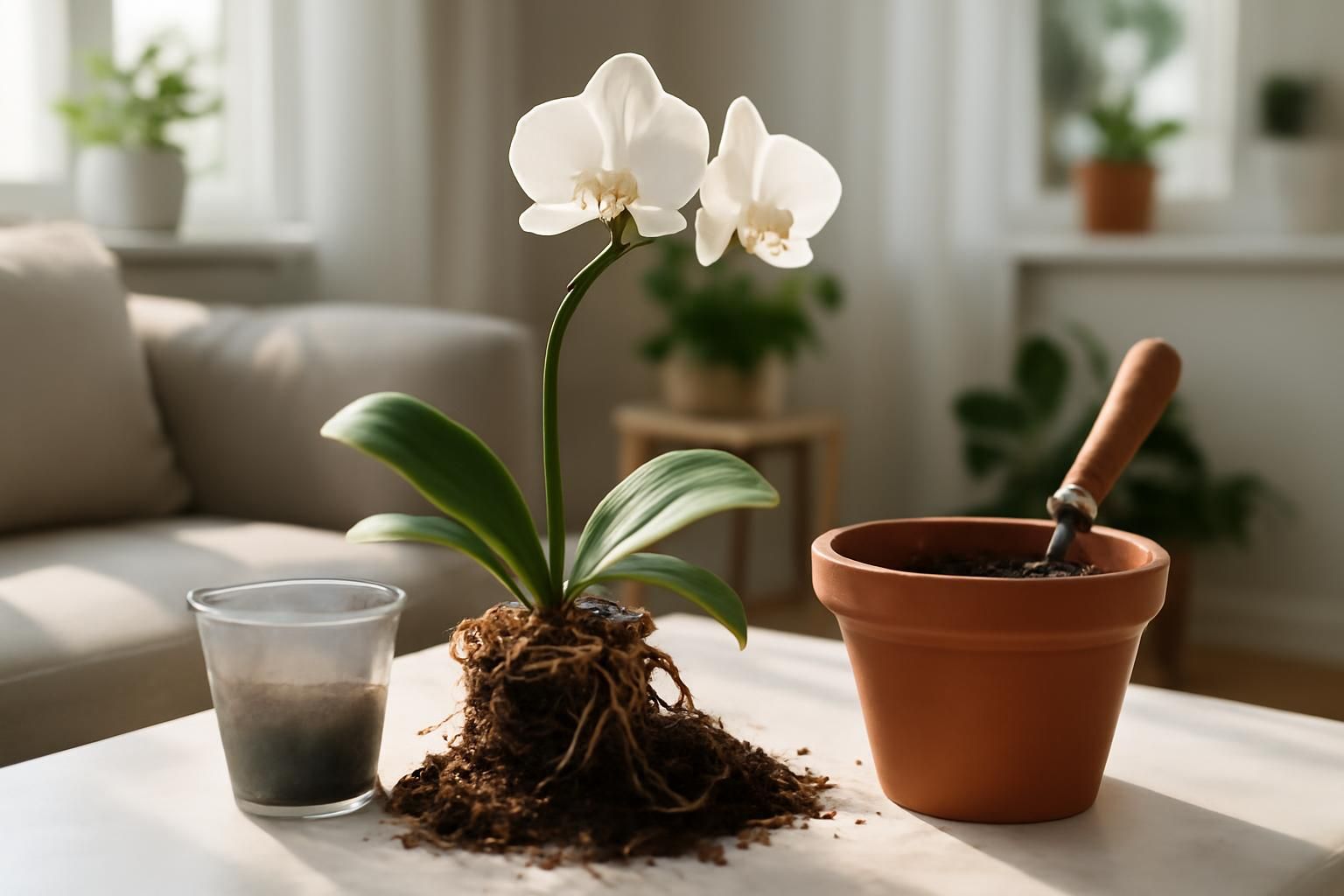
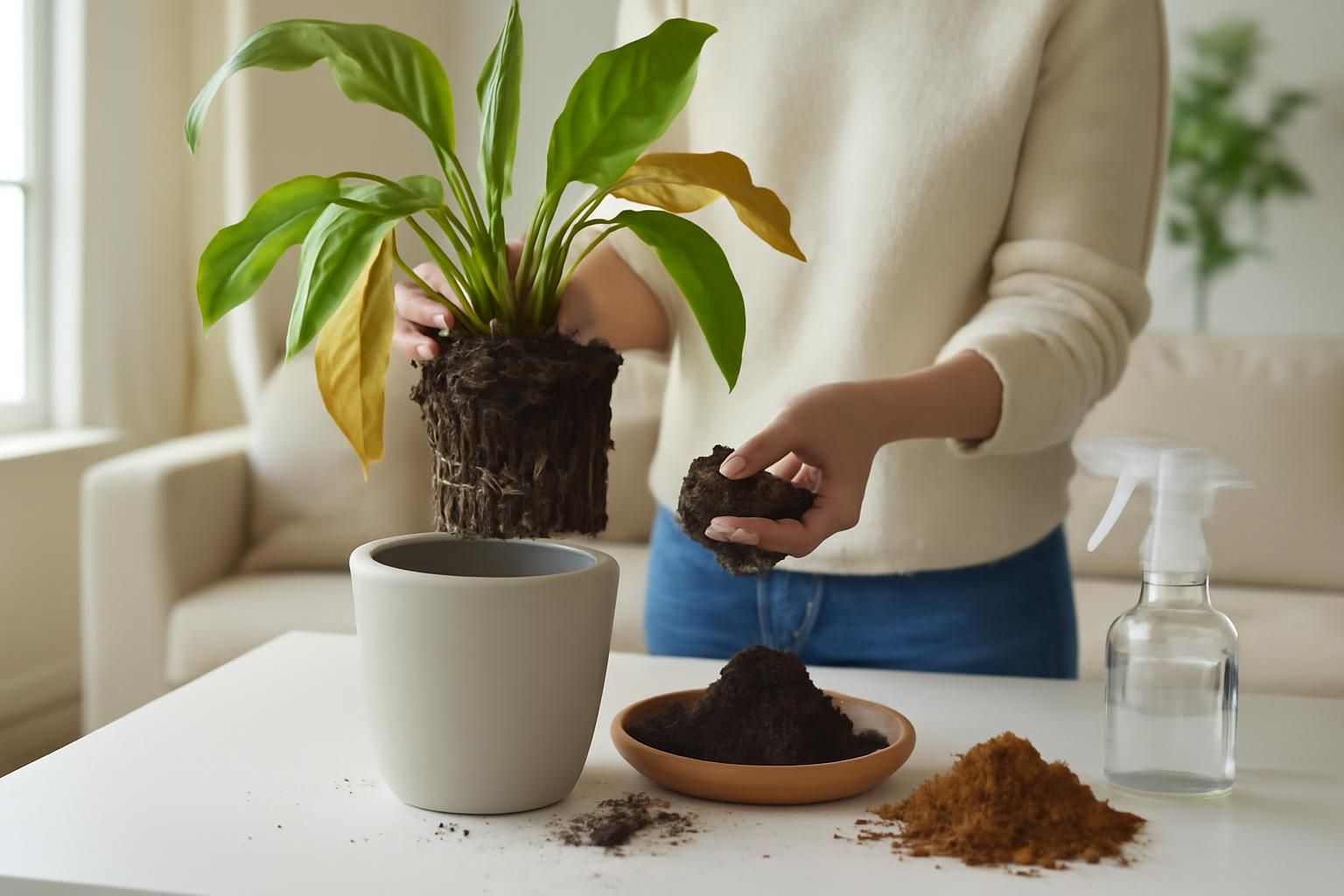
Tip the pot sideways and ease the rootball out. Crumble the wet soil away with your fingers so you can actually see the roots. Healthy roots are firm and white or tan. Rotted roots are brown or black, slimy, and mushy; they pull apart easily and often smell foul. This is your verdict on whether the plant is worth saving. If most of the roots are still firm, your odds are good.
- 4
Trim away every rotted root
Sterilize your scissors with rubbing alcohol or hot soapy water first. Cut off every mushy, dark, or slimy root back to firm, healthy tissue. Don't hold back. Rot you leave behind keeps spreading. Wipe the blades between cuts if you're taking off a lot. If you remove a big share of the roots, trim back a matching share of top growth (start with the oldest or most damaged leaves) so the smaller root system isn't stuck feeding too much foliage.
- 5
Let the rootball air out (optional but helpful)
If the roots and crown are still very wet, set the bare rootball on dry paper towels or newspaper, out of direct sun, for a few hours or even overnight. Surface moisture evaporates and the cut roots get a chance to callus over before they go back into soil. Succulents and cacti benefit from a longer dry-out, a day or two.
- 6
Repot into fresh, dry, fast-draining mix
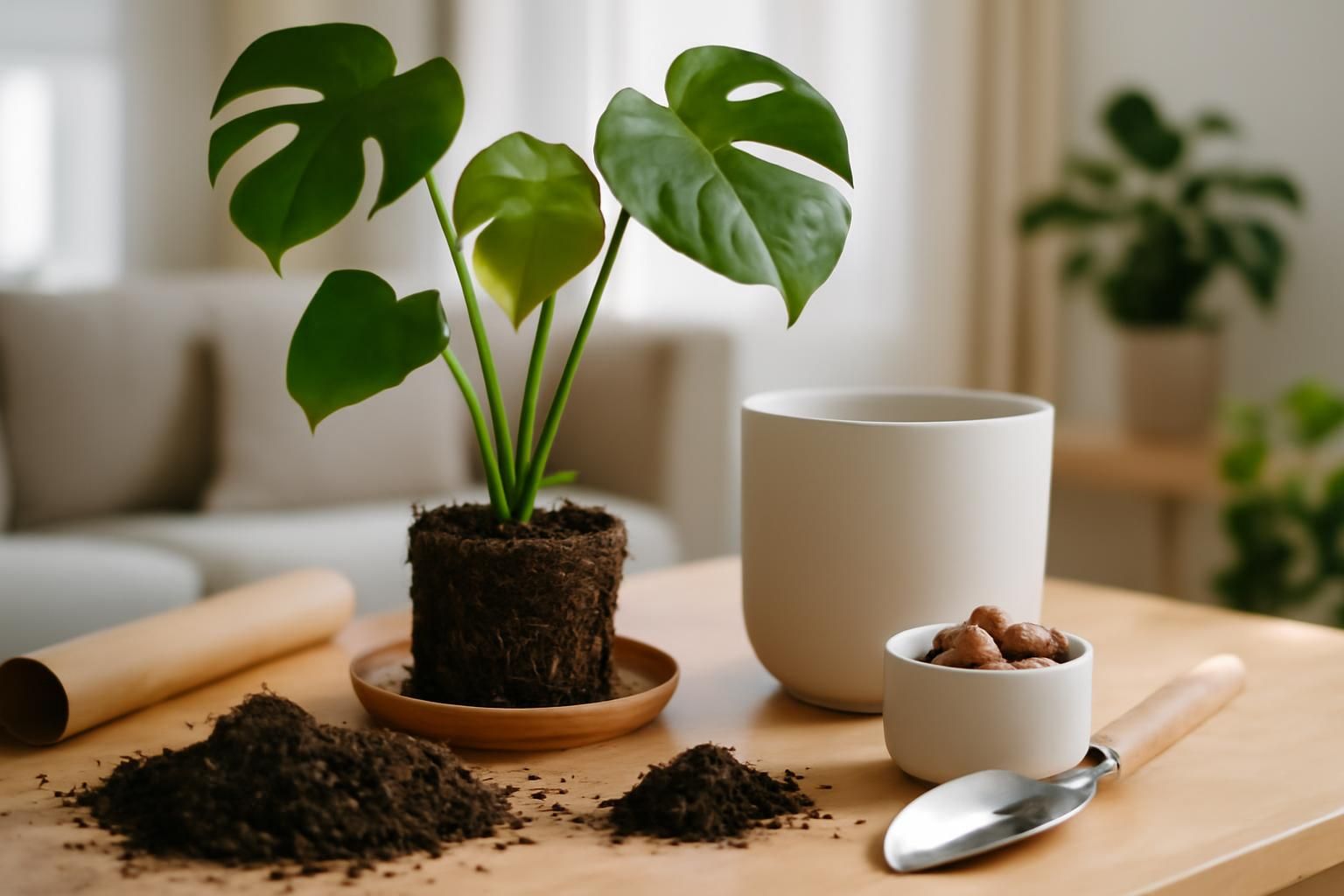
Use a clean pot with drainage holes, no exceptions. A pot with no drainage is probably how you got here. Put down a layer of fresh dry mix, set the plant in, and fill around it with more dry mix, firming gently. Skip the old soggy soil; it's compacted and may be carrying the rot fungus. And don't put gravel in the bottom "for drainage", it doesn't help and can actually make drainage worse by raising the waterline in the soil above it.
- 7
Wait to water, then water right
If you dried the rootball out and used dry mix, wait several days to a week before the first watering so the cut roots can heal. When you do water, soak it until water runs from the drainage holes, then empty the saucer. After that, water only when the top inch or two of soil is dry to the touch. Lifting the pot helps: light means dry, heavy means there's still moisture inside.
- 8
Watch for recovery, and hold off on fertilizer
Give it bright indirect light, a steady room temperature, and time. Firm new growth or leaves perking back up over the next two to four weeks means it's recovering. Don't fertilize until you see healthy new growth. Feeding damaged roots can burn them and pile on more stress.
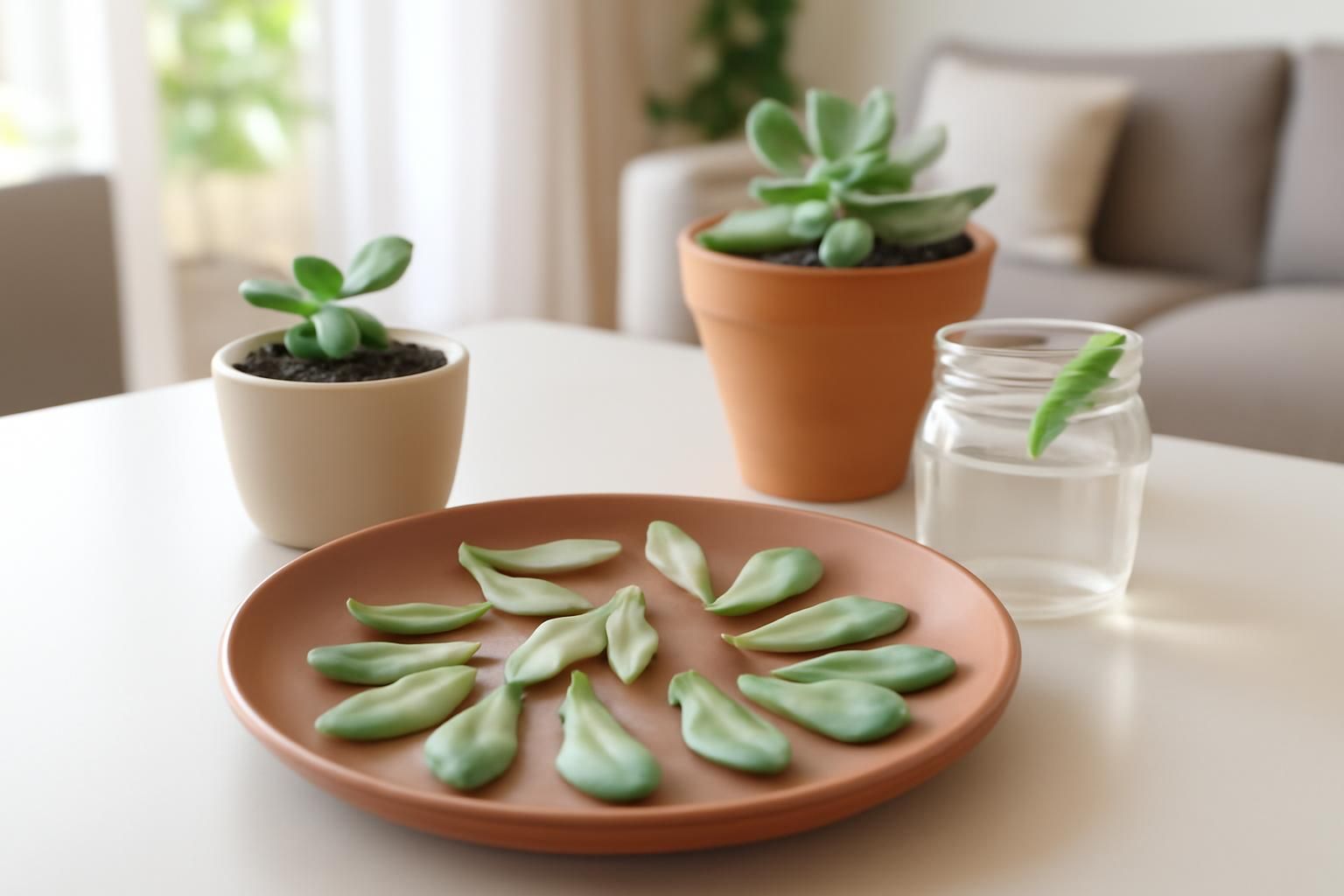
If the stem or crown is soft and mushy all the way through, or nearly every root is black and slimy, the rot has likely gone too far to save the plant. Take healthy stem cuttings from sections that are still firm and green to propagate a replacement, then throw out the rest along with the contaminated soil. Don't compost rotted material near your other plants, root rot pathogens can spread.
Common mistakes
- Watering more because the plant looks droopy. Droopy plus wet soil means water less, not more.
- Leaving the plant in a pot with no drainage holes. Decorative cachepots without holes are a leading cause of overwatering.
- Letting the pot sit in a full saucer or cachepot so the roots stay soaking.
- Repotting into a much bigger pot. The extra soil holds extra water the small root system can't use, which makes rot worse.
- Reusing the old soggy, compacted soil instead of fresh dry mix.
- Fertilizing a struggling plant to "help it recover", which only stresses the damaged roots more.
- Watering on a fixed schedule instead of checking whether the soil is actually dry.
Frequently asked
Can a plant recover from overwatering without repotting?
Mild cases sometimes can. If the leaves are only slightly yellow and the soil is just damp rather than waterlogged or smelly, stop watering, move it to brighter light with good airflow, and let the soil dry out fully before watering again. But once you see soft brown roots, root rot, or a sour smell, you have to repot into fresh dry mix and cut out the rot.
How long does recovery take?
Caught early, with mostly healthy roots, you'll usually see improvement in one to two weeks and solid recovery in two to four. Plants that lost a lot of roots take longer, sometimes a couple of months, and may drop several leaves before pushing new ones. Slow, steady improvement is normal, so resist the urge to keep fussing with it.
Should I use hydrogen peroxide or cinnamon to fight the rot?
These are popular home remedies, but the reliable fix is mechanical: cut out all the rotted tissue and get the plant into fresh, airy, fast-draining soil. That removes the problem instead of masking it. Clean tools and good drainage do far more than any additive.
Why do overwatered and underwatered plants look the same?
Both cause wilting, yellowing, and drooping, because in both cases the roots can't get water to the leaves. Underwatered roots are simply dry; overwatered roots are too damaged or suffocated to take water up. The soil settles it: stick your finger in. Wet soil plus a wilting plant equals overwatering.
How do I avoid doing this again?
Check the soil before every watering instead of going by the calendar, use pots with drainage holes and a fast-draining mix, empty saucers after watering, and water less in winter when growth slows. When in doubt, wait a day. Most houseplants handle being a little too dry far better than too wet.
The single biggest prevention upgrade is a pot with drainage holes plus a chunky, fast-draining mix. If your plant lives in a sealed decorative pot, either drill holes in it or treat it as an outer sleeve only, with the plant in an inner nursery pot you can lift out to drain.