Quick answer
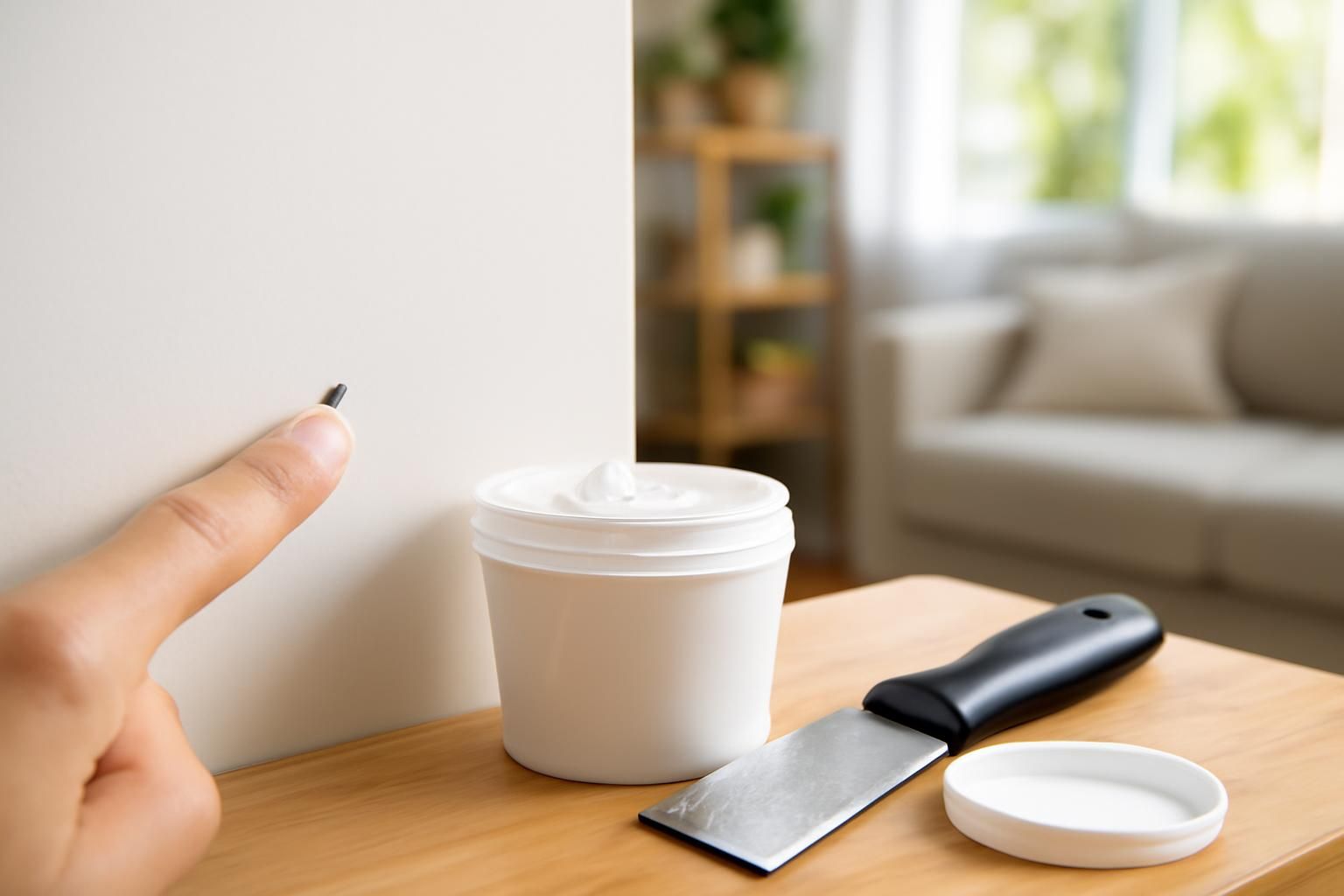
Scrape loose plaster from the hole. Press ready-mixed filler into the hole with a filler knife. Scrape the surface flat. Let it dry fully. Sand lightly with fine sandpaper. Wipe away dust. Touch up with matching paint.
Nail holes are quick to fix. You need filler, a knife and sandpaper. The job takes a few minutes of work plus drying time. A smooth finish hides the repair completely.
What you’ll need
- filler knife
- ready-mixed filler or spackle
- fine sandpaper
- damp cloth
- touch-up paint
- small brush
Step by step
- 1
Clean the hole and surrounding area
Remove any protruding plaster or old paint flakes with the edge of the filler knife. Wipe the area with a damp cloth and let it dry.
- 2
Apply the filler
Scoop a small amount of ready-mixed filler onto the knife. Press it firmly into the hole. Drag the knife across the surface at a slight angle to scrape away excess. The filler should sit slightly proud of the wall.
- 3
Let the filler dry completely
Read the manufacturer's drying time. Most fillers dry in 30 to 60 minutes. Do not sand or paint while the filler is still soft.
- 4
Sand the repair smooth
Wrap fine sandpaper around a flat block. Sand the filler in a circular motion until it is flush with the wall surface. Feather the edges so the repair blends in.
- 5
Clean and paint the patch
Wipe away dust with a damp cloth. Let it dry. Apply touch-up paint with a small brush. Use two thin coats rather than one thick coat for the best match.
Wear a dust mask when sanding filler or old paint. Old paint may contain lead. If your home was built before 1960, test the paint first or call a professional.
Common mistakes
- Overfilling the hole and leaving a raised bump that is hard to sand flat
- Sanding before the filler has dried, which tears the surface
- Skipping the dusting step, which causes paint to peel or bubble
- Using one thick coat of paint instead of two thin coats
Frequently asked
Can I use toothpaste to fill a nail hole?
Toothpaste works as a temporary fix but it shrinks and cracks. Use proper wall filler for a permanent repair.
Do I need primer over the filler before painting?
Yes, if the filler is bare and porous. A coat of primer stops the paint from soaking in unevenly. If you are using emulsion that includes primer, one coat may be enough.
What if the hole is larger than a nail hole?
For holes bigger than a five-pence piece, use a patch kit or backing material. See our guide on patching holes in drywall.