Quick answer
Prep and prime first, cut in edges, then roll while wet using a loaded roller and lay off in one direction, applying two full coats.
Paint walls and ceilings without patchiness, lap marks, or visible roller streaks.
What you’ll need
- Basic DIY
Step by step
- 1
Clear and protect the room
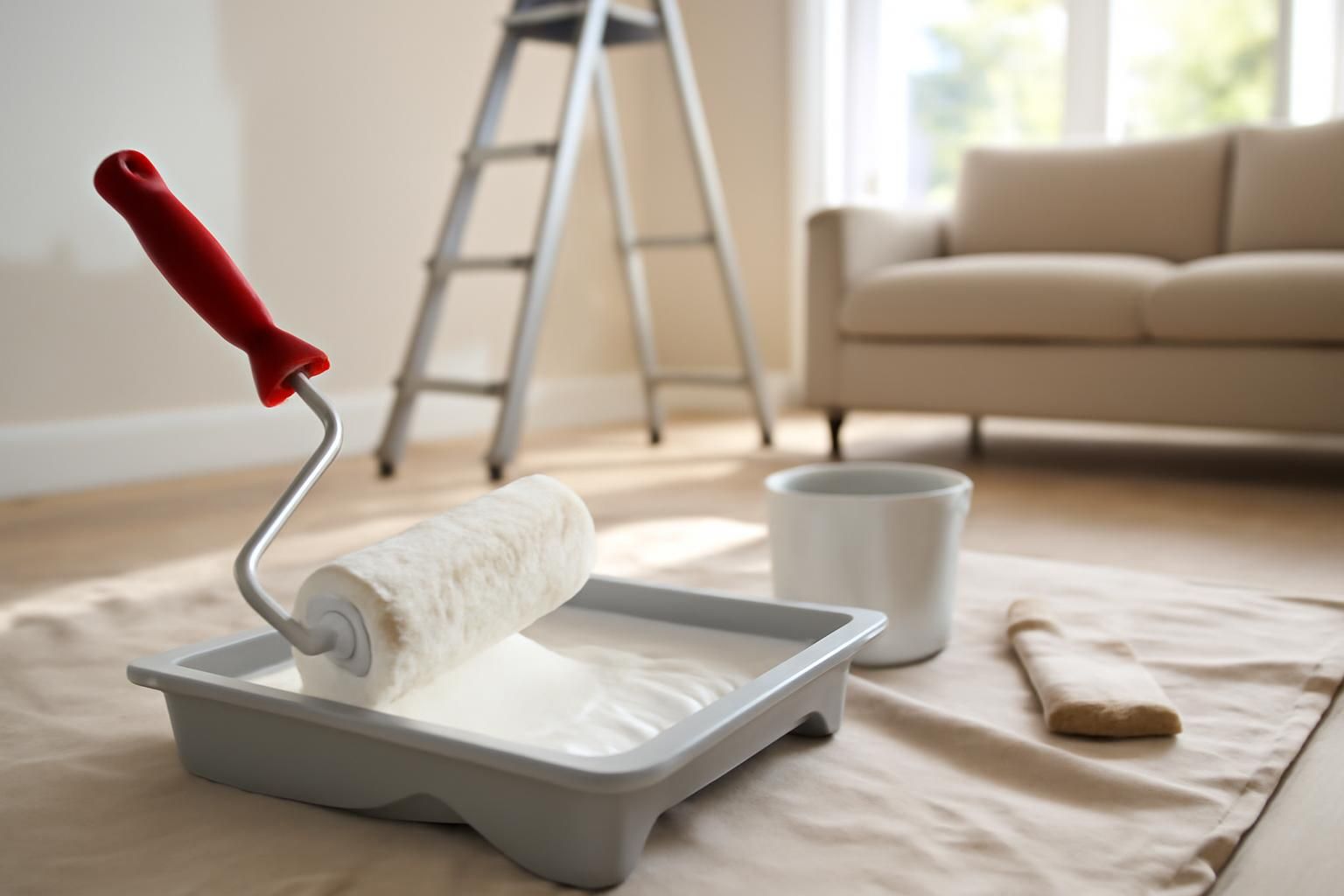
Move furniture to the centre and cover it with dust sheets. Lay protective sheets on the floor and mask skirting boards, sockets, and window frames with low-tack tape. Open windows for ventilation.
- 2
Prep, fill and sand
Inspect walls for cracks, holes, or flaking paint. Fill imperfections with filler and let them dry. Sand the repairs and any rough areas with fine sandpaper until smooth. Wipe away dust with a damp cloth.
- 3
Prime or seal bare patches
Brush primer or sealer over filler, bare plaster, or patched areas. This prevents the finish from flashing and helps the paint bond evenly across the whole surface.
- 4
Cut in edges with a brush
Paint a 50–75mm band along edges, corners, and around fittings with a good quality brush. Work in sections small enough that the brushed paint stays wet by the time you roll the main wall.
- 5
Roll keeping a wet edge
Load the roller evenly and roll the wall in overlapping vertical sections from ceiling to floor. Work one section at a time and roll back into the previous section while it is still wet to blend the edges.
- 6
Lay off in one direction
After loading paint onto the wall, lightly roll over the section in one direction without applying pressure. This sets the nap and removes roller marks for a uniform texture.
- 7
Apply a full second coat and check
Let the first coat dry completely according to the tin. Apply a second full coat using the same wet-edge technique. Once dry, inspect the finish in daylight and artificial light. Touch up any thin areas.
Common mistakes
- Letting cut-in edges dry before rolling, which leaves a visible frame or lap mark.
- Overstretching thin coats instead of applying two proper coats, causing streaks and poor coverage.
- Skipping primer over filler or bare plaster so colour flashes through as a dull patch.
Frequently asked
Why does my wall look patchy after painting?
Patchiness usually comes from thin coats, uneven absorption, or letting edges dry before blending into them. Use a primer on bare or filled areas, apply two full coats, and keep a wet edge while rolling.
What does 'keeping a wet edge' mean and why does it matter?
It means rolling the next section while the previous one is still wet so the paint blends together. If the edge dries first, the overlap creates a visible line called a lap mark.
How many coats of paint do I need?
Two full coats are standard for an even finish. Strong or dark colours may need three. One thin coat will almost always look patchy and show the old colour through.
Should I paint the ceiling or the walls first?
Paint the ceiling first. Splatter from the ceiling will land on the walls, which you will cut in and roll afterwards. Finish with skirting boards and trim last.
Why can I see roller marks when the light hits the wall?
Roller marks happen when the roller is too dry, too much pressure is applied, or the paint starts to dry before you lay it off. Use a well-loaded roller, work in sections, and finish each area with a light lay-off pass in one direction.