Quick answer
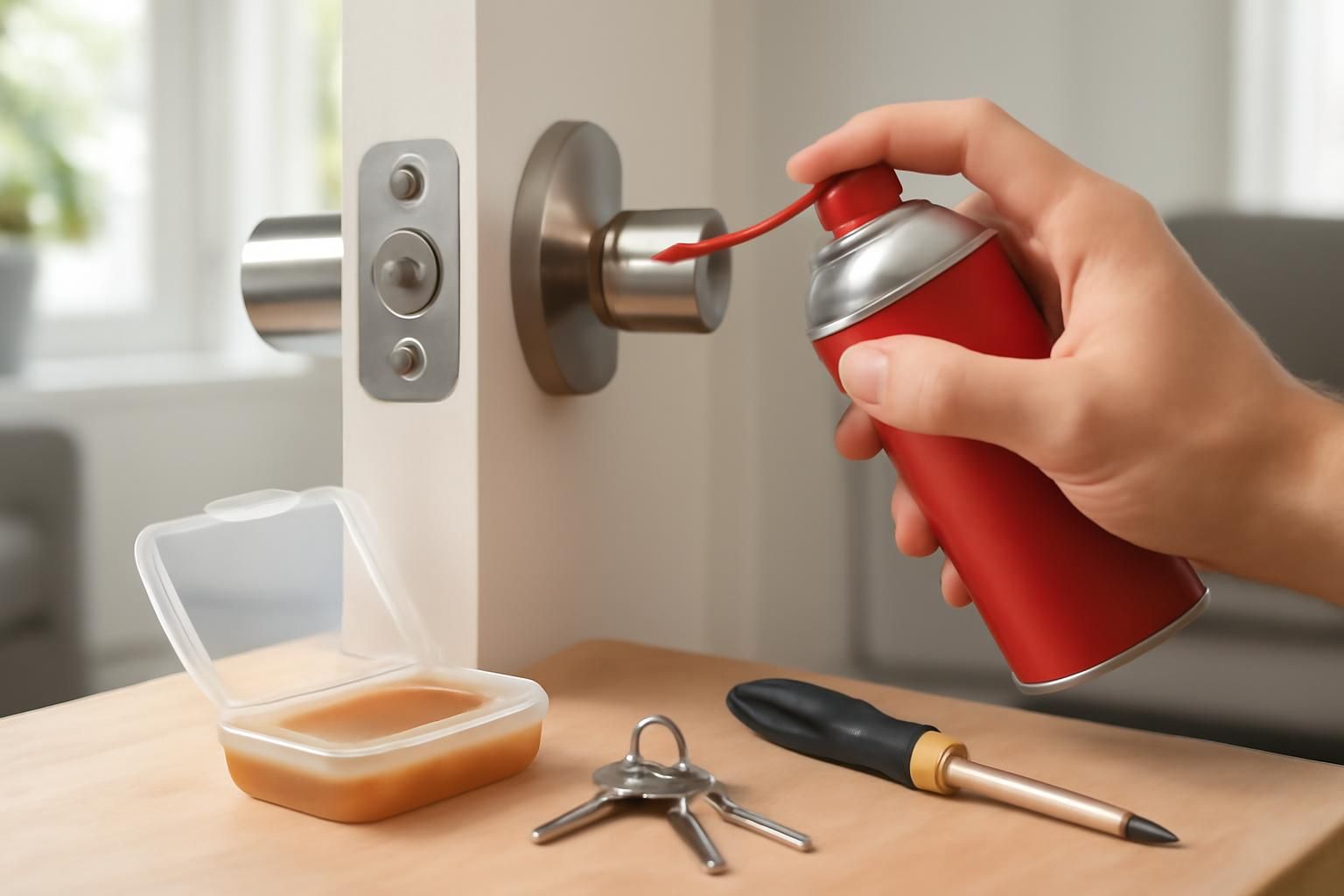
Remove the key. Squirt graphite powder or silicone spray into the keyhole. Insert the key and turn it several times to work the lubricant through. Wipe away excess. If the bolt still sticks, loosen the strike plate screws slightly and check alignment.
A stiff lock is usually caused by dirt, dried lubricant or a misaligned strike plate. Forcing the key can snap it inside the barrel. Clean and lubricate the lock before you consider replacing it.
What you’ll need
- graphite powder or pencil lead
- WD-40 or silicone spray
- screwdriver
- key
- clean cloth
- cotton bud
Step by step
- 1
Check the key and lock for visible dirt
Look at the keyhole. If you see dust or debris, wrap a cotton bud around the key and gently wipe the inside of the barrel. Do this carefully to avoid pushing dirt further in.
- 2
Apply graphite powder or silicone spray
Squirt a small amount of graphite powder or silicone spray into the keyhole. Avoid oil-based products like cooking oil or motor oil. These attract grit and make the problem worse.
- 3
Work the key back and forth
Insert the key and turn it gently several times. This spreads the lubricant through the pins and springs. Wipe the key with a clean cloth after each pass.
- 4
Check the strike plate alignment
If the lock still feels stiff when the door is closed, open the door and turn the key. If it moves freely, the strike plate is misaligned. Loosen the screws, adjust the plate slightly and retighten.
- 5
Test the lock several times
Lock and unlock the door at least five times. The action should feel smooth. If the key still sticks, repeat the lubrication step or consider calling a locksmith.
Do not force the key. A snapped key is expensive to remove. Never use boiling water or heat on a lock. If you use spray lubricant, work in a ventilated area and keep the can away from open flames.
Common mistakes
- Using oil-based lubricants that attract dust and gum up the mechanism
- Forcing the key when it sticks, which can cause the key to break
- Ignoring a misaligned strike plate and blaming the lock barrel
- Applying too much lubricant, which pools inside and attracts dirt
Frequently asked
Can I use a pencil to lubricate the lock?
Yes. Rub pencil lead on both sides of the key and insert it. Graphite works as a dry lubricant. It is not as thorough as powder but helps in an emergency.
How often should I lubricate my door locks?
Check and lubricate them once a year. Locks on external doors may need attention more frequently if exposed to rain or dust.
What if the key still will not turn after lubrication?
Check whether the door frame has swollen or shifted. If the lock works when the door is open, adjust the strike plate. If it is stiff even when open, the mechanism may be worn and need replacing.