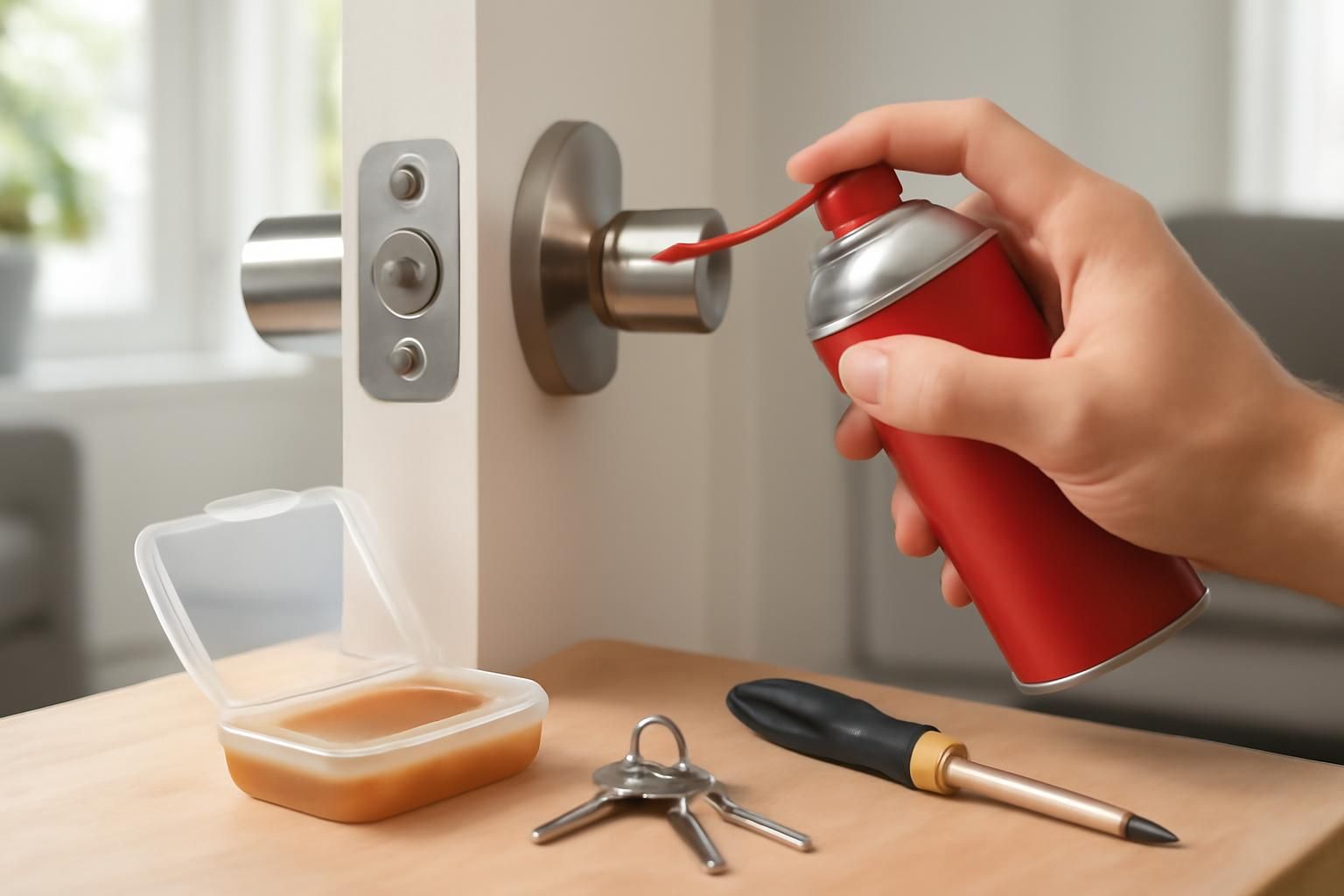
Quick answer
Tighten or reset the hinges first. If the door still rubs, rub chalk on the edge where it sticks, close it, and plane or sand the marked area a little at a time. Seal the bare wood with paint or varnish immediately after.
A sticking door is usually caused by humidity swelling the wood, a dropped hinge, or paint built up on the edge. Before you remove any wood, diagnose the cause. Often the fix needs nothing more than a screwdriver.
What you’ll need
- Chalk or crayon
- Screwdriver
- Hand plane or coarse sandpaper wrapped around a block
- Wood glue and matchsticks (optional)
- Paint or varnish and brush
Step by step
- 1
Diagnose the rub
Rub chalk or crayon along the edge of the door that you suspect is sticking. Close and open it firmly. The chalk will transfer to the frame at the exact contact point. Check the hinges first: loose screws let the door sag and rub at the top or bottom corner.
- 2
Tighten or reset the hinges
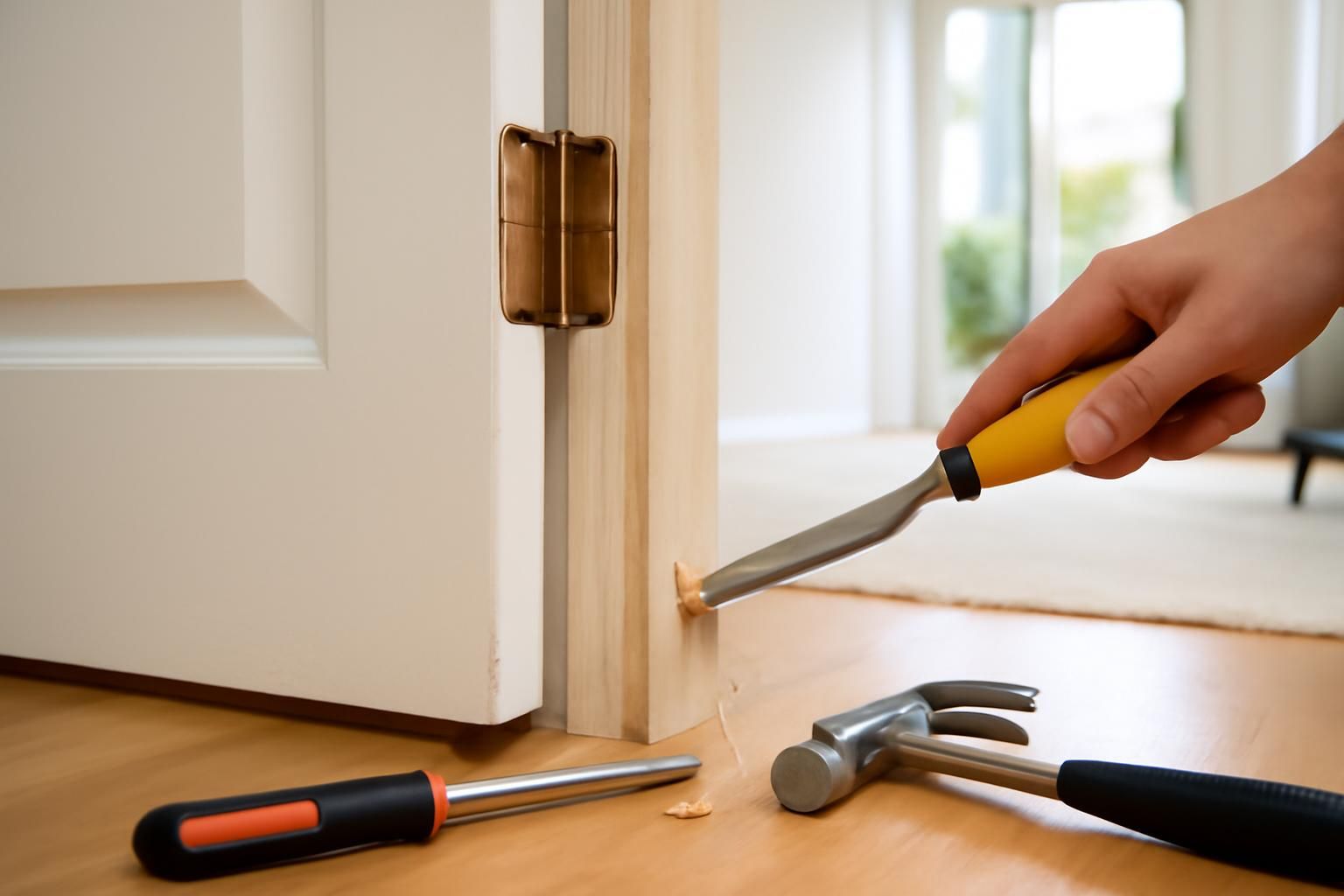
Tighten every screw. If a screw spins freely, remove it, dip a matchstick in wood glue, push it into the hole, snap it flush, and drive the screw back in. For a badly dropped door, replace short screws with longer ones that bite into the wall framing.
- 3
Remove the excess
If the door still rubs, plane or sand the marked area only. Take off a little, then re-hang and test. Repeat until the door closes without resistance. A block plane used in situ on the hinge edge often avoids removing the door entirely.
- 4
Seal the edge
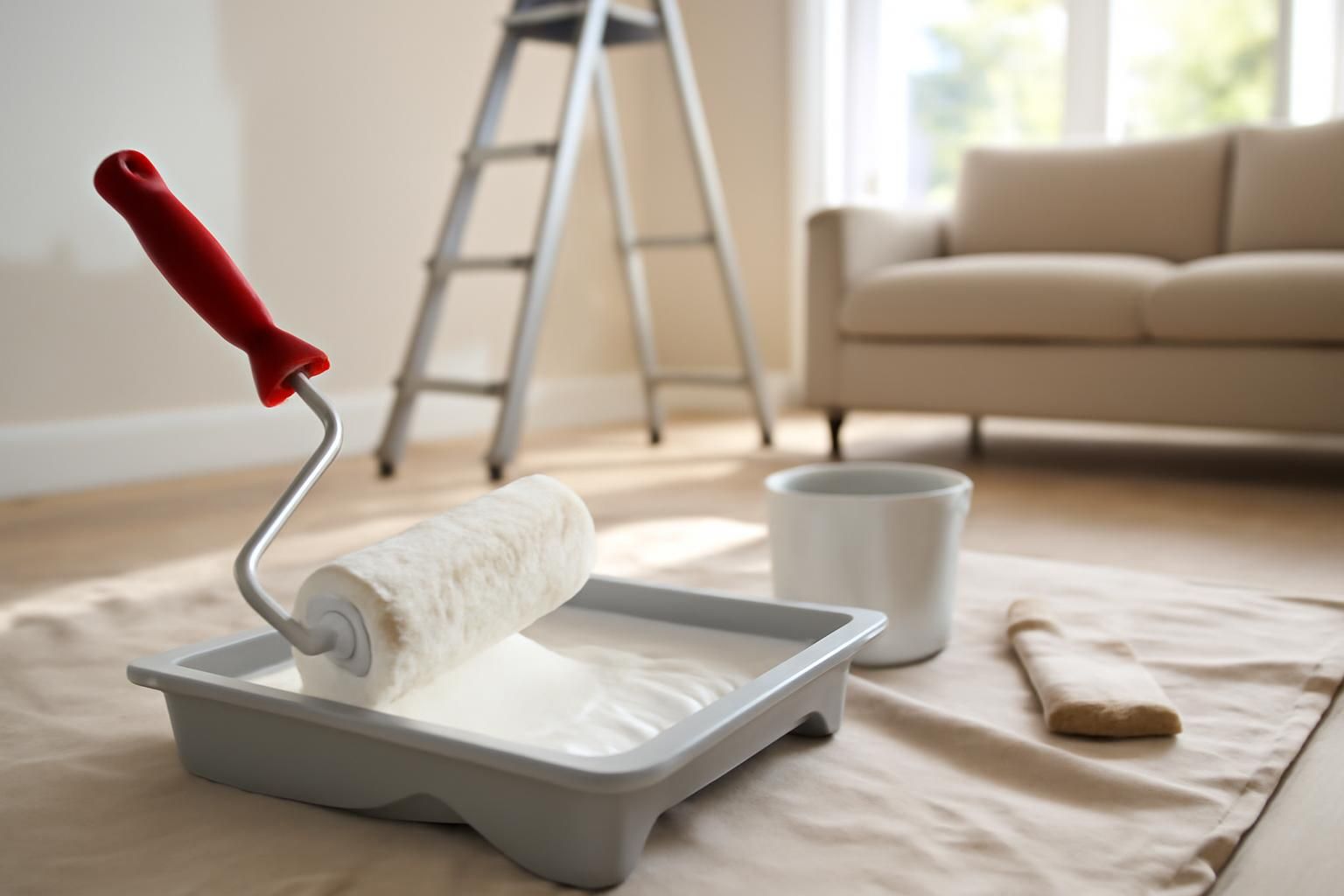
Bare wood absorbs moisture and swells again within weeks. Paint or varnish the planed edge the same day, even if the rest of the door does not need redecorating.
Do not remove large sections of wood in one go. Over-planing creates a permanent gap that lets in draughts and reduces privacy. If the door sticks in all seasons and you notice cracks in nearby walls or sloping floors, the cause may be structural movement or subsidence. Consult a builder or structural surveyor.
Common mistakes
- Planing the wrong edge without using chalk to find the real rub point first.
- Removing the door to plane it when a block plane can often fix the hinge edge in place.
- Leaving the planed edge bare, which lets moisture in and causes the door to swell and stick again within weeks.
Frequently asked
Why does my door only stick in summer?
Wood expands when it absorbs moisture from humid air. The door is likely a tight fit in winter and swells in summer. If it closes freely in winter, planing it will leave a gap in drier months.
Can I fix a sticking door without taking it off its hinges?
Yes. Tightening the hinges or planing the hinge edge with a block plane while the door is hung often solves the problem without removal.
My door sticks at the top — does that mean the house is settling?
Not necessarily. A dropped hinge is the most common cause. If tightening the hinges does not help, and the door frame is visibly out of square with cracks in the surrounding plaster, consult a builder.