Quick answer
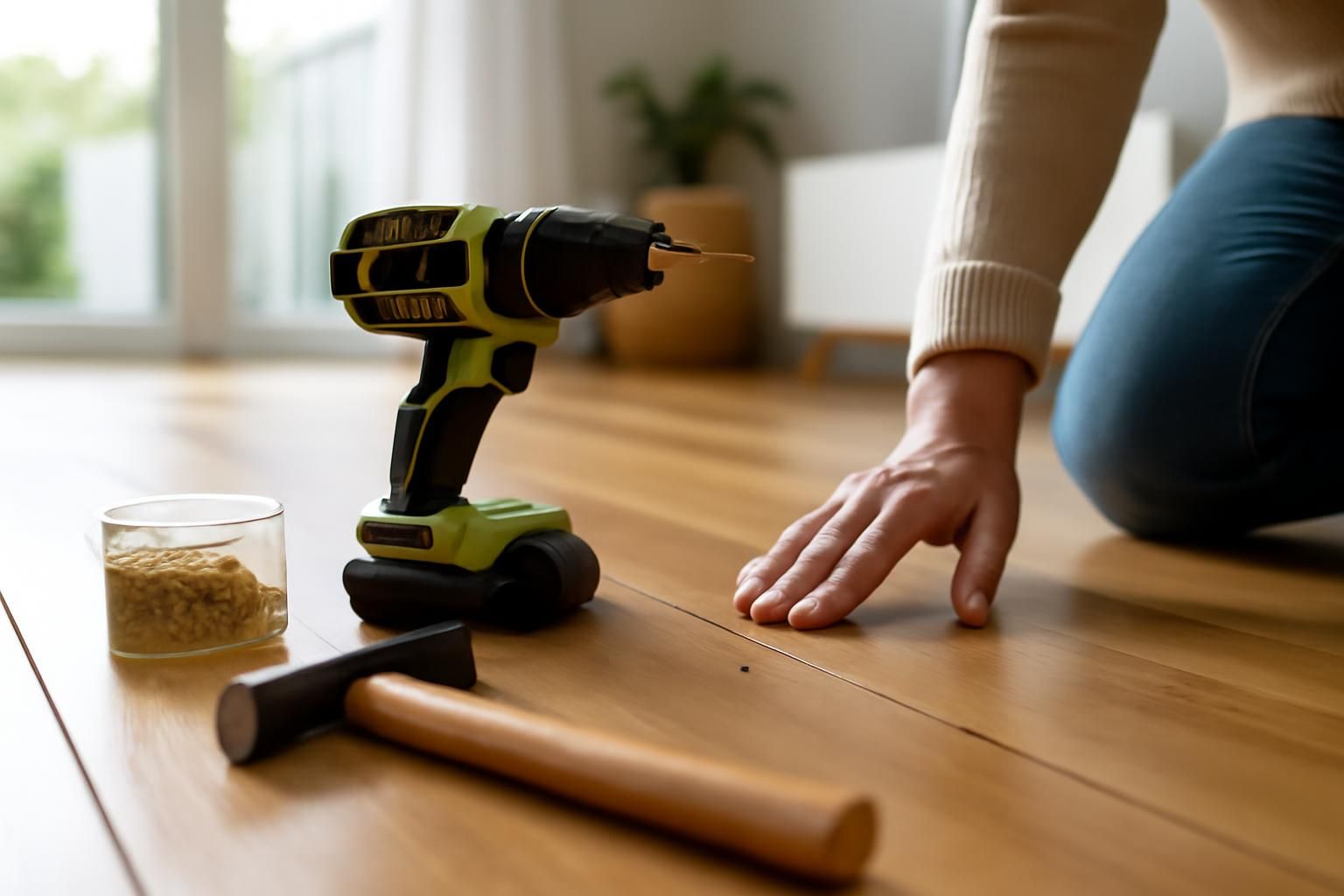
For a quick fix, work talcum powder or powdered graphite into the gap between squeaking boards to reduce friction. For a permanent fix, locate the joist with a stud finder, drive a countersunk screw through the board into the joist, and fill the hole with wood filler. If you have access from below, get someone to walk on the board while you watch from underneath so you can see exactly which board is moving.
Squeaky floorboards happen when boards rub against nails or the joist beneath them. Tongue-and-groove boards squeak at the joint; boards nailed to joists squeak where the nail has loosened. You can silence most squeaks from above in under an hour. If you have loft or basement access, fixing from below is even easier.
What you’ll need
- talcum powder or powdered graphite
- stud finder or magnetic detector
- screwdriver or drill
- wood screws (30–40 mm)
- wood filler
- sandpaper
Step by step
- 1
Identify the squeaking board
Walk across the floor and mark the exact spot where the noise occurs. If you have access from below, get someone to walk on the floor while you look up; you will see which board moves against the joist or a neighbour.
- 2
Try the quick powder fix
If the squeak is caused by friction between boards, sprinkle talcum powder or powdered graphite into the gaps around the noisy area. Work it in with your foot or a thin spatula. Walk over it a few times. This often silences the squeak within minutes and needs no tools.
- 3
Locate the joist
For a permanent fix, you must screw into the joist, not empty space. Run a magnetic stud finder along the floor following the line of existing nails; the joist runs perpendicular to the boards and the nails show you where it is. Mark the centre of the joist with masking tape.
- 4
Drive a screw into the joist
Choose a screw length that passes through the floorboard and at least 20 mm into the joist without breaking through the other side. Drill a pilot hole if needed, then drive the screw until the head sits just below the surface. Stop if you hit unexpected resistance.
- 5
Fill and finish the hole
Press wood filler into the screw hole with a filling knife. Let it dry, then sand it flush with the surrounding board. If the floor is painted or stained, touch up the spot to match.
- 6
Fix from below if you have access
From a loft or basement, have someone walk on the squeaky spot so you can see exactly which board moves. Hold the board firmly against the joist with a timber offcut and a screw driven up through the joist into the board. This avoids any visible holes upstairs.
The biggest hazard is driving a screw too long and piercing a pipe, cable or the ceiling below. Measure the total thickness of the floorboard plus the joist before you choose screw length, and stop immediately if you meet unexpected resistance. If you have underfloor heating or shallow services, do not drive screws without confirming their location first.
Common mistakes
- Using screws that are too long and breaking through the subfloor or ceiling below.
- Driving screws without locating the joist first — screws into void don't hold and the squeak returns within weeks.
- Applying talcum powder to a board that has a structural gap rather than a friction gap — it masks the symptom but the board can become a trip hazard.
Frequently asked
Will the squeak come back after the powder fix?
Powder and graphite wash out or compress over time, so the squeak often returns after months of walking and cleaning. The powder fix is a good temporary measure, but screwing the board to the joist is the permanent solution.
Can I fix squeaky floorboards without lifting the carpet?
Yes. You can work powder through the carpet pile into the gaps, or use a long screw with a snap-off head designed for carpets. These screws break below the pile so the carpet hides the hole. You still need to locate the joist first.
How do I know if the squeak is a structural problem rather than just friction?
Press down on the board with your foot. If it rocks or bounces, the fixing has failed and there may be a gap between the board and the joist. If the board feels solid but makes a noise only when you shift your weight, it is usually just friction.